viernes, junio 05, 2015

Congreso de agroecología

viernes, septiembre 27, 2013

Yes it can be done: Food needs can be met with agroecological vision for agriculture and science

September 17, 2013

THIRD WORLD NETWORK INFORMATION SERVICE ON SUSTAINABLE AGRICULTURE 
Dear friends and colleagues, 
Re: Food needs can be met with agroecological vision for agriculture and science 
In the article below, the authors from Lancaster University and GenØk - Centre for Biosafety call for a new vision for agriculture and science; one where there is agricultural diversification and where agricultural research and development is reoriented towards diverse local conditions and needs, and towards farmers' knowledge. 
This is because the current industrial monoculture model of production, of both food and knowledge, does not meet global food needs. The result is physical and economic disconnection between production and consumption, as well as private control of the crucial knowledge base that shapes agriculture. The approach also assumes that science has a well-defined understanding of the technologies (including GM crops) needed to overcome such challenges, but neglects the extensive diversity of local conditions and knowledge systems, resulting in suppression of more effective sustainable alternatives. 
The alternative agroecological vision for agriculture and food supply is not just theory. The authors present examples of how local expertise and knowledge integrated with leading scientific research have demonstrated the capacity to increase yields sustainably, decrease polluting inputs, promote food security and improve livelihoods. 
With best wishes,
Third World Network
131 Jalan Macalister
10400 Penang
Malaysia

Farming and knowledge monocultures are misconceived 
Food needs can be met with a new vision for agriculture and science, say Brian Wynne and Georgina Catacora-Vargas. 

Etiquetas: , , ,

miércoles, mayo 01, 2013

Simposio de agroecología


Etiquetas: , ,

lunes, abril 11, 2011

Sustainable ag is the way to go, says UN

Sustainable Agriculture Urgently Needed, UN Agencies Say


There is now widespread recognition that a rapid shift from industrial monoculture to sustainable farming is needed to save the climate and guarantee food security for all.

Etiquetas: , , ,

jueves, noviembre 26, 2009

Agroecología: respuesta al sistema imperante


Artículo basado en: Congressos brasileiro e latino-americano de agroecologia reúnem mais de 2.500 pessoas

Fuente: http://www.aenoticias.pr.gov.br/modules/news/article.php?storyid=52004

Mas de 2.500 personas participaron del VI Congreso Brasilero de Agroecología y el II Congreso Latinoamericano de Agroecología realizado en la ciudad de Curitiba del 9 al 12 de noviembre.

La Asociación Brasilera de Agroecología (ABA) y la Sociedad Latinoamericana de Agroecología (SOCLA), fueron las instituciones auspiciantes, habiendo contado con el apoyo del Gobierno del Estado de Paraná. El tema central del Congreso fue "Agroecología: experiencias pasadas y presentes construyendo un porvenir sostenible.

La apertura contó con la participación de investigadores, técnicos, estudiantes de agroecología de Brasil y de América Latina e integrantes del movimiento de la Vía Campesina y organizaciones de la sociedad civil.

El presidente de ABA Francisco Caporal, en el acto de inauguración dijo que la superación de las crisis económica, financiera, social, alimentaria y ambiental, que atraviesa el planeta pasa por la agroecología, que es lo opuesto al actual modelo explotador basado en el petróleo y en la transgenia. “Es como repetir el mismo modelo de la revolución verde, que promueve el uso excesivo de agrotóxicos e insumos químicos que intoxican no solo los alimentos sino que están provocando una crisis a la civilización”. Caporal llamó la atención sobre el fracaso de las primera generación de los cultivos transgénicos y destacó el trabajo de ABA en la movilización que lleva los avances de los nuevos conocimientos y nuevos saberes a la superación de la crisis.

El presidente de SOCLA, Miguel Altieri, también destacó la importancia de fortalecer la agroecología como agricultura del futuro, que ofrece alternativas al modelo actual de explotación agropecuaria que deja la naturaleza sin salida. “Es la única que puede eliminar la pobreza del campo, protege el medio ambiente y evita la concentración de la tierra en el medio rural”, afirmó.

Los grandes desafíos de estos dos congresos fueron consolidar prácticas y discusión de varios temas importantes para la sociedad, que apunten a un mundo mejor. Los objetivos estuvieron dirigidos a destacar la enorme diferencia entre la agroeconomía dirigida al lucro y la agricultura que apunta a aportar beneficios a los productores.

La participación en los congresos superó las expectativas. Se inscribieron 3.200 personas y hubieron más de 1.500 pedidos para presentar trabajos científicos. Para el presidente de ABA eso demuestra la necesidad de proseguir en esta trayectoria y que para que eso se logre se necesita unir conocimientos y saberes de los campesinos, de los agricultores familiares y del sector técnico–científico.

Etiquetas:

lunes, julio 06, 2009

AGRICULTURE-AFRICA: Calls for Sustainable Green Revolution

By Wambi Michael


KAMPALA, Jul 4 (IPS) - Africa needs a Green Revolution, but one that will increase agricultural productivity by using practices that build soil fertility while minimising harm to the environment.

Organic farmers, traders and researchers from are pushing organic agriculture as suitable for Africa because it is based on active management of the agricultural ecosystem rather than on external inputs.

Organic farming relies on compost manure, crop rotation, mulching, biological pest control. It excludes use of chemical fertilisers and genetically-modified organisms.

Many scientists are urging Africa to follow the agro-industrial "Green Revolution" model implemented in many parts of Asia and Latin America to increase food production. This requires the application of agrochemical fertiliser, pesticides and other farm inputs.

National Organic Agricultural Movement of Uganda (NOGAMU) executive director, Moses Kiggundu Muwanga, says, "The call for chemical fertilisers does not make sense: they emit greenhouse gasses, both through their production and their composition of mainly nitrous oxide, and so they contribute to climate change. Besides the cost of synthetic fertiliser is too expensive for most subsistence farmers."

Muwanga, also a board member of International Federation of Agricultural Movements (IFOAM), said the suggestions put forward by the Alliance for a Green Revolution in Africa and others offer market-based solutions that could exploit an average subsistence farmer in Africa.

"The packages offered by the Alliance For Green Revolution (AGRA) will lead farmers to indebtedness and destroy our agro-biodiversity and natural resources because the aim is to shift African agriculture to depend on costly agro-chemicals and pesticides," he said.


SOURCE:
http://www.ipsnews.net/news.asp?idnews=47528

Etiquetas: , , ,

martes, mayo 05, 2009

The Oakland Institute Reporter


A New Online Clearinghouse to Share Information on and Promote Alternatives to the New Green Revolution in Africa


Voices from Africa


Oakland, CA: Concurrent with the release of a printed report, Voices From Africa: African Farmers & Environmentalists Speak Out Against Against a New Green Revolution in Africa, the Oakland Institute has launched Voices from Africa (www.oaklandinstitute.org/voicesfromafrica), a new online clearinghouse to share information on and promote alternatives to the New Green Revolution in Africa. Featuring articles, press releases, commentary, and reports from African NGOs and partner organizations and individuals around the world, Voices from Africa is set up as an interactive web community and will also serve as a resource for media and policy makers to hear the perspective of the African civil society groups on plans for a New Green Revolution in Africa.


Using open-source content management, the website allows visitors to create a personal account and post new articles and information, comment on posted articles, and discuss topics of interest in the user forums. It is hoped that the community aspect of the website will enable activists from across the globe to link up and share news and updates from the latest campaigns against GMOs and will also function as a "home base" where stakeholders can forge coordinated strategy for fostering food sovereignty and influencing policy discussions.


At launch time, the website content consists of the articles in the Voices From Africa: African Farmers & Environmentalists Speak Out Against Against a New Green Revolution in Africa, and new articles that have been received following publication of the report, as well as biographical and contact information for each author. The website also has links to each organization featured in the report. By providing links to partner organizations and enabling users to post content and participate in building the Voices from Africa community, it is hoped that the website will provide a platform to voices often ignored and allow them to be heard in the ongoing policy battle surrounding the new gene revolution in Africa.


Visit Voices From Africa at www.oaklandinstitute.org/voicesfromafrica and join today to bring your voice to the debate.

Etiquetas: , ,

lunes, abril 20, 2009

G8 Urged to Reject Another 'Green Revolution' U.S. working group on the food crisis urges G8 to reject failed green revolution policies for Africa

"'Business as Usual' Will Not Solve Global Hunger Crisis"

FOR IMMEDIATE RELEASE
April 16, 2009

WASHINGTON - April 16 - The U.S. Working Group on the Food Crisis, a group representing anti-hunger, family farm, community food security, environmental, international aid, labor, food justice, consumers and other food system actors, urges the G8 at the upcoming Agricultural Ministerial in Treviso, Italy to reject the failed policies of the Green Revolution. A recent landmark report backed by the UN and World Bank argues for agroecological and sustainable agriculture, rather than reliance on chemical-intensive practices and genetic engineering.

The U.S. Working Group is deeply disappointed by the U.S. Senate Foreign Relations Committee’s hasty passage of the Global Food Security Act (S. 384) on March 31. This bill would mark a significant shift in U.S. policy by specifically mandating foreign agriculture research for genetic engineering. Previously, we had criticized the Committee’s March 24 hearing on “Alleviating Global Hunger” that relied on testimonies from “Green Revolution” advocates for the industrial agriculture system. We urge the G8 summit to resist pressure from the biotech industry and embrace genuine solutions to the food crisis.

The U.S. Working Group on the Food Crisis’s vision for reforming agriculture policy to help end the global food crisis calls on governments to:

* Re-regulate commodity futures markets to end excessive speculation
* Halt expansion of industrial agrofuels in developing countries
* Stabilize commodity prices through international and domestic food reserves
* Establish fairer regional and global trade arrangements
* Direct farm policy, research, education and investment toward agroecological farming practices.

The United States should reject the approach of the Global Food Security Act, sponsored by Senators Richard Lugar (R-IN) and Bob Casey (D-PA), and instead bring our agricultural research and foreign aid strategy in line with the findings of the acclaimed International Assessment of Agricultural Knowledge, Science and Technology for Development (IAASTD), backed by United Nations agencies, the World Bank and over 400 contributing scientists from 80 countries. The IAASTD found that the most promising solutions to the world’s food crisis include investing in agroecological research, extension and farming.

Marcia Ishii-Eiteman, Senior Scientist at Pesticide Action Network and a Lead Author of the IAASTD report said, “Today’s global food crisis demands immediate action. But the Lugar-Casey Global Hunger Bill takes us in exactly the wrong direction. As numerous scientific reports from the UN have confirmed, African productivity can be most effectively increased through investment in organic and agroecological farming.” Ishii-Eiteman further cautioned the G8 not to focus simply on production: “The bigger, more fundamental challenge today is about restoring fairness and democratic control over our food systems. It is about increasing the profitability, well-being and resilience of small-scale and family farmers in the face of massive environmental and global economic challenges.”

Food First/Institute for Food and Development Policy has released a policy brief on “Why the Lugar-Casey Global Food Security Act Will Fail to Curb Hunger”http://www.foodfirst.org/en/node/2412
Eric Holt-Gimenez, Executive Director of Food First, said, “The Global Food Security Act, while commendable for its renewed focus on investing in agricultural development in Africa, mandates funding for genetically modified (GM) crop research. Past public-private partnerships on GM crops for Africa have proven to be colossal failures. The failed GM sweet potato project between Monsanto, USAID and a Kenyan research institute is a good example of 14 years’ worth of wasted money and effort. The G8 Conference should focus on solutions that actually work.”

Anti-hunger groups also criticized the Global Food Security Act’s approach and warned about the effects of promoting biotechnology on the poor. Bill Ayres, Executive Director of World Hunger Year, said, “The recent Global Food Security Act to improve the U.S. response to the world food crisis starts from a flawed premise. Indeed, the world – and the U.S. in particular – must refocus antihunger efforts to support aid and agricultural research for small farmers throughout the world. But the emphasis on genetically modified crops is misplaced. We saw Germany this week ban genetically engineered maize based on health and environmental grounds. GM maize has also been banned in France and Greece. We should focus on helping African farmers maintain control over their land and seeds, earn a living wage, and enhance – not degrade – the quality of their land and water.”

Faith groups also recommended a new approach to eliminating global hunger and warned that the G8 should not emphasize biotechnology. Andrew Kang Bartlett of the Presbyterian Church (U.S.A.) said, “While the intentions behind the Global Food Security Act may be laudable, the question is whether poorer farmers left behind by the last Green Revolution will again be swept aside by a top-down approach that benefits mostly transnational corporations.” Dave Kane, of Maryknoll Office for Global Concerns, a Catholic missionary organization with priests, brothers, sisters and lay people working in Asia, Africa and Latin America, added, “We have found GM technology to be disastrous for small farmers and rural communities. Our missioners in Latin America and Asia have seen farmers get deeper and deeper into debt as they struggle to pay for all the seeds, fertilizers and herbicides that GMO technologies require. The result: farmers lose their land and with it, the ability to feed themselves and their families.”

The National Family Farm Coalition, a North American member of La Via Campesina, the international peasants movement, will be pressing the G8 to reconsider policies that advocate for food sovereignty. Ben Burkett, a Mississippi farmer and president of NFFC said, “Farmers both here and in Africa know that the current industrial agriculture model—and the push to fast-track trade liberalization—has failed to alleviate global hunger and denied family farmers a sustainable livelihood. A recently released report this month by Union of Concerned Scientists titled “Failure to Yield: Evaluating the Performance of Genetically Engineered Crops,” showed that despite 20 years of research and 13 years of commercialization, genetic engineering has failed to significantly increase U.S. crop yields while only driving up costs for farmers. In comparison, traditional breeding continues to deliver better results. The G8 needs to move away from Green Revolution monoculture practices and instead implement the IAASTD’s most promising options: support ecologically sound practices, more equitable trade rules and local food distribution systems to empower family farmers.”

###

The US Working Group on the Food Crisis is an ad hoc group of organizations from around the US, representing various sectors of the food system, including anti-hunger, family farm, community food security, environmental, international aid, labor, food justice, consumer, and other groups. We do not view the food crisis as an unexpected, sudden emergency of the last year, but as the inevitable consequence of the development of a long list of misguided agricultural and food policies over the last 30+ years.

CONTACT: US Working Group on the Food Crisis
http://www.usfoodcrisisgroup.org/


SOURCE: http://www.foodfirst.org/en/node/2419

Etiquetas: , , , , , ,

viernes, febrero 06, 2009

INVITACION CHARLA/INVITATION


Queremos compartir con todos una breve charla el domingo, en EL LOCAL EN SANTURCE. Tenemos una grán necesidad, no solo como agricultores, sino com ciudadanos de esta pequeña isla y del grán planeta madre tierra, de enfocarnos y desarrollar una mejor disciplina al escoger nuestros alimentos. Pueden haber grandes consecuencias, maravillosas o catastróficas, no solo a nuestra propia salud sino, más importante aún, a la salud de nuestra isla y nuestro planeta. Unete y libérate del sentido de culpabilidad ahora participando de nuestro esfuerzo! Para más info, reserva tu espacio en : ellocalensanturce@gmail.com

---------------------------------------
We would love for you to join us in an informal chat, this Sunday, at El LOCAL EN SANTURCE. Not only as farmers but as citizens to this wonderful, little island and our great planet mother earth, we are all in great need to focus and re-program ourselves to a better judgement when choosing the food we consume. Great consequences are at stake, maybe good ones, maybe catastrophical ones, not only for our own health but that of our island and our planet. Join us now and get rid of any guilt by being part of our effort!
Please RSVP to: ellocalensanturce@gmail.com

Etiquetas: ,

martes, enero 27, 2009

Intervale Center's Healthy City

Stuck in Vermont 90

By Eva Sollberger

When did kale become so cool? Down at Burlington's Intervale Center, the Healthy City kids are growing vegetables, becoming farmers, volunteering in their community, working a summer job and changing the world, weed by weed.

Check out all the good things the Healthy City Youth Farm has to offer.

Music: Keith & Tony's Freestyle


:

Etiquetas: , , , , , , ,

domingo, enero 11, 2009

Agroecología, en Latinoamérica diez años de rica historia


"A pesar de la expansión en la producción de alimentos el sector rural en América Latina atraviesa por una compleja crisis, como resultado del modelo de crecimiento intensificado en la etapa neoliberal".

A pesar de la notable expansión en la producción de alimentos, el sector rural en América Latina atraviesa por una compleja crisis, como resultado del modelo de crecimiento intensificado en la etapa neoliberal. En ese contexto de concentración de los recursos, la producción y el comercio, conjuntamente con la exclusión de numerosos agricultores y el acelerado deterioro ambiental, diversos actores sociales en diferentes países, buscan construir estrategias alternativas de desarrollo rural en la perspectiva de la sustentabilidad y teniendo como base la Agroecología. El medio rural es escenario de múltiples experiencias que, partiendo de las condiciones locales, muestran la viabilidad de iniciativas. Las mismas muchas veces trascienden a la escala provincial y regional y requieren importantes cambios institucionales para poder sustentarse.
“El modelo de desarrollo rural seguido por Latinoamérica, más allá de ciertas particularidades de cada país, presenta una serie de rasgos comunes que pueden ser agrupados en el paradigma de la llamada Revolución Verde y la reciente revolución biotecnológica, cuya esencia es la industrialización de la naturaleza, a partir de estilos tecnológicos basados en el monocultivo, las semillas híbridas y transgénicas, y el uso intensivo de fertilizantes químicos, plaguicidas y combustibles fósiles. Esta manera de utilizar los recursos naturales implica la simplificación de los ecosistemas reduciendo su diversidad y propiciando su fragilidad. Favorece así el deterioro continúo y sistemático de los recursos naturales, a través del continuado intento de homogeneización de los espacios rurales” (1)
La idea de homogeneizar los agroecosistemas, conlleva la modernización de aquellas culturas campesinas e indígenas con otras racionalidades productivas y ecológicas. Así, en Latinoamérica, se asiste a la desaparición acelerada de culturas milenarias y con ello, a la pérdida de conocimientos y saberes locales y de diversidad cultural. Los efectos de este desarrollo impone la homogeneización cultural, ecológica y productiva a una región que presenta notables diferencias.
“ La globalización de este modelo de desarrollo, ha ocasionado una crisis compleja y multidimensional –ecológica, social, económica, cultural y existencial-, la crisis de la modernidad, (Touraine, 1998), que ha generado un amplio cuestionamiento y también una búsqueda global de alternativas en la cual, participa un espectro variado de movimientos sociales rurales a niveles locales, regionales y nacionales, y en este momento, es posible afirmar que Latinoamérica se encuentre inmersa en esta búsqueda. A pesar de los diversos contextos sociales, existe un creciente consenso acerca de la necesidad de establecer otro tipo de articulación entre las sociedades humanas, y la naturaleza en los procesos de desarrollo, en la perspectiva de la sustentabilidad” (1).

La idea de sustentabilidad
La idea de sustentabilidad comienza a estar presente en la investigación-experimentación agropecuaria de universidades y centros de investigación, aunque comparando con los recursos volcados al sistema hegemónico y la preeminencia ideológica del mismo en los centros de educación, resulten prácticamente “miserables”, aunque crezcan día a día. Es indiscutible sin embargo que es cada vez mayor el número de educadores y técnicos implicados en investigaciones basadas en los principios de la Agroecología; el acercamiento entre ellos y las experiencias prácticas existentes ha propiciado el desarrollo de alternativas tecnológicas que no solo alcanzan a los agroecosistemas de campesinos y agricultores familiares capitalizados en la región, sino que comienzan a debatir la transición también en las unidades de mayor escala.
Sin desconocer la importancia de los miles de experiencias existentes en la Región, destacamos dos que marcan hitos en el proceso de cuestionamiento del modelo hegemónico de la “Revolución Verde” y la propuesta de un nuevo paradigma; la formación de servicios de extensión y asistencia técnica institucional en base a la Agroecología, en Cuba y Brasil. En este último, obviamente más cercano a los escenarios que debemos enfrentar en Argentina, a principios de 1999 se produjo un importante cambio en las directivas de la Empresa de Extensión del Estado de Río Grande del Sur, que adoptó las metodologías participativas como estrategia de intervención y los principios de la Agroecología como base teórica para la transición hacia la agricultura y en el desarrollo rural.
La extensión agroecológica
En Río Grande del Sur se partía de la comprensión de que un cambio en las estrategias de desarrollo rural orientado por ideales de sustentabilidad necesitaba la participación del Estado y de los servicios públicos. Al contrario de lo que sucede con las políticas neoliberales que proponen el fin de las organizaciones públicas de extensión rural, es posible y necesario mantener estos servicios públicos y gratuitos para los agricultores familiares, pero con otra estrategia y otros objetivos.
La presencia institucional en acciones basadas en la Agroecología, se extiende hacia las instancias de extensión rural y comienza a ser parte de las políticas públicas de desarrollo rural.
“No obstante, dadas las complejas condicciones objetivas impuestas por el modelo de desarrollo rural y de agricultura (sean de naturelaza económica, social, cultural o política), o incluso por los limitantes ambientales determinados por los niveles de deterioro de los agroecosistemas (que necesitan ser recuperados para permitir la construcción de estos nuevos estilos de agricultura sustentable), la búsqueda de la sustentabilidad debe ser guiada por un proceso de ecologización permanente y continuado en el tiempo y por una transición agroecológica, gradual pero segura” (1). Esta visión es compartida por el Ministerio de Desarrollo Rural del Brasil, desde donde se impulsa la producción agroecológica como eje del modelo de desarrollo rural brasileño.
La formación de redes y la creación de foros que permitieran articular estas experiencias exitosas, intercambiar saberes y fortalecer el debate, fueron muy importantes en este proceso. Como ejemplo de ello, basta recordar que a fines de noviembre del 2008 se realizó el IX Seminario Internacional sobre Agroecología y el X Seminario Estadual sobre Agroecología en Porto Alegre, instancias donde se encuentran miles de participantes. Como Archivo adjunto se incluye la Carta Agroecológica de Porto Alegre 2008 , donde a instancias de funcionarios de alto nivel del Poder Ejecutivo del Brasil, se solicita la creación de un PLAN NACIONAL DE TRANSICION AGROECOLOGICA que promueva el avance hacia una nueva forma de agricultura, es decir de una nueva forma de sociedad.

Fuente: Desarrollo Rural y Politicas

Etiquetas:

domingo, enero 04, 2009

Existe otro paradigma que no es el agronegocio

maggi

Descargar (5:38 minutos, 3.87 MB)

Un vistazo a la labor de la Federación Argentina de Estudiantes de Agronomía.

Desde Córdoba, la Federación Argentina de Estudiantes de Agronomía (FAEA) mantiene un amplio espectro de articulaciones con organizaciones sociales y políticas con el objetivo de cambiar el paradigma del agronegocio en el marco del conocimiento científico agronómico.

En un país emblemático del agronegocio, donde la expansión del monocultivo sojero y forestal ha alcanzado niveles máximos con el consiguiente saldo de desplazados del campo, empobrecimiento del suelo y contaminación de los recursos naturales, la labor de estos estudiantes de agronomía se torna crucial.

Etiquetas: , ,

viernes, diciembre 26, 2008

GM-Free Organic Agriculture to Feed the World

http://www.i-sis.org.uk/GMFreeOrganicAgriculture.php


EXCERPTS:

International panel dispels aggressive corporate propaganda

A fundamental change in farming practice is needed to counteract soaring food prices, hunger, social inequities and environmental disasters. Genetically modified (GM) crops are highly controversial and will not play a substantial role in addressing the challenges of climate change, loss of biodiversity, hunger and poverty. Instead, small-scale farmers and agro-ecological methods are the way forward; with indigenous and local knowledge playing as important a role as formal science. Furthermore, the rush to grow crops for biofuels could exacerbate food shortages and price rises.

These are the conclusions to the most thorough examination of global agriculture, on a scale comparable to the Intergovernmental Panel for Climate Change. Its final report, The International Assessment of Agricultural Science and Technology for Development (IAASTD), was formally launched at a plenary in Johannesburg, South Africa on 15 April 2008 [1-3] and simultaneously released in London, Washington, Delhi, Paris, Nairobi and a number of other cities around the world.

The IAASTD is a unique collaboration initiated by the World Bank in partnership with a multi-stakeholder group of organisations, including the United Nations Food and Agriculture Organisation, United Nations Development Programme, United Nations Environmental Programme, the World Health Organisation and representatives of governments, civil society, private sector and scientific institutions from around the world [2]. The actual report runs to 2 500 pages, and has taken more than 400 scientists 4 years to complete.

In one mighty stroke, it has swept aside years of corporate propaganda that served as a major diversion from urgent task of implementing sustainable food production for the world. As UK’s Daily Mail editorial commented [4]: “For years, biotech companies have answered critics by insisting genetically modified crops are essential to bringing down food prices and feeding the world's hungry. Well, now we know they’re not.”

******

Biotech industry and US out in the cold

The plenary was marked by some perennial disagreement over biotechnology and trade. During a long debate over biotechnology, the meeting very nearly collapsed [1]. The United States and Australian government delegates objected to the wording in the synthesis report that highlighted concerns over whether the use of GM in food is healthy and safe.

Syngenta and the other biotech and pesticide companies had already abandoned the assessment process late last year. The impasse at the plenary was broken when the two countries agreed to a footnote in the report indicating their reservations about the wording, and to accept the report as a whole, along with Canada and Swaziland, but without adopting the report.

GM biotechnology and trade had been thoroughly debated over the four-year IAASTD process, and the final wording reflected scientific evidence. The report says biotechnology has a role to play in future though it remains a contentious matter. It further notes that patenting of genes causes problems for farmers and researchers.

The other 60 countries represented at the plenary adopted the report.

******

GM crops not the answer

Biotech companies, trade bodies and associated scientists have exploited the food crisis to step up their propaganda for GM crops. And the UK government’s Economic and Social Research Council (ESRC) has been exposed for misusing substantial public funds to support marketing GM crops to UK farmers and issuing a misleading press release on how UK farmers are “upbeat” about GM crops [11, 12] (Marketing Masquerading as Scientific Survey and "UK Farmers Upbeat about GM Crops" Debunked, SiS 38)

Professor Watson told the Daily Mail [3]: “Are transgenics the simple answer to hunger and poverty? I would argue, no.”

He said much more research was needed to establish whether they offer benefits and do not harm the environment. The industrialisation of agriculture, of which GM is a part, has led to the heavy use of artificial fertilisers and other chemicals, and these have harmed the soil structure and polluted waterways. The leeching of the soil of essential minerals means food is less healthy than 60 years ago.

The IAASTD states [10]: “Assessment of the technology lags behind its development, information is anecdotal and contradictory, and uncertainty about possible benefits and damage is unavoidable.”

The authors also warned that the global rush to biofuels was not sustainable. “The diversion of crops to fuel can raise food prices and reduce our ability to alleviate hunger. The negative social effects risk being exacerbated in cases where small-scale farmers are marginalised or displaced from their land.”

Professor Janice Jiggins of Wageningen University, one of the scientists co-authoring the IAASTD, questioned whether GM crops have been proven as safe [3]: “There are many legitimate concerns about the presence of transgenics in food, as well as the safety standards that might be appropriate as these enter into animal and human food,” she said.


Etiquetas: , ,

jueves, diciembre 25, 2008

African conference on ecological agriculture

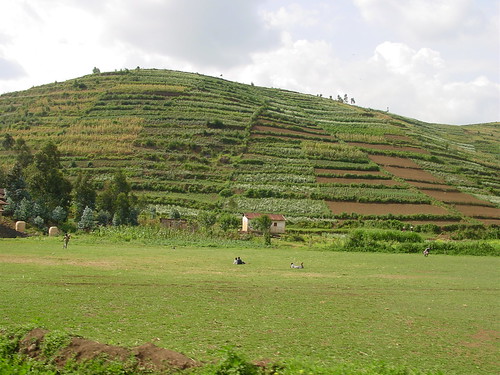
Farmer in Rulindo, Rwanda por jon gos.

Conference on
Ecological Agriculture: Mitigating Climate Change, Providing Food Security And Self-Reliance For

Rural Livelihoods In Africa

AU Headquarters, Addis Ababa, 26-28 November 2008

CONCLUSIONS and RECOMMENDATIONS

Introduction

The Conference on Ecological Agriculture: Mitigating Climate Change, Providing Food Security and Self-Reliance for Rural Livelihoods in Africa was held in Addis Ababa, Ethiopia on 26-28 November 2008. It was organised by the African Union (AU), UN Food and Agriculture Organization (FAO) and the Ministry of Agriculture and Rural Development of Ethiopia, in collaboration with the Institute for Sustainable Development (ISD), Ethiopia and the Third World Network (TWN).

Over 80 participants from 15 African countries - Benin, Burundi, Djibouti, Ethiopia, Kenya, Madagascar, Malawi, Mali, Nigeria, Rwanda, Sudan, Tanzania, Uganda, Zambia and Zimbabwe - attended the Conference. The participants included policy makers, agriculture experts representing governments, NGOs, farmers’ organisations, and universities, and international and regional bodies such as the AU, FAO, United Nations Conference on Trade and Development (UNCTAD), the UNEP-UNCTAD CBTF, International Food Policy Research Institute (IFPRI), International Assessment on Agricultural Knowledge, Science and Technology for Development (IAASTD) and World Food Programme (WFP).

The Conference was preceded by a field visit to the Axum area in Tigray Region in northern Ethiopia on 23-25 November 2008, to visit some of the communities of smallholder farmers that the Tigray Regional Bureau of Agriculture and Rural Development of Ethiopia and ISD have been working with on ecological agriculture since 1996. This was an appropriate experience to help focus attention on the aspects of the ecosystem that can easily respond to appropriate management, so as to stimulate discussion on experiences relevant for raising agricultural production, mitigating and adapting to climate change, and achieving the Millennium Development Goals (MDGs) in Africa.

The following are among the significant views, conclusions and recommendations expressed by participants during the Conference. Detailed recommendations from the Working Groups that discussed some of the issues in-depth are annexed to this report.

General

The Conference heard several presentations and discussed the challenges facing African agriculture, not least among them the global food crisis, climate change and the conflicts with inappropriate biofuels development. Moreover, land degradation and the consequential loss of soil fertility, which are exacerbated by pests and erratic rainfall associate with climate change, are major constraints to improving agricultural production in Africa. Consequently, many local communities in African countries are food insecure. Trade policies also have implications for African food security and rural development, which need to be addressed, to stop the worrying trend of food import dependency and increasing vulnerability to external shocks.

The steep rise in petroleum prices and the consequent increase in the cost of chemical fertilizers and pesticides are making it essential to improve soil fertility and agricultural productivity in Africa through effective management of the local resources that are found in the agricultural and surrounding ecosystems. Many diverse and creative ecological agriculture (including organic agriculture) practices based on rich traditional knowledge and agro-biodiversity are found in Africa. Where supported by appropriate research and policy, it has been shown that these have been effective in tackling poverty and improving livelihoods.

In addition, this opens up the opportunity for Africa’s smallholder farmers to become recognized as organic farmers producing for the growing global market fetching fair prices for their products. The global organic market growth has been about 15 per cent per year over the past decade. Internal markets for organic products are also developing rapidly, particularly where consumers are made aware of the improvements to health from eating organic food.

The Conference heard presentations on the potential of ecological agriculture, including organic agriculture, to meet food security needs in Africa. Concrete examples and lessons learnt were presented from several African countries on practices that have successfully increased productivity and yields of crops, provided ecologically sound pest, weed and disease control, resulted in better water availability, met household and local food security needs, increased household income and improved livelihood opportunities, especially for women who are the majority of Africa’s farmers. Other presentations focused on the potential of ecological agriculture to mitigate climate change, and to provide farmers with the means to adapt to climate change.

Participants discussed the need for appropriate national policies to support and build the capacity of farmers and agricultural professionals to implement and mainstream ecological/organic agriculture in Africa. Some of the major barriers and challenges to a transition to ecological agriculture were identified, and recommendations for charting the way forward in terms of policies, action plans and regional and international cooperation were made.

SRA_12052007_0308 por Simon Rawles.

Main conclusions

1. Ecological agriculture holds significant promise for increasing the productivity of Africa’s smallholder farmers, with consequent positive impacts on food security and food self-reliance. This is demonstrated by efforts such as the Tigray Project, now working with over 20 000 farming families in Ethiopia, where crop yields of major cereals and pulses have almost doubled using ecological agricultural practices such as composting, water and soil conservation activities, agroforestry and crop diversification. Although Tigray was previously known as one of the most degraded Regions of Ethiopia, yet over the 12 years of the introduction and expansion of ecological agriculture, the use of chemical fertilizers has steadily decreased while total grain production has steadily increased.

2. As most poor farmers, particularly in degraded lands and in market-marginalised areas, are not able to afford external inputs, the principles and approach of the Tigray Project, based on ecological agriculture, offer farmers and their families a real and affordable means to break out of poverty and achieve food security, provided that relevant government commitment, support and capacity-building is provided to them.

3. Ecological agriculture also provides many other benefits, including to the environment, such as addressing land degradation and reducing the use of polluting chemical inputs, with consequent beneficial health impacts. Ecological agriculture helps foster agrobiodiversity and other essential environmental services, which improves agroecosystem resilience, helping farmers to better face risks and uncertainties. The productivity and diversity of crops also increases incomes and improves rural livelihoods.

4. Ecological agriculture has high climate change mitigation potential; for example avoiding the use of synthetic fertilizers results in reduced greenhouse gas emissions, particularly nitrous oxide. Ecological agriculture practices such as using leguminous crops, crop residues, cover crops and agroforestry enhance soil fertility and lead to the stabilization of soil organic matter and in many cases to a heightened sequestration of carbon dioxide in the soils.

5. Ecological agriculture assists farmers in adapting to climate change by establishing conditions that increase agroecosystem resilience to stress. Increasing an agroecosystem’s adaptive capacity allows it to better withstand climate variability, including erratic rainfall and temperature variations and other unexpected events. Drawing on strong local community and farmers’ knowledge and agrobiodiversity, ecological agriculture improves soil quality by enhancing soil structure and its organic matter content, which in turn promotes efficient water use and retains soil moisture. Such conditions simultaneously enhance soil conservation and soil fertility, leading to increased crop yields.

6. The development and growing of biofuels should not compete with food and other crops, and thus require comprehensive impact assessments. Locally-controlled bioenergy production that makes use of agricultural waste and biomass, such as through biogas digesters, could provide sustainable energy generation.

7. Food and energy demand and climate change are inducing land use changes and land access issues, which threaten the viability of farming and rural livelihoods. The resilience of agroecosystems can only be built by empowering local communities, particularly women, to rehabilitate, adapt and improve their natural resource base for continued productivity, and by giving them the appropriate legal backing.

8. The implementation and scaling up of ecological agriculture face several constraints, including the lack of policy support at local, national, regional and international levels, resource and capacity constraints, and a lack of awareness and inadequate information, training and research on ecological agriculture at all levels.


READ THE REST AT: http://www.twnside.org.sg/title2/susagri/susagri063.htm

Farmer por Lars-Gunnar Svärd.

Etiquetas: ,

sábado, diciembre 20, 2008

Food for the future, Organic farming takes root in post-bomb Bali por BALIwww.com.

Is Ecological Agriculture Productive?

By Lim Li Ching, Researcher, Third World Network (November 2008)


A key question that is often asked about ecological agriculture, including organic agriculture, is whether it can be productive enough to meet the world’s food needs. While many agree that ecological agriculture is desirable from an environmental and social point of view, there remain fears that ecological and organic agriculture produce low yields.

This short paper will summarise some of the available evidence to demystify the productivity debate and demonstrate that ecological agriculture is indeed productive.

In general, yields from ecological agriculture can be broadly comparable to conventional yields in developed countries. In developing countries, ecological agriculture practices can greatly increase productivity, particularly if the existing system is low-input, which is the largely the case for Africa. This paper will focus mainly on evidence from developing countries.

Evidence from global modelling

A recent study examined a global dataset of 293 examples and estimated the average yield ratio (organic : non-organic) of different food categories for the developed and developing world (Badgley et al., 2007). For most of the food categories examined, they found that the average yield ratio was slightly less than 1.0 for studies in the developed world, but more than 1.0 for studies in developing countries.

On average, in developed countries, organic systems produce 92% of the yield produced by conventional agriculture. In developing countries, however, organic systems produce 80% more than conventional farms.

With the average yield ratios, the researchers then modeled the global food supply that could be grown organically on the current agricultural land base. They found that organic methods could hypothetically produce enough food on a global per capita basis to sustain the current human population, and potentially an even larger population, without putting more farmland into production.

Moreover, contrary to fears that there are insufficient quantities of organically acceptable fertilizers, the data suggest that leguminous cover crops could fix enough nitrogen to replace the amount of synthetic fertilizer currently in use.

This model suggests that organic agriculture could potentially provide enough food globally, but without the negative environmental impacts of conventional agriculture.

Agriculture por Piotrek_23.

Evidence from reviews of ecological agriculture projects

In a review of 286 projects in 57 countries, farmers were found to have increased agricultural productivity by an average of 79%, by adopting “resource-conserving” or ecological agriculture (Pretty et al., 2006).

A variety of resource conserving technologies and practices were used, including integrated pest management, integrated nutrient management, conservation tillage, agroforestry, water harvesting in dryland areas, and livestock and aquaculture integration into farming systems. These practices not only increased yields, but also reduced adverse effects on the environment and contributed to important environmental goods and services (e.g., climate change mitigation), as evidenced by increased water use efficiency and carbon sequestration, and reduced pesticide use.

The work built on earlier research, which assessed 208 sustainable agriculture projects. The earlier research found that for 89 projects for which there was reliable yield data, farmers had, by adopting sustainable agriculture practices, achieved substantial increases in per hectare food production - the yield increases were 50-100% for rain-fed crops, though considerably greater in a number of cases, and 5-10% for irrigated crops (Pretty and Hine, 2001).

Disaggregated data show:

  • Average food production per household rose by 1.7 tonnes per year (up by 73%) for 4.42 million small farmers growing cereals and roots on 3.6 million hectares.
  • Increase in food production was 17 tonnes per year (up 150%) for 146,000 farmers on 542,000 hectares cultivating roots (potato, sweet potato, cassava).
  • Total production rose by 150 tonnes per household (up by 46%) for the larger farms in Latin America (average size 90 hectares).

The database on agricultural sustainability (comprising the 286 projects) was reanalyzed to produce a summary of the impacts of organic and near-organic projects on agricultural productivity in Africa (Hine and Pretty, 2008). The average crop yield increase was even higher for these projects than the global average (79%): 116% increase for all African projects and 128% increase for the projects in East Africa.

For Kenyan projects, the increase in yield was 179%, for Tanzanian projects 67% and for Ugandan projects 54%. Moreover, all case studies that focused on food production in this research where data have been reported, showed increases in per hectare productivity of food crops, which challenges the popular myth that organic agriculture cannot increase agricultural productivity.

READ THE REST AT: http://www.twnside.org.sg/title2/susagri/susagri064.htm

Agriculture por amalthya.

Etiquetas: , ,

viernes, diciembre 05, 2008


Ecological agriculture a solution to food security, climate challenges in China

http://www.twnside.org.sg/title2/susagri/susagri059.htm

A new report by Greenpeace, ‘Climate Change and Food Security in China’, warns that China will lose its self-sufficiency in food production as early as 2030 because of climate change. Climate change is affecting agricultural production through changes in temperature, water availability, soil condition, extreme weathers, crop diseases and pest outbreaks, with serious consequences for food security. This disaster can only be averted if the government takes immediate action to cut its greenhouse gas emissions and adopt policies encouraging more climate-friendly ecological agriculture.

The report was authored by China’s top climate experts and agronomists commissioned by Greenpeace. Led by the lead author, Professor Lin Erda from the China Academy of Agricultural Sciences, who is also China’s top scientist for the Intergovernmental Panel on Climate Change, the report points out that ecological agriculture, which works with nature rather than against it, can drastically reduce greenhouse gas emissions. Moreover, compared with today’s destructive chemical and fossil energy intensive agriculture, ecological agriculture better adapts to and survives the effects of climate change.

The Executive Summary of the report is reproduced below. More information is available at http://www.greenpeace.org/china/en/news/climate-change-food-security and the full report (in Chinese) is available at http://act.greenpeace.org.cn/event/olympic/climate-agriculture.pdf

With best wishes,
Lim Li Ching
Third World Network
131 Jalan Macalister
10400 Penang
Malaysia
Email: twnet@po.jaring.my
Websites: www.twnside.org.sg, www.biosafety-info.net

http://www.greenpeace.org/raw/content/china/en/press/reports/climate-food-report-summary.pdf

Executive Summary

Climate change has become one of the greatest challenges faced by the human race. It affects almost all aspects of our society, including food supply. Agriculture has long been the foundation of China’s social and economic development. With a large agricultural population and a huge pressure placed on resources, as well as a large production area that features complex topography and distinct patterns of climate, China’s farming industry is very vulnerable to climate change. Against this background, ecological agriculture therefore has its obvious advantages. It is of great importance for the sustainable development of agricultural and national security to determine the impact of climate change on agriculture and food security in the country, and to devise and implement appropriate measures to avoid these problems.

Climate Change threatens China’s Food Security

Climate change affects agricultural production through changes in temperature, water resources, soil condition, as well as causing extreme weather events, disease and pest outbreaks. Its influence varies between different regions and seasons. Generally speaking, its impact on China’s agriculture has both a positive and a negative aspect, with the latter being dominant. Climate change will lead to increasing fluctuations in the country’s food production, and threaten the country’s food security.

Rising temperature is the most prominent feature of climate change. It directly affects the growth of crops from a physiological perspective, and therefore affects food production capability. It is estimated that because of climate change, over the next 20 to 50 years, China’s rice, corn and wheat production will drop significantly, while the overall agricultural productivity will also be hit hard. If no effective measures are taken, a national average temperature increase of 2.5-3 will lead to decreases in the yield of these three major crops. The primary result of a new study shows that, with the combined effects of the increase in temperature and the decrease in agricultural water resources and arable land, China’s overall food production will fall by 14%-23% by 2050 from 2000 (when the total food production was 500 million tons).

In northern China, rising temperatures will worsen water shortages, especially in arid and semi-arid regions where desertification is accelerating. On the other hand, strong precipitations in the middle and lower reaches of the Yangtze River are happening at an increased rate and will cause more catastrophic flooding. These droughts and precipitations have a direct impact on agricultural production. Crop yields may be reduced, with some being completely wiped out.

China’s agriculture is relatively vulnerable to climatic disasters. Currently, as much as 50 million hectares of crops in China are threatened by various climatic disasters every year. With increased frequency and intensity of extreme weather events, including heat waves, rainstorms, droughts, floods and typhoons, China may suffer even larger losses in agricultural production in the future.

Climate change will also lead to increased activity of soil microorganisms. That will cause a loss of organic matter and nitrogen in the soil, accelerated soil degradation, erosion and alkalinizing, as well as weakening in the capability of the agricultural ecosystem to resist natural disasters.

Environmental changes due to climate change can aggravate the spread of plant diseases, pests and weed growth. Plant diseases and pests are currently causing a 20%-25% average annual loss to China’s agriculture output value. Rising winter temperatures have helped many pests and pathogens to survive more easily, increasing the number of generations in a single year and therefore the probability of harming crops.

Climate change also poses a challenge to China’s agricultural production pattern and planting system established over hundreds of years because of the changes it makes to water and temperature conditions, especially in low-latitude areas. However, these changes have also made it possible to introduce the multiple-crop planting systems in mid and high latitude areas as well as in plateau areas, such as rice planting in Heilongjiang and the northward expansion of winter wheat planting operations.

We have seen an increasing use of pesticides and chemical fertilizers in an effort to adapt to the negative climate impact. In addition, climate change can also increase irrigation costs and costs for soil improvement and conservation, thus increasing total agricultural investment.

The increasing demand for food and bio-fuel and the decrease in both crop yield and storage around the globe due to natural disasters, has caused global food prices to shoot up. Climate change may further deteriorate the situation. For China, this means serious consequences for food production. Taking into consideration increased demands for food in the future, climate change will affect the country’s ability to balance food supply and demand. Under a high greenhouse gas emission scenario, basic food supplies will become insufficient around 2030. Under a mid to low emission scenario, this problem may not occur but it may not be possible to meet the food requirements for sustainable social development.

Therefore, it becomes especially important to devise suitable policies to adapt to these scenarios, which include better irrigation, more appropriately selected seeding times, and alternating among different crops. Meanwhile, more emphasis should be placed on ecological agriculture, which is a way to reduce greenhouse gas emissions from agriculture while ensuring production yield.

The Advantages of Ecological Agriculture

This report has pointed out that compared to the current production mode which depends heavily on agro-chemical input, the more comprehensive ecological approach to agriculture can effectively reduce greenhouse gas emissions. Also, due to its characteristics, ecological agriculture can more easily adapt to climate change, and its associated problems such as rising temperatures, water shortages, extreme weather, soil degradation and increasing frequency of disease and pest outbreaks. Eco-agriculture can help to ensure the country’s food production and food security.

The main features of ecological agriculture include maintaining soil fertility through organic measures and reducing dependence on synthesized materials such as fertilizers, pesticides and other agro-chemicals. It works with nature by following the way nature functions, protecting and rationally using natural resources, promoting animal breeding methods that better cater to the animals’ needs, adapting to the local environment and providing highly diversified operation modes.

Ecological agriculture can reduce greenhouse gas emissions and can increase carbon sequestration.

On greenhouse gas emissions: According to the report, the rice-fish system is shown to be able to improve the oxidation-reduction condition of soil and significantly decrease methane emissions. The rice-duck system is also capable of improving the microclimate in the field and reducing methane emissions. The construction of biogas generators in rural areas can control methane emissions during the processing of organic fertiliser. The utilising of biogas instead of coal is expected to cut carbon dioxide emissions by 3,077,700-45,928,000 tons and sulphur dioxide emissions by 130,000-988, 700 tons annually between 2010 and 2050.

The use of organic fertiliser can also reduce dependence on nitrogenous fertilisers. Nitrous oxide emissions can also be reduced.

On carbon sequestration: The report points out that conservation farming methods in ecological agriculture, including the restoration of farmland to forest and grassland, no-till or less-till farming and returning straw and stalk to the field, can greatly increase the carbon storage capacity of China’ssoil and improve the overall ecological environment, therefore mitigating the impact of climate change.

As a comprehensive and systematic agricultural production method that suits local circumstances, ecological agriculture can better adapt to climate change. The report has illustrated the high adaptability of ecological agriculture to climate change examples including the northward relocation of winter wheat planting in Liaoning and conservation farming operations in Inner Mongolia.

Ecological agriculture can also control the threat from disease, pests and weeds, and reduce the use of agro-chemicals. By increasing biodiversity in the field, plantdisease can be effectively controlled through the natural competition among different species, therefore significantly reducing the need for agro-chemicals and resulting in less pollution. Experiments carried out in Yunnan have shown that by planting only the disease vulnerable glutinous rice, an average incidence of 20% for rice blast is observed. After intercropping glutinous rice with other rice varieties, however, the incidence rate was reduced to only 1%. Intercropping of glutinous rice and other rice varieties reduces the production loss caused by rice blast and rice falling over and increases production yield by 6.5%-8%.

By integrating physical, agricultural and biological measures, disease, pests and weeds that affect crops can be better controlled. According to the report, measures including planting lettuce with cucumbers and the rice-duck, rice-fish systems can effectively control disease, pests and weeds, while the income of farmers is also boosted. These methods also help to decrease human intervention to the natural ecological system in the forms of herbicides and pesticides. Studies show that the rice-duck system is 65.5% effective in controlling the rice planthopper pest. A four-year consecutive adoption of rice-duck mode will control 99% of the rice field weeds, cut the infection rate of rice roots to rice sheath blight by 56.0% and the infection rate of rice stripe by 57.7%. Climate change may cause increased incidence of disease, pests and weeds, while the eco-agricultural mode presents an effective means to solve the country’s agricultural pollution and food security problems.

The report presents two cases in Liaoning and Inner Mongolia, in which the effectiveness of ecological agriculture in adapting to climate change is clearly demonstrated. The northward relocation of winter wheat planting fully utilises land and climate resources, improves the alternating planting mode, and increases the cropping index. It is a good example showing the development of ecological agriculture and its adaptability to climate change. Through measures including no-till, less-till and surface covering, conservation farming increases the permeation of natural precipitation and reduces ground flow and evaporation, therefore improving the operation’s endurance against drought and its water conservation, thus mitigating the negative effects of climate change. Conservation farming can adjust to changes in temperature and moisture in the field, reduce the respiration of crops while increasing the retention of carbon. It can also prevent erosion by wind or water, while providing protection from sandstorms. It improves the quality of life and increases the income of farmers.

These methods have shown good potential in increasing the region’s adaptability to climate change. Also, an integrated agricultural system called farmland shelterbelt network has been developed based on these methods. It combines farmland with forest, and can serve to stop sandstorms and drought, adjust local climate, improve agricultural production conditions, ensure a high and stable agricultural yield, while also increasing the region’s adaptability to climate change and mitigate its impact.


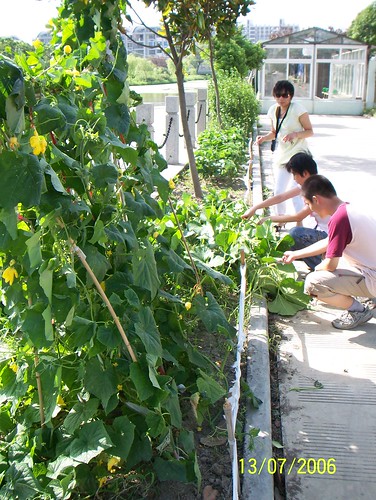
Shanghai Organic Farm by slgr.

THIRD WORLD NETWORK INFORMATION SERVICE ON SUSTAINABLE AGRICULTURE

Dear friends and colleagues,

Re: Ecological agriculture a solution to food security, climate challenges in China

A new report by Greenpeace, ‘Climate Change and Food Security in China’, warns that China will lose its self-sufficiency in food production as early as 2030 because of climate change. Climate change is affecting agricultural production through changes in temperature, water availability, soil condition, extreme weathers, crop diseases and pest outbreaks, with serious consequences for food security. This disaster can only be averted if the government takes immediate action to cut its greenhouse gas emissions and adopt policies encouraging more climate-friendly ecological agriculture.

The report was authored by China’s top climate experts and agronomists commissioned by Greenpeace. Led by the lead author, Professor Lin Erda from the China Academy of Agricultural Sciences, who is also China’s top scientist for the Intergovernmental Panel on Climate Change, the report points out that ecological agriculture, which works with nature rather than against it, can drastically reduce greenhouse gas emissions. Moreover, compared with today’s destructive chemical and fossil energy intensive agriculture, ecological agriculture better adapts to and survives the effects of climate change.

The Executive Summary of the report is reproduced below. More information is available at http://www.greenpeace.org/china/en/news/climate-change-food-security and the full report (in Chinese) is available at http://act.greenpeace.org.cn/event/olympic/climate-agriculture.pdf

With best wishes,
Lim Li Ching
Third World Network
131 Jalan Macalister
10400 Penang
Malaysia
Email: twnet@po.jaring.my
Websites: www.twnside.org.sg, www.biosafety-info.net
Executive Summary

Climate change has become one of the greatest challenges faced by the human race. It affects almost all aspects of our society, including food supply. Agriculture has long been the foundation of China’s social and economic development. With a large agricultural population and a huge pressure placed on resources, as well as a large production area that features complex topography and distinct patterns of climate, China’s farming industry is very vulnerable to climate change. Against this background, ecological agriculture therefore has its obvious advantages. It is of great importance for the sustainable development of agricultural and national security to determine the impact of climate change on agriculture and food security in the country, and to devise and implement appropriate measures to avoid these problems.

100_1168 by kafka4prez.


Etiquetas: , , , ,