viernes, noviembre 04, 2011

ESPERANZA, NO BARULLO: EL FUTURO DE LA AGRICULTURA

Prof. Jack A. Heinemann
Universidad de Canterbury, Nueva Zelanda
UNA síntesis de la mejor ciencia aplicada a la agricultura fue el ambicioso objetivo de un proyecto iniciado en 2003 titulado Evaluación Internacional del Papel del Conocimiento, la Ciencia y la Tecnología en el Desarrollo Agrícola, abreviado como IAASTD. Este proyecto es el resultado conjunto de las más importantes instituciones en agricultura y desarrollo iniciado por el Banco Mundial y conducido en colaboración con la Organización de las Naciones Unidas para la Agricultura y la Alimentación (FAO), el Programa de las Naciones Unidas para el Medio Ambiente (PNUMA), el Programa de las Naciones Unidas para el Desarrollo (PNUD), la Organización de las Naciones Unidas para la Educación, la Ciencia y la Cultura (UNESCO), la Organización Mundial de la Salud (OMS) y el Fondo Mundial para el Medio Ambiente (GEF) (IAASTD, 2008).
La Evaluación completa está compuesta por un reporte global multi-capitulado y cinco reportes sub-globales multi-capitulados con dos documentos generales, el Resumen de la evaluación mundial preparado para los responsables de la toma de decisiones y el Informe de Síntesis. El proyecto completo fue supervisado por una oficina gobernada por las diferentes partes involucradas compuesta por representantes de gobiernos, agencias financiadoras, el sector privado y las organizaciones no gubernamentales (ONG). Esta es la evaluación global más importante y más diversa de la agricultura que jamás se haya hecho (Rivera-Ferre, 2008); con la esperanza, de que no haya sido completada demasiado tarde. Ahora más que nunca la agricultura se encuentra bajo una importante revisión, dado que es cada vez más evidente que los beneficios e impactos de ella no son compartidos equitativamente entre los ricos y los pobres. La Evaluación se propuso la ambiciosa tarea de responder a la pregunta central de cómo la agricultura, en el 2050, podría contribuir a una humanidad sana y bien alimentada a pesar de los desafíos de extensa degradación ambiental, de crecimiento de la población y del cambio climático, y hacerlo de tal manera que el potencial de producir alimentos no se pierda por la forma en la que hacemos agricultura. Una de las respuestas fue simple. Ese objetivo fracasará debido a la manera en la que hacemos agricultura actualmente. El cómo deberíamos hacer agricultura no fue una pregunta simple por responder.
Nadie puede saber de manera segura si habrá una tecnología capaz de alimentar por siempre al mundo. Al menos por el momento, debemos estar tan atentos a limitar nuestros apetitos como lo somos con nuestra capacidad de producir más alimentos, combustibles y materiales. La Evaluación tuvo palabras duras para las sociedades que han consumido de manera desproporcionada. Y palabras todavía más fuertes por sus intentos de mantener su consumo usando subsidios y mecanismos comerciales de distorsión de mercados y marcos asimétricos de DPI. Lo que está claro es que la biotecnología moderna – al menos en la forma en la que la hemos desarrollado e implementado- no puede alimentar al mundo.
Lo que la Evaluación encontró con respecto a los OGM fue que:
1. No existe evidencia de un aumento general, sostenido o fiable, del rendimiento de los cultivos GM en los 12 años desde que fueron liberados comercialmente por primera vez.
2. No existe evidencia de una reducción sostenida de los gastos por parte de los agricultores que adoptan los cultivos GM, ni tampoco un aumento sostenido y fiable de las ganancias.
3. No existe evidencia de una reducción sostenible en la utilización de plaguicidas. En realidad, existe un aumento drástico en el uso de algunos herbicidas, y la manera particular en la que son usados en los cultivos GM está subestimando las opciones de control de malezas de los agricultores convencionales.
4. La gran mayoría de los cultivos GM no fueron diseñados para aumentar los rendimientos, sino que fueron diseñados para vender agroquímicos particulares o pesticidas biológicos.
5. No existe evidencia de que la ingeniería genética ha sido efectiva en producir los cultivos y los animales necesitados por la mayoría de los granjeros del mundo, o a precios que puedan pagar.
6. La apropiación a gran escala del germoplasma vegetal como propiedad intelectual de algunas mega-corporaciones está consolidando la industria semillera, así como amenaza la agrobiodiversidad y la diversidad vegetales. Existen todas las razonas para esperar la misma contradicción con el germoplasma animal si los animales GM algún día se convierten en productos comerciales viables.
7. Los nuevos OGM deben ser objeto de evaluaciones uniformes de seguridad y de impactos ecológicos que sean de la mejor calidad posible, asimismo como de mayor transparencia e independencia con respecto a lo que ha sido realizado con los OGM existentes.
La adopción de los cultivos GM es consistente con un número de “excesivas simplificaciones”, o de mono-culturización, tendencias propias de la agricultura en las últimas décadas. La más evidente ha sido los grandes monocultivos que caracterizan los sistemas de cultivo en países como los Estados Unidos, Canadá y Argentina, los que también disponen de algunas de las áreas más grandes dedicadas a la producción de cultivos GM. Los monocultivos requieren grandes cantidades de insumos externos para intentar restaurar los suelos, y grandes cantidades de pesticidas debido a las poblaciones importantes de plagas específicas que las invaden. La simplificación excesiva del paisaje agrícola debido a los monocultivos de plantas y animales subestima la resiliencia del agroecosistema y, de esa manera, la sostenibilidad. La comercialización de los OGM no muestra signos de salirse del modelo de monocultivo. El intento de simplificación del manejo de plagas con la ingeniería genética ha provocado un aumento en las aplicaciones de un pequeño número de agroquímicos. Esta práctica aumenta la frecuencia de la resistencia de estos químicos y reduce la diversidad de los productos alternativos, consecuentemente, amenaza la sostenibilidad de los rendimientos tanto en los agroecosistemas con OGM, o sin ellos. Finalmente, el modelo industrial agrícola está correlacionado con la simplificación excesiva de las dietas (Chávez y Muñoz, 2002; Hawkes, 2006; Scialabba; 2007; Tee; 2002). En muchos países, la malnutrición está marcada por un gran número de personas por debajo de un peso normal, o bien, con sobrepeso, muchas veces dentro de los mismos hogares. Las fuentes de grasas, proteínas y carbohidratos provienen de un número reducido de tipos de plantas y animales, dejando a las personas vulnerables a las enfermedades debido a una malnutrición de micronutrientes.
Lo que la Evaluación encontró con respecto a otras soluciones fue que:
1. Existe evidencia sustancial de que la inversión en métodos agroecológicos puede contribuir a alimentar al mundo de una forma sostenible.
2. Debemos volver a invertir cuánto antes en tecnologías que ya hayan sido probadas, como lo son el mejoramiento convencional y la selección asistida por marcadores moleculares.
3. Los marcos de DPI deben ser revisados urgentemente. Si el material biológico continúa siendo protegido por patentes y similares instrumentos, entonces deberán de cambiar tanto la manera en la que la propiedad intelectual es descrita, así como los incentivos en las instituciones públicas para desarrollar propiedad intelectual.
4. La vasta agricultura de los países exportadores deben adoptar inmediatamente políticas de comercio y de ayuda que promuevan la seguridad y soberanía alimentaria fuera de sus propias fronteras.
Lo que caracteriza el presente es que al mundo le falta voluntad y no medios para alimentar a todos; lo que caracteriza el futuro es que tal vez también nos falten los medios por lo tanto debemos prepararnos ahora para ese día.
El propósito de esta presentación no es enfrentar la biotecnología moderna a otras biotecnologías, sino trazar la ruta del desarrollo de una biotecnología correcta para poder lograr los objetivos mutuos de tener alimentos abundantemente nutricionales y sabrosos, adecuados y apreciados localmente, y conseguirlo sin perder la capacidad de continuar alimentando a las futuras generaciones. Es también esencial que el camino hacia este futuro de la alimentación refuerce también a las comunidades locales y construya además economías locales. La Evaluación confía que el camino para alimentar al mundo de una forma sostenible, no sólo logrará una agricultura más resiliente sino que en el proceso, restaurará nuestro ecosistema global y detendrá la pérdida de nuestras diversas agriculturas humanas.
Es bien recibido el hecho de que la biotecnología moderna, incluyendo a los transgénicos, puede contribuir y ser compatible con las grandes soluciones sociales y ecológicas. Pero llegó el momento de que los OGM hagan un aporte real o bien se silencien.
Alimentar al mundo y al mismo tiempo construir agroecosistemas y sociedades sostenibles necesitará más que del conocimiento agroecológico actual (Tilman et al., 2002). Los gobiernos, los filántropos y la industria deben invertir en investigación y en instituciones que construyan conocimiento y mejoren metodologías, así como ayudar a adecuar implementaciones. Este conocimiento debe ser realizado en colaboración con los agricultores y distribuido a través de los servicios de extensión, de las organizaciones no gubernamentales y del sector privado.
¿Puede el mundo seguir una agricultura agroecológica que además sea beneficiosa? La probabilidad es alta pero no existe duda alguna de que habrá que contar con nuevos modelos económicos, ya que para lograr los objetivos discutidos anteriormente se necesita más que pequeños ajustes tecnológicos y de tarifas. Necesitamos ser capaces de dar cuentas de los verdaderos costos del uso de recursos no renovables, como en el caso de los combustibles fósiles, asimismo, el valor de los “suelos marginales” y agua como servicios de los ecosistemas debe ser identificado.
La contribución de los conservacionistas in situ, especialmente agricultores, debe ser reconocida. Finalmente, debemos cambiar la pregunta de “¿Cuánto se puede obtener a partir de los cultivos en estas tierras, o de los animales pastando en este prado? a ¿Cuánto costará no tener esta tierra, estos cultivos, estos animales o estos agricultores?”.
Las biotecnologías adecuadas son sofisticadas y efectivas en lo que hacen. “Una idea errónea muy frecuente es que la agricultura orgánica significa un retroceso hacia un modo primitivo de hacer agricultura. Si bien es cierto que la agricultura orgánica se construye a partir del conocimiento y de las prácticas tradicionales, lo que ofrece es un sistema agrícola moderno y ecológicamente intensivo que puede desempeñase con éxito sin la necesidad de ningún fertilizante o plaguicida sintético” (Scialabba, 2007, p. 217).
Un regreso hacia los sistemas de bajo rendimiento y pocos insumos que caracterizan la mayoría de África no es la solución, pero las estrategias modernas agroecológicas no son de bajo rendimiento, sin embargo, requieren de pocos insumos. La reducción de insumos en la mayoría de los agroecosistemas proveerá de la flexibilidad necesaria para aplicar los insumos externos en otros agroecosistemas, sin perder la sostenibilidad global. La correcta biotecnología está disponible y puede ser implementada ahora mismo, con la condición de que los agricultores pobres y de subsistencia reciban acceso a instituciones que construyen el conocimiento local y esparcen la innovación, y no se les impida desarrollar sus propios mercados. La receta para el éxito se encuentra en la Evaluación.
Referencias
Chávez, A. and Muñoz, M. 2002. Food security in Latin America. Food Nutr. Bull. 23, 349-350.
Hawkes, C. 2006. Uneven dietary development: linking the policies and processes of globalization with the nutrition transition, obesity and diet-related chronic diseases. Global. Health 2:4, p.18. http://www.globalizationandhealth.com/content/2/1/4
Heinemann, J. A. 2009. Hope not Hype. The future of agriculture guided by the International Assessment of Agricultural Knowledge, Science and Technology for Development (Penang, Third World Network). http://www.twnside.org.sg/title2/books/Hope.not.Hype.htm
IAASTD. History of the IAASTD. http://www.agassessment.org/ index.cfm?Page=IAASTD_
History&ItemID=159
Rivera-Ferre, M. G. 2008. The future of agriculture. EMBO Rep. 9, 1061-1066. http://www.nature.com/embor/journal/v9/n11/full/embor2008196.html
Scialabba, N. E.-H. 2007. Organic agriculture and food security in Africa. In Africa Can Feed Itself, A. Nærstad (ed.) (Oslo, AiT AS e-dit), pp. 214-228. http://www.agropub.no/asset/2636/1/2636_1.pdf
Tee, E.-S. 2002. Priority nutritional concerns in Asia. Food Nutr. Bul. 23, 345-348.
http://www.nutriscene.org.my/journals/Tee 2002 - Nutrition concerns in Asia.pdf
Tilman, D., Cassman, K. G., Matson, P. A., Naylor, R. and Polasky, S. 2002. Agricultural sustainability and intensive production practices. Nature 418, 671-677. http://www.nature.com/nature/journal/v418/n6898/full/nature01014.html

Etiquetas: , ,

viernes, abril 23, 2010

Genetically modified crops are not the answer

By Dr. Hans Herren and Dr. Marcia Ishii-Eiteman - 04/22/10

The Senate is considering a bill that would overhaul the way Americans deliver foreign aid. With more people going hungry than ever before, the bill’s attention to global hunger could not come at a better time. The Global Food Security Act would streamline the aid process and focus on long-term agricultural development. But something has gone awry inside the bill. A closer look reveals that its otherwise commendable focus may be seriously undermined by a new clause lobbied for by one of America’s largest seed and chemical companies.

This bill includes a mandate that we spend foreign aid dollars developing genetically modified (GM) crops. No other kind of agricultural technology is mentioned. Unsurprisingly, Monsanto has lobbied more frequently on this bill than any other entity.

The trouble with a mandate for GM crops is this: it won’t work. A recent report by the Union of Concerned Scientists demonstrates that GM crops don’t increase crop yields. USAID has already spent millions of taxpayer dollars developing GM crops over the past two decades, without a single success story to show for it, and plenty of failures. A recent, highly touted partnership between USAID and Monsanto to develop a virus-resistant sweet potato in Kenya failed to deliver anything useful for farmers. After 14 years and $6 million, local varieties vastly outperformed their genetically modified cousins in field trials. Another 10-year USAID project for GM eggplant in India recently met with such outcry — from scientists and Indian farmers alike — that the government put a moratorium on its release. Growing insect resistance to genetically modified cotton and corn shows that the technology is already failing farmers and will continue to fail over the long term. Sadly, today’s GM obsession shows every indication of duplicating the first ill-fated “Green Revolution” that trapped millions of farmers on a pesticide treadmill while devastating the functioning of the ecosystems on which we depend.

Fortunately, we have alternatives. Improved farming practices, conventional breeding and agro-ecological techniques deliver far better results, without the risks and high input costs that accompany GM seeds. A 2008 study by the United Nations Conference on Trade and Development found that “organic agriculture can be more conducive to food security in Africa than most conventional production systems, and … is more likely to be sustainable in the long term.” Even the chief agricultural scientist of Punjab — a home of the Green Revolution —argues that Indian farmers should farm organically.

Meanwhile, the World Bank and UN agencies have completed the most comprehensive analysis of world agriculture to date: the International Assessment of Agricultural Knowledge, Science and Technology for Development (IAASTD). This four-year study — by more than 400 scientists and development experts from 80 countries and approved by 58 governments — found that reliance on resource-extractive industrial agriculture is risky and unsustainable, particularly in the face of worsening climate, energy and water crises. It noted that expensive, quick fixes — including GM crops —fail to address the complex challenges that farmers face, and often exacerbate already bad conditions. Instead, the IAASTD highlighted the need to build more resilience into our food systems by increasing investments in agro-ecological sciences, small-scale biodiverse farming methods and farmer-led participatory breeding programs.

The success of ecological agriculture rests not only in its immediate outcomes of better and more reliable performance, but also in its ability to address the underlying cause of hunger: poverty. Congress could learn from the thousands of Kenyan farmers who have obtained bumper crops and higher household income through the ecological pest management system known as “push-pull.” By planting a variety of grasses in and around their cornfields, these farmers have suppressed insect pest and weed populations, reduced input costs, doubled or tripled their corn harvest, increased forage for livestock, supplied their families and local markets, paid off debts and set aside money to pay for school, medicines and other needs. No amount of gene-splicing (or lobbying or advertising) by Monsanto has ever accomplished this much for an African family.

Ultimately, tackling global hunger and poverty requires more than a focus on production technologies. The bigger, more fundamental challenge today is about restoring fairness and democratic control over our food systems. This requires strengthening local food economies, increasing small-scale farmers’ control of seed and land, and —importantly — breaking up corporate monopolies in agriculture and establishing fairer regional and global trade arrangements.

If Congress is serious about addressing world hunger, they should take their lead from the most comprehensive science and from farmers on the ground — not from Monsanto lobbyists.

Herren is co-chairman of the International Assessment of Agricultural Knowledge, Science and Technology for Development (IAASTD) and president of the Millennium Institute and BioVision. Ishii-Eiteman is a lead author of the UN-sponsored IAASTD Global Report. She is senior scientist and director of the Sustainable Food Systems Program at Pesticide Action Network.

http://thehill.com/opinion/op-ed/93907-genetically-modified-crops-are-not-the-answer

Etiquetas: ,

lunes, abril 20, 2009

G8 Urged to Reject Another 'Green Revolution' U.S. working group on the food crisis urges G8 to reject failed green revolution policies for Africa

"'Business as Usual' Will Not Solve Global Hunger Crisis"

FOR IMMEDIATE RELEASE
April 16, 2009

WASHINGTON - April 16 - The U.S. Working Group on the Food Crisis, a group representing anti-hunger, family farm, community food security, environmental, international aid, labor, food justice, consumers and other food system actors, urges the G8 at the upcoming Agricultural Ministerial in Treviso, Italy to reject the failed policies of the Green Revolution. A recent landmark report backed by the UN and World Bank argues for agroecological and sustainable agriculture, rather than reliance on chemical-intensive practices and genetic engineering.

The U.S. Working Group is deeply disappointed by the U.S. Senate Foreign Relations Committee’s hasty passage of the Global Food Security Act (S. 384) on March 31. This bill would mark a significant shift in U.S. policy by specifically mandating foreign agriculture research for genetic engineering. Previously, we had criticized the Committee’s March 24 hearing on “Alleviating Global Hunger” that relied on testimonies from “Green Revolution” advocates for the industrial agriculture system. We urge the G8 summit to resist pressure from the biotech industry and embrace genuine solutions to the food crisis.

The U.S. Working Group on the Food Crisis’s vision for reforming agriculture policy to help end the global food crisis calls on governments to:

* Re-regulate commodity futures markets to end excessive speculation
* Halt expansion of industrial agrofuels in developing countries
* Stabilize commodity prices through international and domestic food reserves
* Establish fairer regional and global trade arrangements
* Direct farm policy, research, education and investment toward agroecological farming practices.

The United States should reject the approach of the Global Food Security Act, sponsored by Senators Richard Lugar (R-IN) and Bob Casey (D-PA), and instead bring our agricultural research and foreign aid strategy in line with the findings of the acclaimed International Assessment of Agricultural Knowledge, Science and Technology for Development (IAASTD), backed by United Nations agencies, the World Bank and over 400 contributing scientists from 80 countries. The IAASTD found that the most promising solutions to the world’s food crisis include investing in agroecological research, extension and farming.

Marcia Ishii-Eiteman, Senior Scientist at Pesticide Action Network and a Lead Author of the IAASTD report said, “Today’s global food crisis demands immediate action. But the Lugar-Casey Global Hunger Bill takes us in exactly the wrong direction. As numerous scientific reports from the UN have confirmed, African productivity can be most effectively increased through investment in organic and agroecological farming.” Ishii-Eiteman further cautioned the G8 not to focus simply on production: “The bigger, more fundamental challenge today is about restoring fairness and democratic control over our food systems. It is about increasing the profitability, well-being and resilience of small-scale and family farmers in the face of massive environmental and global economic challenges.”

Food First/Institute for Food and Development Policy has released a policy brief on “Why the Lugar-Casey Global Food Security Act Will Fail to Curb Hunger”http://www.foodfirst.org/en/node/2412
Eric Holt-Gimenez, Executive Director of Food First, said, “The Global Food Security Act, while commendable for its renewed focus on investing in agricultural development in Africa, mandates funding for genetically modified (GM) crop research. Past public-private partnerships on GM crops for Africa have proven to be colossal failures. The failed GM sweet potato project between Monsanto, USAID and a Kenyan research institute is a good example of 14 years’ worth of wasted money and effort. The G8 Conference should focus on solutions that actually work.”

Anti-hunger groups also criticized the Global Food Security Act’s approach and warned about the effects of promoting biotechnology on the poor. Bill Ayres, Executive Director of World Hunger Year, said, “The recent Global Food Security Act to improve the U.S. response to the world food crisis starts from a flawed premise. Indeed, the world – and the U.S. in particular – must refocus antihunger efforts to support aid and agricultural research for small farmers throughout the world. But the emphasis on genetically modified crops is misplaced. We saw Germany this week ban genetically engineered maize based on health and environmental grounds. GM maize has also been banned in France and Greece. We should focus on helping African farmers maintain control over their land and seeds, earn a living wage, and enhance – not degrade – the quality of their land and water.”

Faith groups also recommended a new approach to eliminating global hunger and warned that the G8 should not emphasize biotechnology. Andrew Kang Bartlett of the Presbyterian Church (U.S.A.) said, “While the intentions behind the Global Food Security Act may be laudable, the question is whether poorer farmers left behind by the last Green Revolution will again be swept aside by a top-down approach that benefits mostly transnational corporations.” Dave Kane, of Maryknoll Office for Global Concerns, a Catholic missionary organization with priests, brothers, sisters and lay people working in Asia, Africa and Latin America, added, “We have found GM technology to be disastrous for small farmers and rural communities. Our missioners in Latin America and Asia have seen farmers get deeper and deeper into debt as they struggle to pay for all the seeds, fertilizers and herbicides that GMO technologies require. The result: farmers lose their land and with it, the ability to feed themselves and their families.”

The National Family Farm Coalition, a North American member of La Via Campesina, the international peasants movement, will be pressing the G8 to reconsider policies that advocate for food sovereignty. Ben Burkett, a Mississippi farmer and president of NFFC said, “Farmers both here and in Africa know that the current industrial agriculture model—and the push to fast-track trade liberalization—has failed to alleviate global hunger and denied family farmers a sustainable livelihood. A recently released report this month by Union of Concerned Scientists titled “Failure to Yield: Evaluating the Performance of Genetically Engineered Crops,” showed that despite 20 years of research and 13 years of commercialization, genetic engineering has failed to significantly increase U.S. crop yields while only driving up costs for farmers. In comparison, traditional breeding continues to deliver better results. The G8 needs to move away from Green Revolution monoculture practices and instead implement the IAASTD’s most promising options: support ecologically sound practices, more equitable trade rules and local food distribution systems to empower family farmers.”

###

The US Working Group on the Food Crisis is an ad hoc group of organizations from around the US, representing various sectors of the food system, including anti-hunger, family farm, community food security, environmental, international aid, labor, food justice, consumer, and other groups. We do not view the food crisis as an unexpected, sudden emergency of the last year, but as the inevitable consequence of the development of a long list of misguided agricultural and food policies over the last 30+ years.

CONTACT: US Working Group on the Food Crisis
http://www.usfoodcrisisgroup.org/


SOURCE: http://www.foodfirst.org/en/node/2419

Etiquetas: , , , , , ,

viernes, enero 30, 2009


To be published in February 2009 by Third World Network


site and contents copyright Jack A. Heinemann 2009

Can we feed the world in the year 2050? If we can, will it be at the price of more distant futures of food insecurity? 21st Century Earth is still trying to find a way to feed its people. Despite global food surpluses, we have malnutrition, hunger and starvation. We also have mass obesity in the same societies. Both of these phenomena are a symptom of the same central problem: a dominating single agriculture coming from industrialized countries responding to perverse and artificial market signals. It neither produces sustainable surpluses of balanced and tasty diets nor does it use food production to increase social and economic equity, increase the food security of the poorest, and pamper the planet back into health.

This book is about a revolution in agriculture envisioned by the International Assessment of Agricultural Knowledge, Science and Technology for Development (IAASTD), a multimillion dollar research exercise supervised by the UN and World Bank that charts sustainable solutions. The solutions are of course not technological, but technology will be a part of the solution.

Which technology? Whose technology?

Hope Not Hype is written for people who farm, but especially for people who eat. It takes a hard look at traditional, modern (e.g. genetic engineering) and emerging (e.g. agroecological) biotechnologies and sorts them on the basis of delivering food without undermining the capacity to make more food. It cuts through the endless promises made by agrochemical corporations that leverage the public and private investment in agriculture innovation. Here the case is made for the right biotechnology rather than the ‘one size fits all’ biotechnology on offer. This book provides governments and their citizens with the sound science in plain language to articulate their case for an agriculture of their own—one that works for them.


http://sites.google.com/site/jackheinemann/

Etiquetas: ,

viernes, diciembre 26, 2008

GM-Free Organic Agriculture to Feed the World

http://www.i-sis.org.uk/GMFreeOrganicAgriculture.php


EXCERPTS:

International panel dispels aggressive corporate propaganda

A fundamental change in farming practice is needed to counteract soaring food prices, hunger, social inequities and environmental disasters. Genetically modified (GM) crops are highly controversial and will not play a substantial role in addressing the challenges of climate change, loss of biodiversity, hunger and poverty. Instead, small-scale farmers and agro-ecological methods are the way forward; with indigenous and local knowledge playing as important a role as formal science. Furthermore, the rush to grow crops for biofuels could exacerbate food shortages and price rises.

These are the conclusions to the most thorough examination of global agriculture, on a scale comparable to the Intergovernmental Panel for Climate Change. Its final report, The International Assessment of Agricultural Science and Technology for Development (IAASTD), was formally launched at a plenary in Johannesburg, South Africa on 15 April 2008 [1-3] and simultaneously released in London, Washington, Delhi, Paris, Nairobi and a number of other cities around the world.

The IAASTD is a unique collaboration initiated by the World Bank in partnership with a multi-stakeholder group of organisations, including the United Nations Food and Agriculture Organisation, United Nations Development Programme, United Nations Environmental Programme, the World Health Organisation and representatives of governments, civil society, private sector and scientific institutions from around the world [2]. The actual report runs to 2 500 pages, and has taken more than 400 scientists 4 years to complete.

In one mighty stroke, it has swept aside years of corporate propaganda that served as a major diversion from urgent task of implementing sustainable food production for the world. As UK’s Daily Mail editorial commented [4]: “For years, biotech companies have answered critics by insisting genetically modified crops are essential to bringing down food prices and feeding the world's hungry. Well, now we know they’re not.”

******

Biotech industry and US out in the cold

The plenary was marked by some perennial disagreement over biotechnology and trade. During a long debate over biotechnology, the meeting very nearly collapsed [1]. The United States and Australian government delegates objected to the wording in the synthesis report that highlighted concerns over whether the use of GM in food is healthy and safe.

Syngenta and the other biotech and pesticide companies had already abandoned the assessment process late last year. The impasse at the plenary was broken when the two countries agreed to a footnote in the report indicating their reservations about the wording, and to accept the report as a whole, along with Canada and Swaziland, but without adopting the report.

GM biotechnology and trade had been thoroughly debated over the four-year IAASTD process, and the final wording reflected scientific evidence. The report says biotechnology has a role to play in future though it remains a contentious matter. It further notes that patenting of genes causes problems for farmers and researchers.

The other 60 countries represented at the plenary adopted the report.

******

GM crops not the answer

Biotech companies, trade bodies and associated scientists have exploited the food crisis to step up their propaganda for GM crops. And the UK government’s Economic and Social Research Council (ESRC) has been exposed for misusing substantial public funds to support marketing GM crops to UK farmers and issuing a misleading press release on how UK farmers are “upbeat” about GM crops [11, 12] (Marketing Masquerading as Scientific Survey and "UK Farmers Upbeat about GM Crops" Debunked, SiS 38)

Professor Watson told the Daily Mail [3]: “Are transgenics the simple answer to hunger and poverty? I would argue, no.”

He said much more research was needed to establish whether they offer benefits and do not harm the environment. The industrialisation of agriculture, of which GM is a part, has led to the heavy use of artificial fertilisers and other chemicals, and these have harmed the soil structure and polluted waterways. The leeching of the soil of essential minerals means food is less healthy than 60 years ago.

The IAASTD states [10]: “Assessment of the technology lags behind its development, information is anecdotal and contradictory, and uncertainty about possible benefits and damage is unavoidable.”

The authors also warned that the global rush to biofuels was not sustainable. “The diversion of crops to fuel can raise food prices and reduce our ability to alleviate hunger. The negative social effects risk being exacerbated in cases where small-scale farmers are marginalised or displaced from their land.”

Professor Janice Jiggins of Wageningen University, one of the scientists co-authoring the IAASTD, questioned whether GM crops have been proven as safe [3]: “There are many legitimate concerns about the presence of transgenics in food, as well as the safety standards that might be appropriate as these enter into animal and human food,” she said.


Etiquetas: , ,

jueves, octubre 16, 2008

What's for dinner? Corn ethanol, feedlots and what you eat

by Annie Shattuck
April 10, 2008

The debate over renewable energy is raging. The U.S. Congress recently passed a renewable fuels mandate which will effectively create an artificial market for at least 15 billion gallons of corn ethanol per year. Numerous studies have criticized ethanol's environmental footprint. From negligible greenhouse gas savings to increased ground level ozone, and dependency on high-input agriculture–corn ethanol's critics have painted a picture of a costly band-aid for our energy crisis.

None of this analysis examines the full cost of the corn ethanol boom, which actually creates more by-product than it does fuel. Ethanol from corn produces seven pounds of by-product for every gallon of ethanol. This by-product is already in our food. If you eat beef, chances are you have eaten cattle fattened on this ethanol waste.

Dried distillers grains with solubles (DDGS) are the leftovers after corn has been milled and fermented into ethanol. Cattle nutritionists recommend including ethanol by-products in cattle diets at 20%-40% maximum. The quantity of distillers grain available is dictated by government incentives for fuel refining, leaving the ethanol industry to engineer demand for its waste. Without the sale of these ethanol by-products, corn ethanol is vastly less profitable. Industry claims that co-production of distillers grain with ethanol is a win-win proposition. Cattle producers get economical, high-protein feed, and America gets renewable fuel. However, the market for distillers grain is limited, and their disposal, like any other industrial by product, comes with costs to the environment, the economy and public health.

The Problem with Ethanol By-Products

Concentrated phosphorus and nitrogen in cow dung

Feeding distillers grain to cattle increases the amount of nitrogen and phosphorus in their feces. Unfortunately, the ratio of phosphorous to nitrogen is so high in this cow dung that it is of little use as a fertilizer. Cows fed a diet that includes 40% distillers grain, have fecal material with 41% more phosphorous and 33% more nitrogen than cows fed conventional feedlot diets. More than 40 percent more land will be needed to treat the waste of cows consuming this by-product if it is disposed of by spreading it over fields. Even if the proper amount of land can be dedicated to treating wastes, water quality around feedlots will likely worsen. Eutrophication—the process by which streams with high-nutrient runoff clog with vegetation, reducing oxygen in the water, and killing fish and other aquatic organisms—is a proven result of large-scale cattle and dairy operations. More nitrogen and phosphorous cycling through these operations will intensify the deterioration of streams and rivers.

Increasing nitrogen cycling through feedlots also increases greenhouse gas emissions. Nitrous oxide, a greenhouse gas 296 times more potent than carbon dioxide, is a major toxic emission from large-scale agricultural operations. Nitrous oxide forms when bacteria naturally present in soils convert biologically available nitrogen to a gas bound with oxygen. In areas where nitrogen runoff is high, nitrous oxide emission is also high. Cows fed a diet of 40% distillers grain increase the amount of available nitrogen in their excrement by 33% percent. The amount of available nitrogen that forms greenhouse gases varies according to treatment methods applied to the waste. With over 200 billion pounds of by-product slated to be produced annually under Congressional ethanol targets, feedlots all over the nation will increase their nitrogen and phosphorus emissions dramatically.

Food safety: Sulfur, polio and E. coli

The market for ethanol by-products is limited due to sulfur residues. Sulfuric acid and other sulfur compounds used in the distilling process combine with naturally-occurring sulfur in corn to produce unhealthy and potentially lethal levels of sulfur in distillers grain. The sulfur levels in ethanol by-products vary between plants and even between batches at the same plant, making it difficult to label or control. Sulfur, in excess of 0.4% in cattle diets will cause polioencephalomalacia, a deadly form of polio that produces brain lesions. The fine nutritional testing necessary to feed a diet heavy in ethanol waste favors large feedlot operations that can afford to test their water supply and distillers grain for sulfur. Smaller ranchers are unlikely to be able to use ethanol waste to the same degree as feedlots, putting family cattle operations in direct competition with ethanol plants for feed corn.

Feedlots that use ethanol waste also threaten the food supply with E. coli outbreaks. A recent Kansas State University study shows that distillers grain promotes the growth of E. coli. The study's authors warn of “serious ramifications,” predicting strong resistance to feeding ethanol waste. Cattle fed brewers grains, a similar product, are six times more likely to have E. coli in their feces than cattle fed real corn. E. coli outbreaks in factory farms are common. The use of ethanol by-products will doubly increase this phenomenon, both increasing the presence of E. coli and expanding the industrial model that makes our food system vulnerable to contamination in the first place.

The feedlot-refinery connection

Ethanol refineries and factory-style feedlots go hand in hand. For example, at an ethanol plant owned by E3 BioFuels corporation in Mead, Nebraska, manure from a 28,000-cow feedlot helps to power a 25 million gallon per year ethanol plant. In this system, the corn waste from the refinery makes up 40% of the cattle's diet. E3 plans to build larger ethanol plants with feedlots of 60,000-120,000 cattle. Such plants bring in a few jobs, but all of the added value of the ethanol stays with the refiner, while the community is left with despoiled water supplies, bad air quality, and all the other environmental problems associated with feedlots and refineries of that size. The pairing of feedlots and refineries makes sense from an industrial standpoint. Up to one third of the energy produced from ethanol is lost in the drying and shipping of its by-products. Pairing ethanol plants and feedlots eliminates drying and transportation costs. As more ethanol refineries are built around the country we can expect feedlots to follow, spoiling waterways and threatening food safety as they go.

Corporate consolidation and consumer choice

Corporate consolidation is occurring rapidly in the ethanol industry. Of the 119 ethanol plants operating in 2007, 49 of them were owned and operated by farmer cooperatives. But once ethanol refineries currently in construction come on line, farmers will only control 20% of the nation's ethanol (and distillers' grain) production capacity. Just as the refining business favors large corporations, the by-products industry will favor large corporate farms and feed lot operations. As ethanol drives corn prices up and the excess corn by-product becomes cheaper, factory feedlots and dairies are likely to edge out smaller operations that can't or don't want to use distillers grains. Consumers who prefer to avoid factory beef will have to buy from the small number of ranchers who sell to specialty markets.

READ THE REST: http://www.foodfirst.org/en/node/2079


Pouring Fire on the Food


This week’s headlines are ablaze with reports of food riots. Seemingly overnight, the world went from cheap food and surpluses to food prices spiking 80% and countries banning exports of food in an attempt to stave off shortages.

Welcome to the new world food crisis. Except that it has been brewing for decades. Ever since the World Bank and the International Monetary Fund broke down trade barriers in the global south—thus opening the gates for the dumping of subsidized grain from the U.S. and Europe—farmers in poor countries have steadily been driven out of business. Under the banner of “comparative advantage,” many poor countries that had previously been self sufficient in food were turned as a conscious matter of US foreign policy into food importing countries. But with the U.S. hoarding its corn and selling the rest of its food dear, these nations are left holding the poor end of an expensive stick.

Laying the blame on Australian droughts, rising meat consumption in China, the agrofuels boom, and the high cost of oil, our world leaders have been quick to offer a spate of solutions: A “New Deal” from the World Bank, another “Green Revolution” from the Bill and Melinda Gates and Rockefeller Foundations, and a quick $300 million in emergency food aid from the U.S. Billions more will be spent, and it’s a lucrative business. While agribusiness monopolies like ADM, Cargill, Monsanto and food giants like General Foods have remained conspicuously silent, about the crisis, over the pat three years, even as the crisis was unfolding, they were posting record profits of 60-80%.

Emergency measures are urgently needed to make food accessible to poor people. But so are profound changes to a globalized food system in need of repair. Inherently vulnerable to economic and environmental shock, we produce, process, transport and consume food in ways that are structurally dependent on vast amounts of petroleum, obsessed with three or four commodities, and subject to the unaccountable market power of a handful of seed, grain and chemical companies.

Unfortunately, the need for systemic change—not simply more of the same—is absent from official proposals to solve the food crisis. Perhaps this is understandable as it would mean that government, international finance institutions and agribusiness corporations acknowledge that they are part of the problem.

World leaders are rightly concerned about the wave of popular demonstrations against high food prices. With the exception of Haiti (where the poor are eating biscuits made of clay and vegetable oil), these street actions look more like angry rebellions of disenfranchised citizens than they do crazed rioting by starving masses. People are not just upset about high prices; it is the inherent injustice of the global food system that are driving them to revolt.

The International Assessment of Agricultural Science and Technology (IAASTD) recently released its final report in Johannesburg, South Africa. The result of an exhaustive 3-year international consultation similar to that of the Intergovernmental Panel on Climate Change, the IAASTD calls for an overhaul of agriculture dominated by multinational companies and governed by unfair trade rules. The report warns against relying on genetic engineered “fixes” for food production and emphasizes the importance of locally-based, agroecological approaches to farming. The key advantages to this way of farming—aside from its low environmental impact—is that it provides both food and employment to the world’s poor, as well as a surplus for the market. On a pound-per-acre basis, these small family farms have proven themselves to be more productive than large-scale industrial farms. And, they use less oil, especially if food is traded locally or sub-regionally. These alternatives, growing throughout the world, are like small islands of sustainability in increasingly perilous economic and environmental seas. As industrialized farming and free trade regimes fail us, these approaches will be the keys for building resilience back into a dysfunctional global food system.

Expecting solutions from the institutions that created the disaster in the first place is like calling an arsonist to put out the fire. Getting the poor back on the land and providing them the support presently being captured by the world's agri-foods monopolies would be a truly systemic and durable solution to our current global food crisis.


Eric Holt-Giménez, Ph.D.
Executive Director, Food First/Institute for Food and Development Policy
Oakland, California
510-654-4400 Ext 227
fax: 510-654-4551

Etiquetas: , , ,

jueves, septiembre 11, 2008

5620 - vietnam - Terrace agriculture por loupiote (Old Skool).


From Food First's web page:

New Era for Agriculture?

By Marcia Ishii-Eiteman, Molly Anderson, and Ivette Perfecto


DownloadSize
bkg summer 2008.pdf386.01 KB

On April 7, 2008, as the media headlines focused on falling grain reserves, soaring food prices, and food riots, representatives from 61 nations met in Johannesburg, South Africa to adopt a UN Report that proposed urgently needed solutions to the global food system's systemic problems. The International Assessment of Agricultural Knowledge, Science and Technology for Development (IAASTD) asked the question: What must we do differently to overcome persistent poverty and hunger, achieve equitable and sustainable development, and sustain productive and resilient farming in the face of environmental crisis?

To read the entire backgrounder open the attached pdf file.


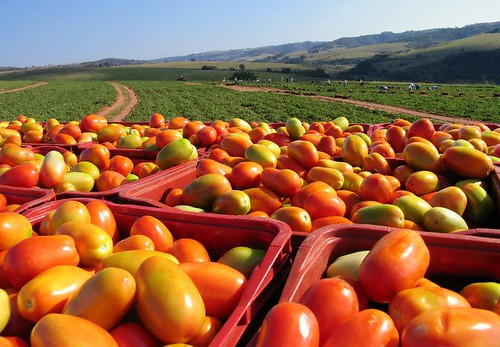
tomato harvest por joaobambu.
E

Etiquetas: ,

martes, septiembre 02, 2008

http://bistandsaktuelt.typepad.com/the_gmo_debate/

GMOs less promising than adoption of proven agroecological approaches and conventionally-bred plants

Jack A. Heinemann


With the publication of the International Assessment on Agriculture Science and Technology for Development (IAASTD, link: http://www.agassessment.org/) we can take much of the hype and guesswork out of the GMO debate.

The Assessment was a cooperative project involving the World Bank, UN FAO, UNDP, UNEP and other agencies. With an estimated 400 authors, 500 peer-reviewers and under the supervision of a governing bureau that included private industry, government, UN and non-governmental organisations, the Assessment is the largest most credible research-based assessment on agriculture on the planet.

The Assessment asked: will GMOs contribute to a form of agriculture that is environmentally sustainable, locally empowering and capable of reducing poverty? It found this prospect unlikely based on past and current performance.

GMOs are not just made by, they also are controlled by some of the largest corporations on earth through intellectual property rights laws in developed countries. Corporate control of IP is enough to prevent GMOs from feeding the world. The World Bank, the most industry friendly of international bodies, says that with “an increasing share of genetic tools and technologies covered by intellectual property protection and largely controlled by a small group of multinational companies, the transaction cost of obtaining material transfer agreements and licenses can slow public research on and release of transgenics.” —World Bank, 2007.

Moreover, GM crops are not a biotechnology that helps poor people. “Biotechnology thus has great promise, but current investments are concentrated largely in the private sector, driven by commercial interests, and not focused on the needs of the poor” —World Bank, 2007.

The debate should now begin where the Assessment ends. The Assessment found that there was no reliable evidence of a sustained increase in yield from GM crops, even among the icon crops such as cotton, maize and soybean in the US, Canada and Argentina. In fact, there is evidence of yield declines in some crops and in some places. GM crops have not been designed to increase yields. There is equivocal to counter evidence of environmental and financial benefits through simplified pest control. Overall, GMOs have less promise than the adoption of proven agroecological approaches and conventionally-bred plants. No surprise, the small scale or poor farmers have not taken up use of these plants and no animals seem anywhere near to commercial availability.

“While many regions are actively experimenting with GMOs at a small scale, the highly concentrated cultivation of GM crops in a few countries (nearly three-fourths in only the US and Argentina, with 90% in the four countries including Brazil and Canada) is also interpreted as an indication of a modest uptake rate. GM crop cultivation may have increased by double digit rates for the past 10 years, but over 93% of cultivated land still supports conventional cropping.”

With 90% of GM cropping in only four countries and 93% of cropping worldwide not based on GM, the impression that this technology has made profound impacts is not due to wide uptake but to the power of the few countries in which it is widely taken up. After nearly 30 years of promises and 12 years of commercialization, it is time to bet on biotechnologies that deliver. And it is time for governments to return the responsibility for feeding the world to the public.

Jack A. Heinemann
Director Centre for Integrated Research in Biosafety
Prof. School of Biological Sciences
University of Canterbury

Etiquetas: , ,

viernes, agosto 29, 2008

LA AGRICULTURA MODERNA CONDUCE AL DESASTRE ECOLÓGICO Y HUMANO

Por Hans R. Herren (*)

WASHINGTON DC, Abr (IPS) Para la mayoría de la gente en el mundo industrializado y en las clases media y alta de los países en desarrollo, la agricultura moderna puede ser considerada como un acontecimiento exitoso sin precedentes en la historia de la humanidad, pero la cruda realidad contradice ese juicio.

Entre 1960 y 2000 la población mundial se duplicó al pasar de 3.000 a 6.000 millones de personas, mientras la producción de alimentos se incrementó en 2 ½ veces. Los beneficiarios de esta munificencia saben que sus alimentos son seguros y variados. Sin embargo, esos beneficios estás distribuidos desigualmente y llegan a un precio cada vez más alto para los pequeños agricultores, los trabajadores, las comunidades rurales y el ambiente. Por lo tanto, es necesario un cambio en la ciencia y en la tecnología de la agricultura.

La agricultura moderna, tal como hoy se practica en el mundo, significa que nos estamos devorando nuestro patrimonio. Está explotando excesivamente el suelo, nuestro recurso natural básico, y es insostenible porque hace un uso intensivo tanto de la energía proveniente de los combustibles de origen fósil como del capital, al mismo tiempo que básicamente no tiene en cuenta los efectos externos de su actividad. A esto se ha agregado recientemente el empleo de algunos productos básicos como el maíz para producir biocombustibles, llevando a las nubes los precios de esos productos. El mundo en desarrollo va en la misma dirección, salvo que hace un uso menos intensivo del capital y emplea en su mayor parte energía humana.

Un estudio elaborado durante cuatro años, la Evaluación Internacional de la Ciencia y la Tecnología Agrícolas para el Desarrollo (IAASTD), fue acometido por iniciativa de la Cumbre Mundial para el Desarrollo Sostenible realizada por el Banco Mundial y la Organización de las Naciones Unidas para la Agricultura y la Alimentación (FAO) en 2002 en Johanesburgo. El informe final de este estudio será divulgado el 15 de abril en Londres, Washington y Nairobi.

Nuestro cometido era el de analizar no sólo la producción de alimentos aisladamente sino también en relación al hambre, la pobreza, el ambiente y la equidad en relación. De modo que nos propusimos estudiar de qué modo la sabiduría agrícola acumulada de la humanidad –conocimientos, ciencia y tecnología- nos ha conducido durante el último medio siglo a la actual situación. También debíamos sugerir opciones para enfrentar los conocidos desafíos de cómo alimentarnos de un modo sostenible tanto social como ambientalmente en los próximos 50 años. Hemos llegado a la conclusión de que sin cambios radicales en el modo en el que el mundo produce sus alimentos el planeta sufrirá daños duraderos.

Nuestro informe es abiertamente a favor de los pobres. Toda nuestra evaluación rotó alrededor de los objetivos de rediseñar la agricultura para reducir la pobreza y mejorar las condiciones de la vida rural y la salud humana. Pero eso no nos hace enemigos de los ricos, aunque debemos reconocer que algunos pueblos están consumiendo más de lo que les correspondería de existir un reparto equitativo de los recursos del planeta. En el informe decimos explícitamente que China e India están ahora compitiendo seriamente por porciones cada vez más grandes de los recursos naturales globales, tal como lo han hecho los países desarrollados durante muchas décadas. La realidad es que cada país necesita vivir de acuerdo con sus medios, de modo que América del Norte y Europa deberían hacer ajustes al respecto y aprender a hacer más con menos.

Una de nuestras conclusiones es que los países más pobres del mundo son netos perdedores en la mayoría de los escenarios de la liberalización comercial. Identificamos algunas “actitudes políticas y económicas conflictivas”. Específicamente, ello se refiere a los muchos países desarrollados que se oponen profundamente a cualquier cambio en los regímenes de comercio o en los sistemas de subsidios. Sin reformas en estos aspectos muchos países más pobres tendrán tiempos muy difíciles porque necesitan en primer lugar proteger su propio desarrollo.

También somos críticos acerca de la agricultura de las grandes corporaciones orientada al lucro, que continúa prosperando en el no reformado sistema que tenemos actualmente. Este sistema mantiene su dominio en el Norte y ahora está siendo exportado cada vez más hacia los países pobres del Sur.

El informe está dirigido a los hacedores de políticas que deben tomar decisiones financieras y también al público en general. En muchos países los alimentos son algo que en gran parte se da por sentado que están disponibles, mientras que los agricultores son pobremente recompensados por su papel consistente en poner los comestibles en la mesa. Las inversiones en ciencia agrícola y su extensión a los agricultores han disminuido a lo largo del tiempo, aunque siguen siendo urgentemente necesarios el desarrollo y la difusión de soluciones sostenibles, ambientalmente seguras y equitativas para la producción de alimentos.

Si seguimos con las actuales tendencias en materia de producción de alimentos agotaremos nuestros recursos naturales y pondremos en peligro el futuro de nuestros niños. Invertir en nuestro sustento debería ser el más básico empeño de la humanidad. (FIN/COPYRIGHT IPS)

(*) Hans R. Herren, copresidente de
la Evaluación Internacional de la Ciencia y la Tecnología Agrícolas para el Desarrollo (IAASTD) y presidente del Millenium Institute.

Etiquetas:

miércoles, julio 16, 2008

Overview: Genetically Engineered Crops Will Not Solve the Global Food Crisis

We've compiled a list of reports on claims about GM solving the food crisis.

When the President of the American Farm Bureau Federation spoke at the UK's National Farmers Union (NFU) conference back in February of this year, he had a clear message:

"I think the debate about higher prices and being able to meet the demand of people in the world for food is a perfect opportunity to make the case (for GMO crops)...

"We may have a window of opportunity here and I would encourage you to exploit that." http://www.planetark.com/avantgo/dailynewsstory.cfm?newsi...

That exploitation has occurred big time ever since, but the reasons advanced for the adoption of GM crops have been spectacularly misleading - or in the words of Prof Dennis Murphy, the pro-GM head of biotechnology at the University of Glamorgan: "they're making these claims about GM crops solving the problem of drought or feeding the world, that's bullshit." http://www.spiked-online.com/index.php?/site/article/5438/

The publication today of GM Freeze's report on GM and drought confirms exactly what Prof Murphy says. http://www.gmfreeze.org/uploads/drought_briefing_final.pdf

And the new report is just one in a whole list of recent reports and articles debunking the claims being made for GMOs as a magic solution for the food crisis.

MUST READ ARTICLE

Superb overview of the misleading hype being promoted about GM crops. "Let's be clear. As of this year, there are no commercialized GE crops that inherently increase yield. Similarly, there are no GE crops on the market that were engineered to resist drought, reduce fertilizer pollution or save soil. Not one." -- Doug Gurian-Sherman, senior scientist at the Union of Concerned Scientists in Washington, formerly the EPA's biotech specialist and an advisor on biotech to the FDA, "Genetic engineering - a crop of hyperbole", The San Diego Union Tribune, 18 June 2008 http://www.signonsandiego.com/uniontrib/20080618/news_lz1...

REPORTS

*Debunking claims that GM crops are becoming the norm. Last year 97.6% of agricultural land globally was non-GM, and in the EU GM crops made up a mniscule percentage of agricultural land (0.21%). http://www.gmfreeze.org/uploads/GM_crops_land_area_final.pdf

*Debunking claims of increased yields with GM crops. Data comparing the yields of GM and conventionally bred crops show that GM crops have made no difference to yields, and in some cases have actually reduced yield by as much as 10%. http://www.gmfreeze.org/uploads/89D_yields_briefing%5B1%5...

*Debunking the claims of cheaper GM animal feed. GM animal feed has seen the fastest rate of feed price inflation! http://www.foeeurope.org/GMOs/animal%20feed/Briefing_anim... 08.pdf

*Debunking claims the EU's "zero-tolerance" policy on non-approved GMOs is no longer workable. http://www.foeeurope.org/GMOs/ZERO_TOLERANCE_Campaigner_b... http://www.foeeurope.org/GMOs/zero_tolerance.html

*Debunking claims of GM crops resistant to drought. http://www.gmfreeze.org/uploads/drought_briefing_final.pdf

Other recent reports:

*Briefing on solving the global food crisis http://www.foe.co.uk/resource/media_briefing/food_crisis.pdf

*Briefing on the main recommendations and findings of the International Assessment of Agricultural Knowledge Science and Technology for Development (IAASTD) report, which found GM was not the answer to the food crisis. http://www.gmfreeze.org/uploads/special_IAASTD_brieifing.pdf

Etiquetas: ,

jueves, mayo 01, 2008

Agriculture: Overhaul of Agriculture Systems Needed


By Lim Li Ching

Lim Li Ching, lead author of the IAASTD's East and South Asia and the Pacific report, is a Senior Fellow at the Oakland Institute and works with the biosafety programme at Third World Network (TWN), an international NGO based in Malaysia.

Report cover: Sahel
An independent and multi-stakeholder international assessment of agriculture has concluded that a radical change is needed in agriculture policy and practice, in order to address hunger and poverty, social inequities and environmental sustainability questions.

The final report of the International Assessment of Agricultural Science and Technology (IAASTD) was launched simultaneously on 15 April 2008 in Washington, London, Nairobi, Delhi, Paris and a number of other cities worldwide.

The report (the product of work of over 400 authors) was finalized at a meeting of over 50 governments held in Johannesburg 7-12 April 2008.

“Business as usual is not an option”, said Professor Robert Watson, Director of the IAASTD and chief scientist of the UK’s Department for Environment, Food and Rural Affairs. Watson was formerly the chair of the Intergovernmental Panel on Climate Change (IPCC). The methodology of the IAASTD’s work and process is similar to that of the IPCC.

The report’s message is that the business-as-usual scenario of industrial farming, input and energy intensiveness, and marginalization of small-scale farmers, is no longer tenable. While past emphasis on production and yields had brought some benefits, this was at the expense of the environment and social equity. Moreover, there is a recognition that excessive and rapid trade liberalization can have negative consequences for food security, poverty alleviation and the environment.

The IAASTD report calls for a systematic redirection of investment, funding, research and policy focus towards the needs of small-farmers. This involves creating space for diverse voices and perspectives, particularly those who have been marginalized in the past, including poor farmers and women. <>The IAASTD report says that greater emphasis is needed on safeguarding natural resources and agro-ecological practices, as well as on tapping the wide range of traditional knowledge held by local communities and farmers, which can work in partnership with formal science and technology. Sustainable agriculture that is biodiversity based, including agro-ecology and organic farming, is beneficial to poor farmers, and needs to be supported by the appropriate policy and regulatory frameworks.

Over three years, from 2005-2007, the IAASTD had conducted an evidence-based assessment on the potential of agricultural knowledge, science and technology (AKST) for reducing hunger and poverty, improving rural livelihoods, and working towards environmentally, socially and economically sustainable development. It aims to drive the agenda for agriculture for the next fifty years.

The IAASTD was launched as an intergovernmental process, with a multi-stakeholder Bureau, under the co-sponsorship of the FAO, GEF, UNDP, UNEP, UNESCO, the World Bank and WHO. In a comprehensive and rigorous process, more than 400 authors were involved in drafting the report, drawing on the evidence and assessments of thousands of experts worldwide.

The drafts were subjected to two independent peer reviews. The experts for the assessment included persons from the research community, international agencies, NGOs and industry, though representatives from industry decided not to stay with the process.

The process itself was a path-breaking one, in which governments, research institutions, industry and civil society shared equal responsibility in its governance and implementation. The success of this experiment supports the value of civil society participation as full partners in intergovernmental processes and future international assessments.

The IAASTD held its intergovernmental plenary meeting from 7-12 April in Johannesburg, South Africa to discuss and finalize the global and five sub-global assessments, and the Synthesis Report that integrates their findings.

The Synthesis Report also focuses on eight cross-cutting issues – bioenergy, biotechnology, climate change, human health, natural resource management, traditional knowledge and community based innovation, trade and markets and women in agriculture.

Fifty-four governments accepted and approved the various components of the report at the meeting. However, by the end of the meeting, Canada, Australia, the United Kingdom and the United States had yet to sign on to the final report.

While there are indications that some of these governments may eventually formally accept and approve the documents, the United States remains the key government that is unlikely to do so, claiming that the report is “unbalanced”, particularly with regard to its analysis and proposals for trade and biotechnology issues.

The agrochemicals and biotechnology industry, which had earlier been a full participant in the IAASTD process, withdrew from the process before the final plenary meeting with similar claims. It claimed that industry perspectives, particularly its view that genetically modified (GM) crops are key to reducing poverty and hunger, were not adequately reflected in the report.

The report’s lack of specific support for GM crops was based on a rigorous and peer-reviewed analysis of the empirical evidence. After consideration of the evidence on both sides of the debate, the report is notably muted in relation to the claimed benefits of GM crops, highlighting instead the lingering doubts and uncertainties surrounding them.

For poor farmers, the report concludes, GM crops are unlikely to play a substantial role in addressing their needs. In any case, longer-term assessments of the environmental and health risks, and regulatory frameworks, are needed.

Another key concern highlighted in relation to GM crops is the dominance of the biotechnology industry in agricultural R&D, at the expense of other agricultural sciences. Furthermore, the report notes that farmers face new liabilities from GM crops, particularly as a result of the detection of GM crops in conventional and organic crops that leads to patent infringement suits and loss of certification, respectively.

During the Johannesburg meeting, there were heated and protracted discussions on GM crops. However, the United States pre-empted debate on the biotechnology section of the Synthesis Report, by asking that its reservation against the whole section be noted. It said it did so because the section was “unbalanced”. China then asked to be included in the reservation. No other country objected to this section.

Other key findings of the IAASTD report acknowledge that market forces alone cannot deliver food security to the poor. It particularly reiterates that developing countries are accorded special and differential treatment in agricultural trade, especially on the grounds of food security, farmers’ livelihoods and rural development.

While hinting that trade rules unfairly favoring rich countries and multinational corporations must be reformed in order to benefit poor farmers, the report however falls short of providing specific guidance that speaks to the current WTO negotiations on agriculture.

Even though the trade policy options could have been stronger, the United States and Canada still placed their reservations on the section of the Synthesis Report dealing with trade and markets, essentially objecting to language that spelt out the negative effects of agricultural liberalization.

The report also recognizes that there are weaknesses and inequities in the current intellectual property rights regime, in relation to genetic resources. Strong intellectual property protection on genetic resources has affected public research and farmers’ rights to seeds. However, the report did not call for a reform of the intellectual property rights regime, following objections from the United States. Nonetheless, some policy options to address the issue are retained in the report.

While recognizing the urgent need to address climate change, for which agriculture is a significant contributor of greenhouse gases, the IAASTD report also cautions governments on biofuels. This is because the diversion of agricultural crops to fuel can raise food prices and reduce the ability to alleviate hunger throughout the world.

At the end of the plenary meeting, following the acceptance and adoption of the various components that made up the IAASTD report, co-chair Judi Wakhungu reminded all participants that “now we are walking in the same direction”.

Nonetheless, while the report provides the policy options that could really make a difference, the challenges ahead are formidable and need the concerted effort of governments, civil society and the co-sponsoring agencies of the IAASTD, in particular the FAO, the World Bank, UNDP and UNEP.

Civil society organizations attending the meeting called on all governments, civil society and international institutions to support the findings of the report, implement its progressive conclusions, and thereby jump start the revolution in agricultural policies and practices that is urgently needed to attain more equitable and sustainable food and farming systems in the future.


Read the Summary of the IAASTD Report

This article was first published in the Third World Network's South-North Development Monitor (SUNS) #6457, Thursday 17 April 2008. TWN is involved in efforts to bring about a greater articulation of the needs and rights of peoples in developing countries; a fair distribution of world resources; and forms of development which are ecologically sustainable and fulfill human needs.

Etiquetas: ,