martes, marzo 29, 2016

Mae Wan Ho


Ha muerto Mae Wan Ho

El jueves 24 de marzo, se nos adelantó en el largo camino de la vida, nuestra amiga y maestra Mae Wan Ho. Hace un par de décadas, Mae Wan Ho realizó una gira en América del Sur, aceptando una invitación de la Red por un América Latina Libre de Transgénicos, donde a través de talleres, foros, debates, colaboró en el proceso de posicionar el debate sobre los transgénicos en la región. Era una época en la que, aunque los cultivos transgénicos comenzaban a invadir nuestros campos, el cuestionamiento sobre los mismos era aún muy incipiente.

Etiquetas: ,

sábado, octubre 25, 2014

Syngenta sued for $1 billion over China's rejection of GM corn

On Wednesday, October 15, 2014 5:24 PM, TWN Biosafety Info wrote:


Title : Syngenta Sued for $1 Billion Over China's Rejection of GM Corn
Date : 15 October 2014
 

London, 13 Oct (Mae-Wan Ho*) -- US corn prices plummeted as China rejected all shipments containing traces of Syngenta's MIR162. Farmers from 5 major corn growing states have filed 3 class action lawsuits against Syngenta, claiming damages of more than $1 billion**. 
[** See "Billion-dollar lawsuits claim GMO corn ‘destroyed' US export to China", RT Question More, 6 October 2014,http://rt.com/usa/193612-china-lawsuits-gmo-corn/ . See also ‘Farmers Sue Syngenta'. Chemical & Engineering News, 13 October 2014,http://cen.acs.org/articles/92/i41/Farmers-Sue-Syngenta.html] 
Syngenta released MIR162, trade name Agrisure Vipera, in 2009. It is engineered to make a Bacillus thuringiensis (Bt) protein vip3Aa20 toxic to lepidopteran insect pests (butterflies and moths) [Event Name: MIR162, International Service for the Acquisition of Agri-Biotech Applications, accessed 13 October 2014, http://www.isaaa.org/gmapprovaldatabase/event/default.asp? EventID=130], and also has a gene pmi (phosphomannose isomerase) from E. coli to allow positive selection for the transgene. 
It was created with Agrobacterium tumefaciens-mediated plant transformation, a particularly hazardous vector system that risks further horizontal gene transfer (see ‘Ban GMOs Now', ISIS Special Report available at http://www.i-sis.org.uk/Ban_GMOs_Now.php). 
While MIR162 is approved for use in the US, China has not allowed its import into the country. 
Syngenta is blamed for destroying the export of US corn to China, which led to depressed prices for domestic corn, according to Volnek Farms, the lead plaintiff in the lawsuit filed in Omaha, Nebraska federal court. The two other suits were filed in Iowa and Illinois federal courts. 
None of the farmers involved in the lawsuits planted MIR162 seed in their fields in Illinois, Iowa, Kansas, Missouri, and Nebraska. But their harvested crop was contaminated with traces of the transgenic trait, and hence unsalable to the Chinese market. 
Although Viptera has been planted on only about 3% of US farm acreage, it is difficult to say for sure "that any shipments of US corn will not be contaminated with trace amounts of MIR162", the Nebraska plaintiff stated. 
The National Grain and Feed Association (NGFA) had encouraged Syngenta to stop selling Viptera, according to the Iowa claim. The NGFA estimated that actions taken in China against US corn have caused prices to drop by 11 cents per bushel. 
The Iowa suit also claims that the release of Syngenta's Viptera caused the US-to-China export market to drop by 85%. Nebraska plaintiffs, too, accuse Syngenta of having crippled the 2013-14 corn export market to China. 
The NGFA reported in April 2014 that China had barred nearly 1.45 million tons of corn shipments since 2013. 
In 2011, Syngenta requested in federal court that a grain elevator firm, Bunge North America, to remove its signs that said it would not accept Vipera corn. The request was denied. 
Concern over the safety of GM food may have played a role in a recent decision by China's officials to move away from GM production. 
In August, China's Ministry of Agriculture announced it would not continue with GM rice and corn ["End of the line: GMO production in China halted", RT Question More, 21 August, 2014, http://rt.com/news/181860-gm-china-rice-stopped/]. 
[* Dr Mae-Wan Ho is the co-founder and director of the Institute of Science in Society (ISIS), an independent, not-for-profit organisation founded in 1999 and dedicated to providing critical public information on cutting-edge science, and to promoting social accountability and ecological sustainability in science. Since 1994, she has been scientific advisor to the Third World Network. This article was first published on the ISIS website and can be found at: http://www.i-sis.org.uk/Syngenta_Sued_for_$1_billion.php] +

Etiquetas: , , , , ,

jueves, octubre 31, 2013

Scientific American Disinformation on GMOs

http://www.i-sis.org.uk/Scientific_American_Disinformation_on_GMOs.php


Scientific American Disinformation on GMOs

America’s most trusted science magazine is spreading disinformation on behalf of a failing and desperate industry, in utter disregard of scientific integrity and the overwhelming evidence of hazards to health and the environment 
Dr Mae Wan Ho, Dr Eva Sirinathsinghji and Prof Peter Saunders

Etiquetas: , , , ,

lunes, abril 11, 2011

Sustainable ag is the way to go, says UN

Sustainable Agriculture Urgently Needed, UN Agencies Say


There is now widespread recognition that a rapid shift from industrial monoculture to sustainable farming is needed to save the climate and guarantee food security for all.

Etiquetas: , , ,

lunes, diciembre 08, 2008

http://www.i-sis.org.uk/Letter_re_GEAC.php

Letter in Support of the Latest Hearing on a Petition for a Moratorium on GM Crops Filed with the Supreme Court in India

1 December 2008

Cc: Aruna Rodrigues arunarod@gmail.com
sunray_harvesters@vsnl.net

Food Futures Now , *Organic *Sustainable *Fossil Fuel Free, How organic agriculture and localised food, and energy systems can potentially compensate for all greenhouse gas emissions due to human activities and free us from fossil fuels To Whom It May Concern

I write on behalf of the Institute of Science in Society (ISIS), a civil society organisation dedicated to providing critical scientific information to the public and to promoting social accountability and ecological sustainability in science. Our scientists have monitored and reviewed extensive scientific literature and empirical evidence on genetically modified organisms (GMOs) over the past ten years. I am on the Roster of Experts for the international Cartegena Protocol on Biosafety that seeks to protect biological diversity from the potential risks of GMOs and came into force on 11 September 2003.

We fully concur with Dr. Pushpa Bhargava’s recommendations to the Genetic Engineering Approval Committee (GEAC) on the biosafety assessment of GMOs, and take great exception to GEAC’s defamatory remarks on him and its unscientific and unprofessional response to his recommendations. We are referring to GEAC’s Counter Affidavit of September 2008, the Indian Government’s ‘Reply’ to the Application filed by Aruna Rodrigues and others in August 2008 (Reference Application I.A. No. 25 of 2008 in the matter of Writ Petition (Civil) No. 260 of 2005).

Dr. Bhargava, founder and director of India’s prestigious Centre for Cellular and Molecular Biology, is an acknowledged world-class authority on genetic engineering, biotechnology and molecular biology, and highly regarded in international scientific circles. GEAC’s defamatory remarks on him betray its possible lack of competence in the relevant scientific and technological disciplines on which the Committee is providing advice to the Indian Government, and/or its willingness to compromise science to serve vested interests in GMO approval.

All of Professor Bhargava recommendations are fully justified on the most rigorous scientific basis as key elements of biosafety assessment, and consistent with widely recognized standards of good, responsible science; as is also clear from both the text and ‘annexures’ to the Petitioner’s Rejoinder Affidavit of November 2008. Ample evidence has been presented in depositions by several leading biosafety experts appended to the Rejoinder Affidavit.

In the Rejoinder Affidavit of November 2008 the Petitioners have abstracted the essential elements of a biosafety assessment protocol from world-class biosafety experts in section 23, and noted that Dr Bhargava's guidelines are virtually the same. The testing procedures outlined in Section 23 of the Rejoinder, which are to be combined with standard crop testing procedures, to determine if a new GM product falls within the accepted norm of safety of current food crops, are:

1. The Ames test for mutagenicity

2. Metabolic Profiling for toxic and nutritional compounds; to detect unexpected changes in small-molecule metabolism

3. Molecular analysis of the gene insertion sites and transformation-induced mutations

4. Extended multigenerational animal feeding studies for carcinogenic, reproductive, and other adverse effects

5. Allergenicity testing,

6. Genomic profiling/DNA Finger Printing/Proteomics

7. Gene flow, testing on non-target organisms, soil micro-organisms

8. Post market surveillance, both health and the environment

The list is complete except for tests on genetic stability of the GM insert, which is required in EU Directive for environmental release, although it is seldom enforced (see Transgenic Lines Unstable hence Illegal and Ineligible for Protection (http://www.i-sis.org.uk/transgenicLinesUnstable2.php). Transgenic instability in the field essentially compromises all safety assessment performed before environmental release, a point that has been stressed by ISIS from the beginning.

The Austrian Government study published in November 2008 (GM Maize Reduces Fertility & Deregulates Genes in Mice http://www.i-sis.org.uk/GmMaizeReducesMiceFertility.php), followed by a peer-reviewed report from the Italian Government showing that GM Maize Disturbs Immune System of Young and Old Mice (http://www.i-sis.org.uk/MON810gmMaizeMiceImmuneSystem.php) confirm a string of previous findings on adverse health impacts from GM food and feed, which has served to convince scientists like us that GM is Dangerous and Futile (http://www.i-sis.org.uk/GMDangerousFutile.php), essentially because the technology is based on an obsolete view of genetics.

The recent studies find problems with fertility, immune response and gene regulation in different GM maize varieties by carrying out precisely the kind of tests recommended by Dr Bhargava and other scientists; i.e., long-term multi-generational feeding trials, coupled with DNA arrays, proteins and metabolic profiling. The GM crops in the feeding trials have been commercialized; they were approved by government regulators in United States and Europe that have ignored stern scientific warnings over safety, as documented in ISIS’ peer-reviewed publication (Ho MW, Cummins J and Saunders PT. GM food nightmare unfolding in the regulatory sham. Microbial Ecology in Health and Disease 2007, 19, 66-77, http://www.i-sis.org.uk/pdf/GM_Food_Nightmare_Unfolding.pdf). GEAC should not be allowed to repeat their mistake, which is overwhelmingly condemned by the European and American public.

For India to implement the series of assessments recommended by Dr. Bhargava and other scientists would not only be good science, but would also be extremely prudent government policy in view of India’s great genetic biodiversity, and her many farming communities whose health and livelihood depend on crops that are proven safe and productive through appropriate tests. At the very least, a five-year moratorium would allow the desired protocols for rigorous safety assessment to be put in place to ensure that any GMO introduced will not cause harm.

ISIS brought together an Independent Science Panel (ISP) of dozens of eminent scientists from nine countries to compile all the evidence on the health and environmental impacts of GM crops on the one hand, and the benefits and successes of non-GM sustainable agriculture on the other. The ISP produced a report in 2003, The Case for a GM-free Sustainable World (http://www.i-sis.org.uk/pdf/GM_Food_Nightmare_Unfolding.pdf), calling for a world-wide ban on further releases of GMOs and a comprehensive shift to non-GM sustainable agriculture. The report was translated into at least 5 languages and republished within a year. Our demands have proven all the more relevant and urgent since then, as evidence of harm from GMOs has accumulated further, while organic, localized agriculture is now widely acknowledged as the solution to the current food, fuel and financial crisis as well as the most important means for mitigating and adapting to climate change (see ISIS Report, Food Futures Now: *Organic *Sustainable *Fossil Fuel Free (http://www.i-sis.org.uk/foodFutures.php)

Yours sincerely,

Dr. Mae-Wan Ho

Director

Institute of Science in Society

www.i-sis.org.uk

Etiquetas: ,

sábado, noviembre 29, 2008

Mae Wan Ho: GM not the way to sustainability

http://www.i-sis.org.uk/GMnotthewaytosustainbility.php

The evidence is clear: industrial agriculture is out; GM agriculture is worse and unsafe. Organic agriculture, on the other hand, can feed the world, and feed it well, as Catherine Badgley and colleagues in the University of Michigan have shown by a careful analysis of data already published [32], and as many other studies have confirmed in ISIS’ own report [33] (Food Futures Now *Organic *Sustainable *Fossil Fuel Free). Especially relevant is the project carried out by Sue Edwards and colleagues at the Ethiopian Institute of Sustainable Development in Tigray over a period of seven years, documenting how compost produced yields 30 per cent greater than chemical fertilisers. (Not surprisingly, crops treated with chemical fertiliser did better than those that were not treated at all, so if this had been a Green Revolution project it would be claimed as a great triumph for chemicals.)

A couple of years ago, some ordinary rice in the USA became contaminated with GM rice that was being trialled. This was not picked up by the Americans, which shows how feeble their testing is, but was noticed in Europe. The authorities were slow to act, the UK worst of all [34] (GM Rice Contamination How Regulators Tried to Sidestep the Law, SiS 32), but the consumers would not tolerate it. You can see just how strongly they objected from a packet of rice found in a London greengrocer. The original label described the contents as “American Long Grain Rice”, but this apparently referred to the variety of rice, not its origin. So the distributor had covered it with a new label, informing the consumer that this was “Long Grain (Non USA Origin): Please Ignore All References to the USA”.

Can GM be stopped? Yes, it can, if consumers refuse to buy it and if farmers refuse to grow it. That little package of rice reminds you what can happen when consumers will not buy something they don’t trust and don’t want. And if consumers don’t want to buy GM, farmers have even less reason to grow it. Among the strongest critics of the lax US regulation and quality control that allowed contaminated rice to be exported were American rice farmers who saw their overseas markets disappear.

And when governments and industry give up devoting so much time, effort and resource to what even the IAASTD considers to be a side issue as far as feeding the world is concerned, we will be able to concentrate on measures that will really make a difference.


This article is based on lectures delivered at the International Conference on Climate Change, GMOs and Food Security, held on 1-2 October, 2008, in New Delhi. India, and the Forum on Genetically Modified Organisms: “Have GMOs Delivered?” held on 16 October 2008 in Manila, Philippines.

Etiquetas:

jueves, noviembre 27, 2008

Organic Agriculture and Localized Food & Energy Systems for Mitigating Climate Change

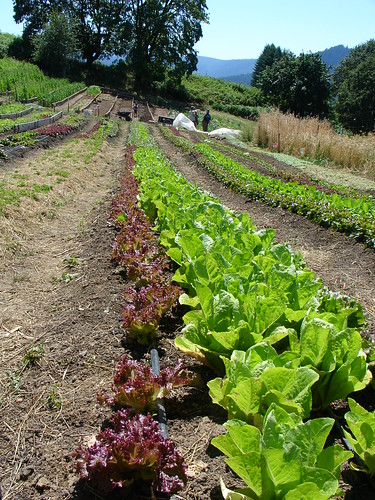
Organic Agriculture at the divine mountains of Oregon por billybuck.


EXCERPT:

Organic agriculture and localized food and energy systems not only mitigate climate change, but also involve major adaptations to climate change [6] such as increasing agricultural biodiversity and resilience to climate extremes, increasing stability of food and energy supply in climate emergencies, reducing dependence on water against drought, increasing percolation of flood water against soil erosion, and increasing habitats for wildlife against species extinction.

While the Intergovernmental Panel on Climate Change (IPCC) failed to mention organic agriculture or localised food systems for mitigating climate change [1, 7], its counterpart on agriculture, the International Assessment of Agricultural Science and Technology for Development (IAASTD) has concluded that a fundamental overhaul of the current food and farming system is needed to get us out of the food (and fuel) crisis, that small scale farmers and agro-ecological methods are the way forward, and GM crops will not play a substantial role [8, 9] (“GM-Free Organic Agriculture to Feed the World”, SiS 38). Earlier in 2002, a United Nations Food and Agriculture Organisation (FAO) report said that organic agriculture enables ecosystems to better adjust to the effects of climate change and has major potential for reducing agricultural greenhouse emission [10].


LINK: http://www.i-sis.org.uk/OAMCC.php

Organic Farm at Cap St-Jacques por shatnerian.

Etiquetas: , ,

sábado, octubre 11, 2008

GM is Dangerous and Futile

We Need Organic Sustainable Food and Energy Systems Now

New genetics research invalidates the science underpinning the $73.5 billon global biotech industry and confirms why genetic modification is futile and dangerous; we must implement organic sustainable food and energy systems now Dr. Mae-Wan Ho

Invited Lecture at Conference on Future of Food: Climate Change, GMOs and Food Security, 1-2 October 2008, India International Centre, New Delhi

******

The Brave New World of GM Science

In Genetic Engineering Dream or Nightmare, the Brave New World of Bad Science and Big Business [2] first published in 1997/1998 I explained why the science behind GM is wrong and obsolete, and hence dangerous; a story elaborated further in Living with the Fluid Genome [3] published in 2003.

Genetic engineering of plants and animals began in the mid 1970s in the belief that the genome (the totality of all the genetic material of a species) is constant and static, and that the characteristics of organism are simply hardwired in their genome. This was encapsulated in the Central Dogma of molecular biology. The genetic information goes from DNA, the genetic material, to RNA, a kind of intermediate, to protein which determines the characteristic involved, such as tolerance to herbicide, for example. One gene determines one trait, so you can transfer one gene and get exactly the trait you want, be it herbicide tolerance, or resistance to insect pest.

But geneticists soon discovered that the genome is remarkably dynamic and ‘fluid’. It is constantly in conversation with the environment, and that determines which genes are turned on, when, where, by how much and for how long. Moreover, the genetic material itself could also be marked or changed according to experience, and the influence passed on to the next generation. Most of that was known by 1980, long before the Human Genome Project was conceived.

The best thing about the Human Genome Project is to finally explode the myth of genetic determinism [4] (The Myth that Launched a Thousand Companies, SiS 18), revealing the layers of molecular complexity that transmit, interpret and rewrite the genetic texts [5] (Life Beyond the Central Dogma series, SiS 24). The ENCODE project has confirmed and extended the complexities especially with regard to what constitutes a gene. Traditionally, a gene is a sequence of DNA that codes for a protein with a well-defined function. This idea has been well and truly shattered [6]; as Barry Patrick wrote in the Science News [7] “genes are proving to be fragmented, intertwined with other genes, and scattered across the whole genome.”

The genetic engineer’s idea of a gene is presented in Figure 1. It has a regulatory signal, a promoter that says to the cell, go and make lots of copies of the coding sequence that would be translated into a protein, and a terminator that says stop, end of message. This is what genetic engineers put into cells to make a genetically modified organism (GMO).
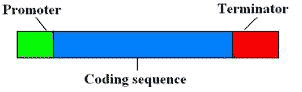
A gene expression cassette,     the genetic engineer’s idea of a gene

Figure 1. A gene expression cassette, the genetic engineer’s idea of a gene

Instead, within the human genome, and indeed other mammalian genomes, coding sequences are in bits (exons) separated by non-coding introns, and exons contributing to a single protein could be in different parts of the genome. Coding sequences of different proteins frequently overlap. Regulatory signals are similarly scattered upstream, downstream, within the coding sequence or in some other distant part of the genome. Coding sequences occupy just 1.5 percent of the human genome, but between 74 and 93 percent of the genome produce RNA transcripts [7], many now known to have regulatory functions. So much so that the project of mapping genetic predisposition to diseases, the original rationale for the Human Genome Project, has now run into serious trouble.

David M. Altshuler, associate professor of genetics and medicine at Harvard Medical School and his research team showed that the risk for type 2 diabetes involves more than a mutated gene. Instead, diabetes, heart disease, some cancers, and other deadly ailments involve non-coding DNA as well as in genes [8]. “We’re realizing that things happening ‘somewhere else’ in the genome, not in genes, are playing critical roles” in sickness and in health, Altshuler said.

David B. Goldstein at Duke University is very pessimistic. He said the effort to nail down the genetics of most common diseases is not working [9]: “There is absolutely no question that for the whole hope of personalized medicine, the news has been just as bleak as it could be. After doing comprehensive studies for common diseases, we can explain only a few percent of the genetic components of most of these traits.” For schizophrenia and biopolar disorder, there is almost nothing, for type 2 diabetes, 20 variants, but they explain only up to 3 percent of familial clustering, and so on.

Goldstein added: “we have cracked open the human genome and can look at the entire complement of common genetic variants, and what do we find? Almost nothing. That is absolutely beyond belief.”

That is just what I predicted soon after the human genome sequence was announced [10, 11] (Human DNA 'BioBank' Worthless, SiS 13/14; Why Genomics Won't Deliver, SiS 26)

Fresh attempts are now made to redefine a gene either in terms of a protein product [12] or a transcript [13], neither of which are satisfactory or would save the industry. All patents on genes based on the old concept are no longer valid; ultimately because the patent is awarded on a supposed function attached to a DNA sequence. But as genes exist in bits interweaving with other genes, so are functions. Multiple DNA sequences may serve the same function, and conversely the same DNA sequence can have different functions. Again, I have explained Why Biotech Patents Are Patently Absurd [14].

Despite the bewildering complexities of how the genome works, individual processes are precisely orchestrated and finely tuned by the organism as a whole, in a highly coordinated molecular ‘dance of life’ that’s necessary for survival.

In contrast, genetic engineering in the laboratory is crude, imprecise and invasive. The rogue genes inserted into a genome to make a GMO could land anywhere; typically in a rearranged or defective form, scrambling and mutating the host genome, and tend to move or rearrange further once inserted. Transgene instability is a big problem, and has been so right from the beginning. There is fresh evidence that GM crops grown commercially for years have rearranged [15, 16] (MON810 Genome Rearranged Again. Transgenic Lines Unstable hence Illegal and Ineligible for Protection, SiS 38). This is a real opportunity to challenge the validity of all biotech patents. Another key issue is safety. Transgene instability means that the original transgenic line has turned into something else, and even if it had been assessed as ‘safe’, this is no longer the case.

The genetically modified genes are a big hazard because they do not know the intricate dance of life that has been perfected in billions of years of evolution. That’s ultimately why genetic modification is both dangerous and futile.

******

No case for GM crops, small scale organic farming is the way ahead

Meanwhile, on 15 April 2008, 400 scientists of the International Assessment of Agricultural Science and Technology for Development (IAASTD) released its 2 500-page report [55, 56] (GM-Free Organic Agriculture to Feed the World”, SiS 38) that took 4 years to complete. It is a thorough examination of global agriculture on a scale comparable to the Intergovernment Panel on Climate Change.

The IAASTD calls for a fundamental change in farming practice to counteract soaring food prices, hunger, poverty and environmental disasters, it says GM crops are controversial with respect to safety for health and the environment, and will not play a substantial role in addressing climate change, loss of biodiversity, hunger and poverty. Small scale farmers and agro-ecological methods are the way forward, and indigenous and local knowledge are as important as formal scientific knowledge. It warns that growing crops for biofuels could worsen food shortages and price rises.

The conclusions of the IAASTD are remarkably similar to our own report Food Futures Now *Organic *Sustainable *Fossil Fuel Free [57] launched in UK Parliament a week later.

Our Food Futures Now report goes a step further. We argue that only organic agriculture can truly feed the world. More than that, organic agriculture and localised food and energy systems can potentially compensate for all greenhouse emissions due to human activities and free us from fossil fuels, and we need to implement this urgently.

The UN has declared 2008 the year of the Global Food Crisis, and it has been the top news story everyday for months now as the crisis deepens. Food prices increased by an average of 40 percent last year; a string of food riots and protests spread around the world including the UK, and more than 25 000 farmers killed themselves in India.

Most commentators agree that the immediate cause of the food crisis is the divestment of food grains into producing biofuels. BusinessWeek identified Monsanto as a “prime beneficiary”. Its stock correlated closely with the price of oil (better than ExxonMobile), and hardly correlated with the price of corn, basically because no one will eat its GM corn. Nevertheless the pro-GM lobby are out in force, using the food crisis to promote GM crops.

GM crops are one big failed experiment based on an obsolete scientific theory, and this failure has been evident since 2004 if not before [58] (Puncturing the GM Myths, SiS 22). Apart from yielding less and requiring more pesticides, anecdotal evidence since 2005 from farmers around the world indicates that GM crops also require more water [59]. Industrial Green Revolution agriculture is now generally acknowledged to be a major driver of climate change as well as being vulnerable to climate change because of its heavy dependence on fossil energies and water, and its susceptibility to pests, diseases and climate extremes [56, 60, 61] (Beware the New "Doubly Green Revolution", SiS 37)..GM crops have all the worst features of industrial Green Revolution varieties exaggerated, and not least, there are outstanding safety concerns as I mentioned. Growing GM crops for biofuels does not make them safe, as they will contaminate our food crops all the same.

Any further indulgence in GMOs will surely damage our chances of surviving global warming. We must get on with the urgent business of building organic, sustainable food and energy systems right now.

Etiquetas: