miércoles, mayo 25, 2016

Unholy alliance has plans for African agriculture


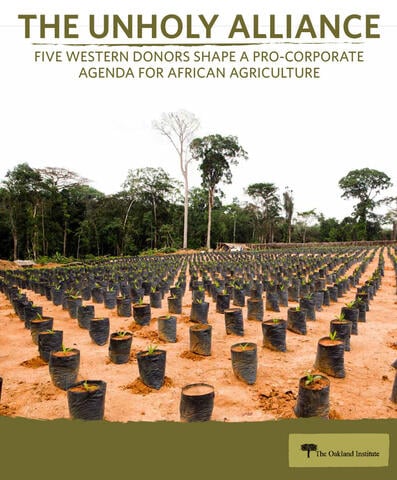
The Unholy Alliance Report Cover

http://www.oaklandinstitute.org/unholy-alliance-five-
western-donors-shape-pro-corporate-agenda-african-agriculture

The Unholy Alliance, Five Western Donors Shape a Pro-Corporate Agenda for African Agriculture, exposes how a coalition of four donor countries and the Bill and Melinda Gates Foundation is shaping a pro-business environment in the agricultural sector of developing countries, especially in Africa.

Etiquetas: , , ,

jueves, abril 22, 2010

EXCERPT FROM AN OPEN LETTER TO OXFAM

THE WHOLE TEXT IS AVAILABLE AT: http://www.oaklandinstitute.org/voicesfromafrica/node/80

Oxfam America’s endorsement of biotechnology sets a very dangerous precedent of being used by the industry in their struggle to force the adoption of GM crops in spite of strong global resistance. The book based on the outcome of Oxfam America’s project and the shocking endorsement of transgenic crops in the face of diverse and voluminous literature countering their stance, threatens to damage Oxfam’s relationship with longtime allies and its reputation as an independent organization. Oxfam, with this study, appears to be siding with corporations, who have used cotton in their efforts to promote GM crops as a whole. Bt cotton is a Trojan horse for future GM crops, including sorghum, cassava, maize, rice and all the staple crops in the world.

This reckless move also raises questions whether Oxfam America’s position endorsing GM crops is a result of significant funding from the Rockefeller and the Bill and Melinda Gates Foundations. The Rockefeller Foundation provided financial support for Oxfam America’s Biotechnology and Development report. In November 2009, Oxfam America received a $491,270 grant from the Bill and Melinda Gates Foundation “to support the monitoring of bacillus thuringiensis cotton impact in West Africa.” These two foundations are explicit promoters of biotechnologies. The Gates Foundation has important ties with Monsanto, the leading company in the biotechnology industry, which has been using ‘revolving doors’ with Foundations and Government Agencies, to erase obstacles and reach its current leading position on the market. Unfortunately, historically and today, agroecological research and development receives a fraction of what biotechnology R&D receives, which this grant by the Gates Foundation perpetuates.

Furthermore, Oxfam America supports the Global Food Security Act of 2009, also known as the Lugar-Casey Act, and claims it will “improve long-term food security by investing in long-term agricultural development.” The section 202 of this Act includes “research on biotechnological advances appropriate to local ecological conditions, including gm technology.” This bill gives favored treatment of biotechnology that is controlled by two or three companies, mostly by Monsanto which has invested over $8.6 million in lobbying Congress last year to pass the Lugar-Casey Act.

Oxfam America is surrendering to the biotech industry and their corporate extensions and private foundations. By doing so it is selling out those it has committed to help and support, including resource-poor farmers, and all those defending health, biodiversity, and the environment. We hope Oxfam America will retract its stance on biotechnology and join the global farmer, environmental, and justice movements united around the world calling for an end to corporate domination and contamination of our food.

Sincerely,

African Biodiversity Network
African Centre on Biosafety, South Africa
Biowatch, South Africa
Bharatiya Krishak Samaj/Indian Farmers Association, India
Cathy Rutivi, IAASTD Advisory Bureau Member, Sub Saharan Africa
Center for Food Safety, US
CNOP (Coordination Nationale des organizations Paysannes/ National Coordination of Peasant Organizations), Mali
Consumers Association of Penang (CAP), Malaysia
Development Research Communication and Services Centre (DRCSC), India
Earthlife Africa, South Africa
Food First, US
Global Village Cameroon(GVC), Cameroon
GRABE, Benin
GRAIN, Spai
Grassroots International, US
International Development Exchange (IDEX), US
Institute for Sustainable Development, Ethiopia
Surplus People's Project, South Africa
Kalpavriksh Environmental Action Group, India
Kalanjium Unorganised Worker's Union, India
Kalanjium Women Farmer's Association, India
Kheti Virasat Mission, Punjab, India
Dr Mira Shiva, Initiative for Health , Equity and Society, Diverse Women for Diversity, India
Ndima Community Services, South Africa
PLANT (Partners for the Land and Agricultural Needs of Traditional Peoples, US
Tamilnadu Resource Team, India
Tamilnadu Women's Collective, India
The South African Freeze Alliance on Genetic Engineering (SAFeAGE), South Africa
Safe Food Coalition, South Africa
Thamizhaga Vivasayigal Sangam/Farmers Association Of Tamil Nadu, India
The Oakland Institute, US
Vandana Shiva, Navdanya, India

Etiquetas: ,

martes, abril 13, 2010

Excerpt of an open letter to Oxfam

Oxfam America’s endorsement of biotechnology sets a very dangerous precedent of being used by the industry in their struggle to force the adoption of GM crops in spite of strong global resistance. The book based on the outcome of Oxfam America’s project and the shocking endorsement of transgenic crops in the face of diverse and voluminous literature countering their stance, threatens to damage Oxfam’s relationship with longtime allies and its reputation as an independent organization. Oxfam, with this study, appears to be siding with corporations, who have used cotton in their efforts to promote GM crops as a whole. Bt cotton is a Trojan horse for future GM crops, including sorghum, cassava, maize, rice and all the staple crops in the world.

This reckless move also raises questions whether Oxfam America’s position endorsing GM crops is a result of significant funding from the Rockefeller and the Bill and Melinda Gates Foundations. The Rockefeller Foundation provided financial support for Oxfam America’s Biotechnology and Development report. In November 2009, Oxfam America received a $491,270 grant from the Bill and Melinda Gates Foundation “to support the monitoring of bacillus thuringiensis cotton impact in West Africa.” These two foundations are explicit promoters of biotechnologies. The Gates Foundation has important ties with Monsanto, the leading company in the biotechnology industry, which has been using ‘revolving doors’ with Foundations and Government Agencies, to erase obstacles and reach its current leading position on the market. Unfortunately, historically and today, agroecological research and development receives a fraction of what biotechnology R&D receives, which this grant by the Gates Foundation perpetuates.

Furthermore, Oxfam America supports the Global Food Security Act of 2009, also known as the Lugar-Casey Act, and claims it will “improve long-term food security by investing in long-term agricultural development.” The section 202 of this Act includes “research on biotechnological advances appropriate to local ecological conditions, including gm technology.” This bill gives favored treatment of biotechnology that is controlled by two or three companies, mostly by Monsanto which has invested over $8.6 million in lobbying Congress last year to pass the Lugar-Casey Act.

Oxfam America is surrendering to the biotech industry and their corporate extensions and private foundations. By doing so it is selling out those it has committed to help and support, including resource-poor farmers, and all those defending health, biodiversity, and the environment. We hope Oxfam America will retract its stance on biotechnology and join the global farmer, environmental, and justice movements united around the world calling for an end to corporate domination and contamination of our food.


Sincerely,

African Center on Biodiversity, South Africa (Mariam Mayet, Executive Director)

Bharatiya Krishak Samaj/Indian Farmers Association, India (Krishan Bir Chaudhary, President)

Center for Food Safety, U.S. (Debi Barker, International Director)

CNOP (Coordination Nationale des organizations Paysannes/ National Coordination of Peasant Organizations), Mali (Ibrahima Coulibaly, President)

Grassroots International, US (Nikhil Aziz, Executive Director)

Thamizhaga Vivasayigal Sangam/Farmers Association Of Tamil Nadu, India (S.Kannaiyan, Organizer)

The Oakland Institute, US (Anuradha Mittal, Executive Director)

Etiquetas: ,

lunes, marzo 08, 2010

WATCHDOG REJECTS INDUSTRY’S HYPE OF GM SUCCESS IN SOUTH AFRICA

MEDIA RELEASE FROM THE AFRICAN CENTRE FOR BIOSAFETY

8 March 2010.

On the 9th March 2010 and at a press conference in Johannesburg South Africa, the industry-sponsored International Service for the Acquisition of Agri-biotech Applications (ISAAA) will announce the “phenomenal success” of GM crops in South African based on a single minded obsession with numbers: that South African farmers are growing 1.8 million ha of GM maize, soya and cotton.

The African Centre for Biosafety (ACB) has in its briefing paper titled ‘From South Africa: ISAAA’s 2009 report is fundamentally flawed’ presented a more sobering picture, which includes crop failures in South Africa, the incapacity of South African biosafety regulators to ensure environmental and food safety, the spectacular rejection by the South African regulators of a commercial release application for GM potato and small-scale farmers’ abandonment of GM cotton.

The ACB also questions the veracity of the ISAAA’s figures, which the ACB argues are based on speculation. According to Haidee Swanby of the ACB, “ISAAA has obtained its figures from FoodNCropBio, a private consultancy firm in South Africa, who has in turn compiled its figures by extrapolating from seed orders and the ‘intention to plant’ obtained from seed companies.”

The briefing points out that only 2.7% of global agricultural land is in fact planted to GM crops, with the majority being grown in the United States, Brazil and Argentina. Together, these three countries account for 79.6% of the GM crops grown globally in 2009. It also argues that only small “gains” were made in India, Canada, Argentina and South Africa; while China, Paraguay and Europe all recorded a drop in GM crop plantings and Australia remained static.

According to Mariam Mayet, director of the ACB, “In reality, the numbers of hectares planted to GM are of less importance than questions about food security and sovereignty, equity and justice, and the livelihood of small scale farmers - real issues that industry obfuscates with its single minded fixation on percentages, hectares and industry profits.”

The ACB calls for a shift in global agricultural policy towards ecological farming practices and small-scale and local production for local consumption. “The promotion of genetically modified crops, which are resource hungry, capital intensive and protected by intellectual property rights, is the exact opposite approach to what is needed to solve global ecological and food crisis and should be rejected” said Swanby.

The briefing can be downloaded from the ACB’s website at www.biosfetyafrica.org.za

Contact

Haidee Swanby: 082 459 8548

Mariam Mayet: 083 269 4309

Etiquetas: , , ,

domingo, marzo 07, 2010

DAWN OF THE RISKY STACKED GENE ERA: A TASTE OF THINGS TO COME

March 2010

The African Centre for Biosafety (ACB) has today released a new study titled “The GM stacked gene revolution: a biosafety nightmare” which reveals some startling current and future trends concerning the advent of GM stacked varieties.

Stacked GMOs are those containing more than one gene genetically
engineered into a crop plant. A controversial stacked GMO, Smarstax
containing 8 such genetically engineered genes, was commercially
approved in the US, Canada, Japan and South Korea during 2009. Stacked
gene varieties are highly complex, posing new biosafety risks that
outpace the capacity of regulatory systems. “Stacked GM varieties
also promise unprecedented scope for patents on life forms” said
Gareth Jones, researcher for the ACB.

According to the study by Jones, from 2006 to 2007, the global area
of stacked trait GMOs planted to cotton and maize grew by 66%, with
maize alone increasing by over 100%, from 9 million to 19 million ha.
Plantings of stacked varieties ballooned between 2007 and 2008 at 23%
compared with its single trait counterparts: 9% for herbicide
tolerance and a 6% reduction in planted area for insect resistance. A
total of 26.9 million ha of stacked biotech crops were planted
globally in 2008 compared with 21. 8 million ha in 2007, with the US
having planted 41% (26.7 million ha) of its total biotech area of 65.2
million ha to stacked varieties.

Stacked GMOs deliver nearly twice the rate of profit compared to
their single trait counter parts, often forcing farmers to pay for
traits they neither want nor need. Increased profits further
strengthen the dominant position of the world’s largest biotech
companies; between 1996 and 2007 over 90% of all stacked events
approval globally were owned by a handful of multinational companies,
with Monsanto leading the pack.

In 2006, stacked GMOs accounted for 23.7% (approximately $1.4
billion) of the global GM market, worth $6.5 billion. Monsanto
expected 79% of its maize seed sales in 2009 to be triple stacked
while Syngenta plans to make triple stacked maize account for 85% of
its portfolio for 2011.

South Africa is a fervent supporter of stacked GMOs, granting a
staggering 56 permits for stacked GM maize varieties during 2009
alone. Currently, 19% of South Africa’s GM maize area is planted to
stacked GM varieties, representing a four-fold increase since 2007.

According to Jones, “If the adoption rate of stacked traits between
2005 and 2009 is projected forward, a colossal 81 million ha of
stacked GMOs could be planted by 2015 (an area larger than Mozambique
or Turkey).”

In 2008 Monsanto announced that it expected its profits to treble to
nearly $3 billion by 2010 and that its new stacked trait releases
would account for the bulk of this. “Despite the rhetoric promising
GM drought tolerant varieties for the poor and the marginalised, it is
clear from the current trends that the game is set for a stacked GM
revolution” said Mariam Mayet, Director of the ACB.

The ACB briefing can be accessed at
http://www.biosafetyafrica.org.za/index.php/20100304290/The-GM-stacked-gene-revolution-A-biosafety-nightmare/menu-id-100026.html

ENDS

Contact:

Mariam Mayet on 083 269 4309

Gareth Jones on 079 761 5300

Notes to Editors

The biotech industry’s response to several well documented cases of
‘super-weeds’ evolving resistance to herbicides has simply been to
increase the dosage. Recent research from the United States has
revealed that, far from reducing the use of chemical inputs in
farming, since 1996 GMOs have been directly responsible for the
additional application of almost 150,000 tonnes of chemical inputs.
Several GMOs stacked for resistance to up to 6 different herbicides
are currently in development.


http://www.oaklandinstitute.org/voicesfromafrica/node/72

Etiquetas: ,

sábado, enero 16, 2010

Africa’s Green Revolution Drought Tolerant Maize Scam

Dear friends and colleagues

Prediction of exacerbated drought in Africa due to climate change is apparently the driving force behind the establishment of the Water Efficient Maize for Africa (WEMA) initiative, another prong of the so-called "New Green Revolution for Africa". WEMA seeks to develop drought tolerant maize varieties through a program which is being presented as a panacea for solving issues of hunger on the continent using marker assisted breeding and genetic engineering. That this is being done under the guise of philanthropy sidesteps questions about the real causes of hunger, disregards issues of imbalanced global distribution of food and underplays the financial benefits to be derived by the various proponents of the scheme. The possible risks to small-scale farmers, whom WEMA targets, include loss of biodiversity through gene flow, a dependence on expensive inputs into farming, possible exposure to intellectual and property rights claims and impacts on their food security. The most effective ways of supporting small-scale farmers is through agro-ecological approaches to farming. These focus on small-scale sustainable agriculture; locally adapted seed and ecological farming that better addresses the complexities of climate change, hunger, poverty and productive demands on agriculture in the developing world.

Click here to download a briefing paper titled Africa's Green Revolution Drought Tolerant Maize Scam by Dr Shenaz Moola which deals with the key issues. We trust that the paper will assist you in your work.

Etiquetas: , , ,

domingo, noviembre 29, 2009

Kenya: Gates Foundation and Monsanto to Develop Genetically Modified Seeds for Small Farmers

Kenya: Gates Foundation and Monsanto to Develop Genetically Modified Seeds for Small Farmers
http://www.ratio-magazine.com/200911261425/Kenya/Kenya-Gates-Foundation-and-Monsanto-to-Develop-Genetically-Modified-Seeds-for-Small-Farmers.html

26 November 2009 KARI is one of the main partners in a new programme funded by the Gates Foundation to develop genetically modified (GM), drought-resistant maize for small farmers in Africa. Monsanto has committed to providing the seeds without royalty payments. Rachel Keeler looks at the implications for the local and regional market.

Many of the emotionally charged headlines that drive Africa’s food security debate are intricately connected to the critical and complex Kenyan seed industry: Kenya is the second largest seed consumer in sub-Saharan Africa, and a key driver of agricultural research on the continent. For decades, donors and private interests have been funneling millions of dollars into the Kenya Agricultural Research Institute (KARI), in an effort to develop new plant varieties that can repel pests, withstand disease and produce higher yields.

KARI is now one of the main partners in a new programme funded by the Gates Foundation that will attempt to develop genetically modified (GM) maize that can withstand drought. The plan is to distribute the seeds to small farmers in Kenya, Mozambique, South Africa, Tanzania and Uganda. The technology is coming from Monsanto, the American corporate seed giant that does a lot of work for the Gates Foundation in Africa. Normally Monsanto’s patented seeds come at a high price, which has inspired an endless stream of vitriol from activists who accuse the company of exploiting poor farmers for obscene profits. This time, farmers will receive the seeds royalty free – indefinitely – as part of Gates’ push for a “green revolution” in Africa.

But that has not stopped the critics from questioning the wisdom (and motives behind) introducing expensive farming technology to poor African countries. They also question the implications for human health and the environmental safety of GM food. Anytime you cross poverty, aid, science, and big business, the debates are bound to be endless, and indeed they have been (for a good overview, see recent articles in the Nation , and Economist ). But what is often missing amidst all the rhetoric is a basic look at how the markets might respond to these developments.

GM seeds are not yet legally available in East Africa. Regulations for Kenya’s Bio-Safety Act are still being developed. Nonetheless, Monsanto has been testing GM cotton with KARI for three years already, and plans to launch trials for GM corn next year. Kinyua M’Mbijjewe, the company’s corporate affairs director for Africa, says he expects legislation to be functional soon, and expects the commercial cotton and corn varieties to hit markets even before Gates’ drought resistance maize is ready – probably within the next five years.

******
A recent Reuters report on African agriculture cites Mariam Myatt of the Johannesburg-based African Centre for Biosafety, as saying: “If India's experience is anything to go by, a Green Revolution would leave Africa's farmers as dependent on banks and seed and fertilizer companies as they are now on seasonal rains.” Myatt makes a valid point, but still: which would farmers rather be reliant on? Farmers in East Africa are constantly complaining about a lack of access to credit, with which they would want to buy fertilizer and good seeds. That would lead to predictable production and profits, rather than the region-wide starvation caused when dependence on rain is interrupted by drought.

Monsanto is the largest seed seller in the world, and although they haven’t lately (due largely to competition from China), usually they make rather hefty profits. But the company also sells a product that many African farmers seem to want. And if the seeds they end up promoting in markets in Africa do not work well, there is nothing compelling farmers to buy them. Since the agricultural sector in East Africa was liberalized, Kenya especially has developed an active seed industry. Monsanto has competition here.

EA Seeds’ Mugambi also says a lot more research will have to be carried out to assure farmers that GM crops are safe and reliable, especially as they continue to see reticence in Europe where consumers and governments have yet to accept the safety of GM food. The company will also have to pick and choose the GM varieties it invests in. Farmers who sell vegetables to Europe will simply refuse to grow any modified crops. Promotion of GM cotton seeds will also face market challenges as the US continues to subsidize its cotton farmers and drive global cotton prices down despite multiple rulings against this by the WTO. But farmers who do want to compete with cash crops like cotton on international markets will want access to the same edge that their counterparts in West Africa and South Africa have.

Still, there are serious problems to consider with the Gates-Monsanto model. Farmers in East Africa retain the power of choice at the shop-front level, but they have very little say over the direction of agricultural research here. Farmers groups say they have not been consulted by researchers, and ask how they can attempt to retain bio-diversity and promote local knowledge in the face of Gates’ highly capitalized funding machine that has taken a keen interest in promoting the bio-technology solution.

While Gates has publicly acknowledged that GM technology is only a fraction of the solution to food insecurity in Africa, critics point out that 30% of his foundation’s grants in 2008 went to bio-tech funding, while 79% of the money spent in Kenya went to the same. When foreign philanthropists have such a large say over policy direction at high levels, it greatly limits the choices for consumers down the line, even if market distortions like this and the perverse consequences of aid are of course nothing new. This is all the more frustrating in a country like Kenya, where industry development depends on government action, and the government so often fails to act or be held accountable when it acts badly.

It is important to note that Monsanto has been accused, by multiple sources and respected research institutions, of limiting innovation in seed technology because it controls such a huge share of the global seed market. The Economist speculates that the company could be one of the next targets for anti-trust authorities at the US Department of Justice – an experience Bill Gates’ Microsoft is all too familiar with.


TO READ THE WHOLE ARTICLE:
http://www.oaklandinstitute.org/voicesfromafrica/node/58

Etiquetas: , , ,

domingo, septiembre 27, 2009

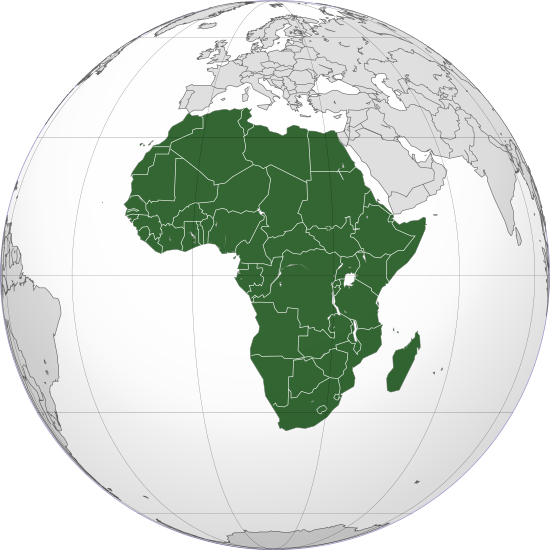
File:Africa (orthographic projection).svg

Africa is Heading for an Ecological Disaster

http://www.capetimes.co.za/index.php?fArticleId=5177780

September 25, 2009 Edition 1

Mariam Mayet

First introduced commercially in South Africa in 1998, genetically modified (GM) seeds are used extensively in our agriculture. In just over 10 years, 56 percent of South Africa's white maize and 72 percent of its yellow maize have been converted to genetic modification.

A staggering 96 percent of the area planted to cotton is comprised of GM varieties and 88 percent of soyabeans are GM. Genetic modification is an imported technology, and licensed for use in South Africa. A small handful of multinational agro-chemical/seed corporations - Monsanto, Syngenta and Pioneer Hi-Bred - control the GM seed market. Monsanto has bagged the lion's share of the patents on GM traits and secured access to the South African market through an extensive and well-oiled agribusiness dealer network.

Profits are secured through the extraction of exorbitant technology fees from farmers. Farmers using Monsanto's GM seed sign away the right to save or exchange seed. They also absolve Monsanto from liability for contamination. Monsanto has ruthlessly taken legal action against farmers for patent infringement.

Last year alone, the South African government acting through the Department of Agriculture granted 425 permits for imports of GM seed into South Africa, field trials and commercial releases. It is unashamed in its support of GM technology and sees it as a key growth area for the economy.

It is thus not concerned that farmers who use GM seed are locked into an industrial agricultural system dependent on ready-made packages of industrial inputs - a process that de-skills farmers. It also cannot see that these corporations are now moving away from the single trait GM technology on the market since 1998, to the production of seeds with "stacked" traits.

A single GM maize variety can contain up to eight transgenes - genes expressing for herbicide tolerance and insect resistance. Farmers are having to continuously upgrade and adapt to an externally driven agenda over which the government has no control.

Drought tolerance in GM maize is also being touted in The Time of Global Warming. Monsanto is feverishly conducting field trials in South Africa of four varieties of abiotic stress maize and is set to provide patented germ-plasm and transgenes to the highest bidder. At the same time, millions of dollars from the Bill and Melinda Gates and Howard G Buffet foundations are pouring into Africa for GM drought-tolerance research and development. GM drought tolerance is being offered to African countries as a panacea in the alleviation of poverty and hunger, and in combating climate change. This will usher in massive field trials across Africa, finally pushing open hitherto closed doors to GM-based agriculture.

The Bill and Melinda Gates Foundation through the Warren Buffet Foundation, the Yara Foundation and the Soros Foundation has committed over $300 million (R2.2 billion) to the New Green Revolution push in Africa. This is an agriculture system underpinned by the single-minded objective of increasing crop yields.

The term was coined by the US Agency for International Development (Usaid) in 1968, to describe breakthroughs in the development of seeds responding well to inorganic fertilisers and agro-chemicals.

The model was introduced in South-East Asia and India, heralding a historic shift in global farming away from local production for local consumption to large-scale production of mono-crops for the global market.

Cut from a similar cloth, the African Green Revolution discourse defines rural poverty in terms of insufficient productivity, which a technological "fix" comprised of high-yielding varieties, GM seeds and agro-chemicals will resuscitate.

A tendency of the Green Revolution is to myopically view food shortages as a shortcoming of food supply rather than a more complex phenomenon requiring a holistic understanding of why people go hungry. Nevertheless, this ideology has received the endorsement of the African Union, and is propagated through the New Partnership for Africa's Development. Heads of state in Africa have also thrown their weight firmly behind it.

The philanthropic money pouring into Africa is used to lay the groundwork for the industrialisation of African agriculture and creation of markets for agribusiness. In turn, this is paving the way for the emergence of a new rural private sector, agro-processors and exporters who contract small farmers to produce crops for them.

Added to the mix are the ongoing attempts by USAID to undermine the sovereignty of African governments by unduly influencing biosafety laws. It is only a matter of time before national biosafety spaces will acquiesce to the expanding needs of Monsanto, Syngenta and their ilk.


http://www.oaklandinstitute.org/voicesfromafrica/node/46

Etiquetas: ,

miércoles, mayo 20, 2009

www.oaklandinstit/3F6DE3FE.png

The Oakland Institute Reporter


Tell Congress Not to Force GE Crops on Other Countries


An Action Alert from Center for Food Safety (www.centerforfoodsafety.org)


A Note from the Oakland Institute


The 2008 food crisis and growing hunger, which threatens nearly one billion people worldwide, has been framed as a crisis of demand and supply. Thus the solutions offered primarily focus on boosting agricultural production through technological solutions like genetic engineering (GE).


A big player promoting GE as the panacea to world hunger is the United States. During the G-8 Summit, U.S. Secretary of Agriculture Tom Vilsack warned that failure to take immediate steps to reduce hunger will cause fresh social unrest. He thus urged the G8 to back the use of science in agriculture, including genetically modified organisms, to boost productivity. (Financial Times, 2009) On his return from Italy, much to the delight of biotech companies such as Pioneer Hi-Bred and Monsanto, he pledged to bring a "more comprehensive and integrated" approach to promoting agricultural biotech overseas. (Des Moines Register, 2009).


Similarly in a joint essay, former Executive Director of the UN World Food Program, Catherine Bertini, and former U.S. Secretary of Agriculture, Dan Glickman, hailed plans for a new Green Revolution that includes biotechnology, as holding "great promise." They advocated for prioritizing food and agriculture in the U.S. foreign aid. Recognizing that their plans might generate resistance, the authors wrote, "Although there is the potential for conflict over a hunger initiative on the issue of introducing more GM crops, this conflict is more likely to be with Europeans than with Africans or Asians, both of whom are increasingly inclined to accept the technology." (Bertini & Glickman, 2009)


This thinking, that developing countries can be arm twisted into accepting GE crops, is reflected in a new multi-billion dollar U.S. aid bill. Global Food Security Act (SB 384), also known as the Lugar-Casey Act, revises the 1961 Federal Assistance Act to direct more money towards GE research as part of U.S. foreign aid programs. (PANNA, 2009) The bill is now before the Senate after passing the Senate Foreign Relations Committee in March 2009 on the basis of hastily conducted, industry-friendly research that was funded by the Gates Foundation. A similar bill is expected soon in the House of Representatives.


A recent report from the Oakland Institute, Voices from Africa: African Farmers & Environmentalists Speak Out Against a New Green Revolution in Africa, clearly outlines African resistance to plans for a technological agricultural revolution in Africa, particularly the misguided philanthropic efforts of the Gates Foundation's Alliance for a New Green Revolution in Africa (AGRA), and presents African solutions rooted in first-hand knowledge of what Africans need. To learn more, download a copy of the report at www.oaklandinstitute.org.


Also visit and join today, Voices From Africa at www.oaklandinstitute.org/voicesfromafrica, a new online clearinghouse to share information on and promote alternatives to the New Green Revolution in Africa.


It is time that we demand the U.S. government stops bullying other countries and that they hav policy space to develop agriculture as they deem fit for their environment, farmers, and national needs.


Send a letter to the following decision maker(s):


Tell Congress Not to Force GE Crops on Other Countries


An Action Alert from Center for Food Safety (www.centerforfoodsafety.org)


An effort to fight global poverty and hunger may become a Trojan horse to force genetically engineered crops on countries and farmers that do not want them. In the Senate, Senators Bob Casey (D-Penn.) and Dick Lugar (R-Ind.) introduced the Global Food Security Act, which increases funding for agricultural research in the developing world, and a companion bill in the House of Representatives is expected to be introduced soon. While the bill recognizes the desperate need to increase funding for agricultural development and food security, it also requires that foreign agricultural development aid include investment in genetically engineered (GE) crops.


Most developing countries, especially in Africa, do not allow genetically engineered crops to be commercially grown, but that's changing with international pressure. Biotech companies have mounted a misinformation campaign to sell themselves and their products as "humanitarian." But, genetically engineered crops are not a solution to world hunger. To date, not a single GE crop released for commercial growing has increased yield potential or elevated nutritional levels. In reality, fully 85% of all GE crops globally are engineered to survive spraying with chemical weedkillers. These chemical-dependent GE crops have sharply increased overall use of pesticides and are best-suited to large growers seeking to reduce labor needs for weed control, not poor farmers anxious to produce more to feed their families.


A recent report by the Center for Food Safety and Friends of the Earth found that agricultural biotechnology feeds the profits of biotech companies - not the poor. The report's findings support the United Nations' assessment of world agriculture released in a report in 2008, which concluded that GE crops have little potential to alleviate poverty and hunger in the world, and instead recommended low-cost, low-input agroecological farming methods.


The solutions for food security through agricultural development lie in promoting agroecological practices that not only increase agricultural productivity, but are affordable and accessible to small-scale developing world farmers. As Ben Burkett, an African American farmer from Mississippi and President of the National Family Farm Coalition who has visited Africa many times, said in a recent article, "More expensive genetically modified seeds, pesticides and chemical-intensive practices won't help the hungry and will only allow more profits and control for seed companies like Monsanto and Syngenta."


Food aid and development assistance should never be pre-conditioned on accepting unwanted and ineffective genetically engineered crops. Tell Congress to keep genetic engineering out of any food aid and agricultural research legislation.


Send a letter to the following decision maker(s):


Your Senators


Below is the sample letter:


Subject: Keep genetic engineering out of food aid and agricultural research legislation


Dear [decision maker name automatically inserted here],


I urge you to oppose any food aid or agricultural development aid legislation that promotes genetic engineering, or that mandates its development or use, such as the Global Food Security Act of 2009 (S. 384), Section 202, subsection number 4. This provision would require that agricultural research include "research on biotechnological advances, including genetically modified technology."


The food crisis makes clear how vital it is that we increase our foreign assistance funding to help the world's poor - primarily small farmers - become more productive and capable of feeding their families and communities. However, as Congress examines the ways to do so, genetically modified (GM) crops should not be mandated as part of that funding. Thus far, GM crops have failed to offer food security or agricultural development assistance in developing countries throughout the world. Currently 85% of all GM crops are engineered for pesticide tolerance. These chemical-dependent crops have sharply increased overall use of pesticides and are best-suited to large growers seeking to reduce labor needs for weed control, not poor farmers striving to produce more to feed their families. In addition, GM seeds are two to four-fold more expensive than conventional seeds, well beyond the means of many developing country farmers. Not a single GM crop commercially available offe rs nutritional benefits, enhanced yield potential, drought-tolerance, or other attractive sounding traits often touted in the media. Thus, it is not surprising that many developing countries do not allow the commercial growing of GM crops, particularly in Africa, where only two countries allow them.


Fortunately, much more effective and affordable solutions already exist - only they desperately require additional funding to spread their benefits to more farmers. In fact, a comprehensive assessment sponsored by the United Nations and the World Bank concluded in 2008 that while such agroecological techniques hold tremendous promise, GM crops have little potential to alleviate poverty and hunger in the world.


Farmers and governments in the developing world have the right to make their own choices about GM crops. Food aid and development assistance should never be pre-conditioned on acceptance of unwanted, expensive, and ineffective technology. Instead, our legislative efforts to increase food security and agricultural development assistance should be based on the proven agroecological methods already being promoted by the international community and the United Nations.


Please oppose Section 202, subsection number 4 of the Global Food Security Act (S. 384) which would force genetically engineered crops on the developing world.


Sincerely,


###


Support the Oakland Institute

The Oakland Institute is an independent policy think tank working to increase public participation and to promote fair debate
on critical social, economic, and environmental issues.


-OR-
Make your check payable to our fiscal sponsors, the International Forum on Globalization and note that it is for The Oakland Institute.
Please mail your checks to:
The Oakland Institute
P.O. Box 18978
Oakland, CA 94619

Etiquetas: ,

lunes, mayo 11, 2009

Please sign petition: Monsanto's failed GM crops in South Africa


This campaign has been initiated by The African Centre for Biosafety.

Click here to sign onhttp://www.activist.co.za/campaigns/2009/investigategm.php

May 2009

CALL FOR INDEPENDENT SCIENTIFIC INVESTIGATION INTO GM CROP FAILURE AND ESTABLISHMENT OF INDEPENDENT MONITORING PANEL,

Three varieties of Monsanto’s genetically modified maize failed to produce crops during the 2008/9 growing season, leaving up to 200 000 hectares of fields barren of cobs and crop losses across several provinces in South Africa. According the GRAIN SA, the varieties are: MON 810, NK 603 and MON 810 x NK 603. These seeds were sold to commercial maize farmers and provided to resource poor farmers in South Africa.

Monsanto has compensated commercial farmers who lost their yield, and barred these farmers from speaking to the media or public. Monsanto has claimed that a mistake was made in the breeding process. No further details regarding this mistake or how it might have similarly affected all three varieties has been forthcoming from Monsanto. Why the veil of secrecy on Monsanto’s part and the gagging of affected commercial crop producers?

The South African biosafety regulatory authority, which approved the commercial release of these three maize varieties, has not seen fit to make any statement regarding the crop failure to the consuming public. Should we assume that the regulatory authority has uncritically accepted the Monsanto explanation? South Africa is a signatory to the Cartagena Protocol on Biosafety, and is therefore obliged to implement an effective precautionary approach to monitor and regulate GMOs. What confidence can we, the consuming public, have that our regulatory authority is effectively fulfilling this role in an independent and transparent fashion?

Concerned scientists have long since warned that commercialisation of GM plants is premature given the attendant uncertainties and imprecision of genetic crop modification. The impact of these “mistakes” in producing these GM maize crops was smoothed out this time by compensation from Monsanto to affected commercial farmers. How might other mistakes impact on farmers and consumers and who will pay the price? What steps has Monsanto taken to protect the interests and reimburse the loss of affected resource poor farmers? These and other questions remain unanswered.

WE, THE CONCERNED PUBLIC, CALL ON OUR GOVERNMENT TO MAKE PUBLIC WHAT IT KNOWS ABOUT THE CROP FAILURES AND TO SUPPORT THE ESTABLISHMENT OF A PANEL OF INDEPENDENT EXPERTS TO INVESTIGATE THESE CROP FAILURES AND ACT AS A MONITORING BODY FOR ALL GMOS RELEASED INTO OUR ENVIRONMENT.

SOURCE: http://www.oaklandinstitute.org/voicesfromafrica/node/18

Etiquetas: , ,

martes, mayo 05, 2009

The Oakland Institute Reporter


A New Online Clearinghouse to Share Information on and Promote Alternatives to the New Green Revolution in Africa


Voices from Africa


Oakland, CA: Concurrent with the release of a printed report, Voices From Africa: African Farmers & Environmentalists Speak Out Against Against a New Green Revolution in Africa, the Oakland Institute has launched Voices from Africa (www.oaklandinstitute.org/voicesfromafrica), a new online clearinghouse to share information on and promote alternatives to the New Green Revolution in Africa. Featuring articles, press releases, commentary, and reports from African NGOs and partner organizations and individuals around the world, Voices from Africa is set up as an interactive web community and will also serve as a resource for media and policy makers to hear the perspective of the African civil society groups on plans for a New Green Revolution in Africa.


Using open-source content management, the website allows visitors to create a personal account and post new articles and information, comment on posted articles, and discuss topics of interest in the user forums. It is hoped that the community aspect of the website will enable activists from across the globe to link up and share news and updates from the latest campaigns against GMOs and will also function as a "home base" where stakeholders can forge coordinated strategy for fostering food sovereignty and influencing policy discussions.


At launch time, the website content consists of the articles in the Voices From Africa: African Farmers & Environmentalists Speak Out Against Against a New Green Revolution in Africa, and new articles that have been received following publication of the report, as well as biographical and contact information for each author. The website also has links to each organization featured in the report. By providing links to partner organizations and enabling users to post content and participate in building the Voices from Africa community, it is hoped that the website will provide a platform to voices often ignored and allow them to be heard in the ongoing policy battle surrounding the new gene revolution in Africa.


Visit Voices From Africa at www.oaklandinstitute.org/voicesfromafrica and join today to bring your voice to the debate.

Etiquetas: , ,

martes, abril 21, 2009

Africa's Green Revolution rolls out the Gene Revolution

African Centre for Biosafety produces another Briefing paper, titled: "Africa's Green Revolution rolls out the Gene Revolution" by Mariam Mayet.

"The 'New Green Revolution in Africa', touted since the 1990s, was given renewed impetus two and a half years ago, when the Rockefeller and Bill and Melinda Gates Foundations launched the Alliance for a Green Revolution in Africa (AGRA). Although AGRA itself does not incorporate genetically modified (GM) crops in its projects, the ominous presence of GM companies and GM technologies hovers over the Green Revolution push like a bad dream.
Millions of dollars have been poured into the coffers of a host of carefully selected role players, to lay the groundwork for the industrialisation of African agriculture and creation of markets for agribusiness giants. These AGRA players include US groups such as Citizens Network for Foreign Affairs (CNFA) and the International Fertiliser Development Centre (IFDC). Both these groups are successfully enmeshing the corporate interests of Syngenta Crop Protection, Dow AgroSciences, Bayer CropScience, Du Pont Crop Protection and Monsanto within AGRA projects in select African countries.
It is also becoming extremely important to link the huge amounts of cash flowing into 'Green Revolution' coffers, to the enormous cash injections flowing from the Gates Foundation into biosafety projects in Africa. The beneficiaries of huge Gates Foundation biosafety grants are all linked directly with, or are funded by, the biotechnology industry. These projects strategically avoid the promotion of GM crops that are in commercial production and instead focus on 'pie in the sky' nutritionally enhanced GM 'biofortified' and 'climate-friendly' drought-tolerant crops. This is done to win over the hearts and minds of reluctant Africans, while paving the path for the gene giants to gain a firmer and more respectable foothold in Africa."
To download the whole document, please log on to:
http://www.biosafetyafrica.org.za/images/stories/dmdocuments/gene_revolution_brief.pdf
This paper has been published in the Third World Resurgence, April edition.

SOURCE:
http://www.oaklandinstitute.org/voicesfromafrica/node/15

Etiquetas: , ,

lunes, marzo 09, 2009

Oakland Institute Report Challenges Western-led Plans for a Genetically Engineered Revolution in African Agriculture


Voices From Africa


African Farmers & Environmentalists Speak Out Against a New Green Revolution in Africa


Oakland, CA: A new report from the Oakland Institute, Voices from Africa: African Farmers & Environmentalists Speak Out Against a New Green Revolution in Africa, issues a direct challenge to Western-led plans for a genetically engineered revolution in African agriculture, particularly the recent misguided philanthropic efforts of the Gates Foundation's Alliance for a New Green Revolution in Africa (AGRA), and presents African resistance and solutions rooted in first-hand knowledge of what Africans need.

The report finds a lack of accountability, transparency, and stakeholder involvement in philanthropic efforts such as AGRA. "Despite the Gates Foundation's rhetoric of inclusion and the claim that their investment in agricultural development benefits the growing majority of the world's poor who rely on agriculture, a leaked Gates Foundation confidential report on their Agricultural Development Strategy for 2008-2011 actually emphasizes moving people out of the agricultural sector," said Anuradha Mittal, Executive Director of the Oakland Institute and the editor of the report. "Their intention is to reduce dependency on agriculture, but their strategy report does not specify where or how this new 'land mobile' population is to be reemployed," she continued.

AGRA claims to be an "African-led Green Revolution," and features Kofi Annan at the helm as its chairman; however, African civil society has rejected the idea that one man can speak on behalf of over 50 countries and 680 million people. It is also not apparent from the foundation's Agricultural Development Strategy report whether--or how--the Gates Foundation consulted with African farmers before launching their multi-million dollar development strategy for the continent. Some of the foundation's external advisors have long partnered with biotech companies: for example, Ruth Oniang'o is featured on Monsanto's website claiming that there is an urgent need for food biotechnology in Africa, and Gates Foundation potential grantee Calestous Juma has urged the G8 to put biotechnology on the agenda for for Africa and discard the application of the precautionary principle because it interferes with the development of new technologies.

"Africa does not need dumping of food aid by rich countries that destroys local efforts to produce. Not the imposition of industrial-style agriculture based on chemicals and 'high-yielding' seeds, with the paradoxical outcome of greater production of a few food crops accompanied by even worse hunger and environmental degradation," said Diamantino Nhampossa, a contributor to the report and Executive Coordinator of the União Nacional de Camponeses (National Peasants Union) in Mozambique and member of the Via Campesina's International Coordinating Committee for the Africa Region.

The battle over genetic engineering is being fought across the world, between those who champion farmers' rights to seeds, livelihood, and land, and those who seek to privatize these. While promotional campaigns for technological solutions to hunger regularly feature a handful of African spokespeople who drown out the genuine voices of farmers, researchers, and civil society groups, there is widespread opposition to genetic engineering and plans for a New Green Revolution for Africa. Voices From Africa is based on the essays and statements of leading African farmers, environmentalists, and civil society groups, and brings to light the real African perspectives on technological solutions to hunger and poverty on the continent--and the solutions that the people on the ground believe would bring true development.

The increase in hunger resulting from 2008's steep increase in food prices has been used to make a case for increasing agricultural production through technical solutions such as genetically engineered crops. This "poor washing"--the spurious claim that technology will address the needs of the hungry--and "green washing"--the claim that this technology will help address the threat of climate change--conveys a false sense of need. Voices from Africa clarifies how solutions to hunger and environmental degradation require a paradigm shift that values local and traditional knowledge and biodiversity, opens policy space for developing countries to craft their own solutions, and allows for agriculture and trade policies that protect local and regional markets for small farmers, pastorlists, and fisherfolk. "The way to fight poverty in Africa is to embrace the proposal of food sovereignty that comes from the movement of peasants, indigenous peoples, migrants, women, and rural communities," said Mr. Nhampossa. "Food sovereignty puts those who produce, distribute, and consume food at the heart of food systems and policies, rather than the demands of markets and corporations."

Other voices featured in the report include: Mariam Mayet, African Center of Biodiversity, South Africa; Nnimo Bassey, Environmental Rights Action, Nigeria; David Fig, BioWatch, South Africa; Mukoma Wa Ngugi, BBC Focus on Africa Magazine; Makhathe Moahloli, Katleho Moho Association (KMA), Lesotho; Zachary Makanya, Participatory Ecological Land Use Management Association (PELUM), Kenya; and Gertrude Kenyangi Kabusimbi, Support for Women in Agriculture and Environment (SWAGEN), Uganda.

Voices from Africa:African Farmers & Environmentalists Speak Out Against a New Green Revolution in Africa is a publication of the Oakland Institute (www.oaklandinstitute.org), a think tank for research, analysis, and action whose mission is to increase public participation and promote fair debate on critical social, economic, and environmental issues in both national and international forums.

Download a copy of the report at http://www.oaklandinstitute.org/voicesfromafrica/pdfs/voicesfromafrica_full.pdf

Download the Introduction of the Report at http://www.oaklandinstitute.org/voicesfromafrica/pdfs/voicesfromafrica_intro.pdf

Meet the Authors at http://www.oaklandinstitute.org/?q=node/view/501

Read other reports and policy briefs on the global food crisis at http://www.oaklandinstitute.org/?q=node/view/489

Etiquetas: , ,

jueves, mayo 01, 2008

Agriculture: Overhaul of Agriculture Systems Needed


By Lim Li Ching

Lim Li Ching, lead author of the IAASTD's East and South Asia and the Pacific report, is a Senior Fellow at the Oakland Institute and works with the biosafety programme at Third World Network (TWN), an international NGO based in Malaysia.

Report cover: Sahel
An independent and multi-stakeholder international assessment of agriculture has concluded that a radical change is needed in agriculture policy and practice, in order to address hunger and poverty, social inequities and environmental sustainability questions.

The final report of the International Assessment of Agricultural Science and Technology (IAASTD) was launched simultaneously on 15 April 2008 in Washington, London, Nairobi, Delhi, Paris and a number of other cities worldwide.

The report (the product of work of over 400 authors) was finalized at a meeting of over 50 governments held in Johannesburg 7-12 April 2008.

“Business as usual is not an option”, said Professor Robert Watson, Director of the IAASTD and chief scientist of the UK’s Department for Environment, Food and Rural Affairs. Watson was formerly the chair of the Intergovernmental Panel on Climate Change (IPCC). The methodology of the IAASTD’s work and process is similar to that of the IPCC.

The report’s message is that the business-as-usual scenario of industrial farming, input and energy intensiveness, and marginalization of small-scale farmers, is no longer tenable. While past emphasis on production and yields had brought some benefits, this was at the expense of the environment and social equity. Moreover, there is a recognition that excessive and rapid trade liberalization can have negative consequences for food security, poverty alleviation and the environment.

The IAASTD report calls for a systematic redirection of investment, funding, research and policy focus towards the needs of small-farmers. This involves creating space for diverse voices and perspectives, particularly those who have been marginalized in the past, including poor farmers and women. <>The IAASTD report says that greater emphasis is needed on safeguarding natural resources and agro-ecological practices, as well as on tapping the wide range of traditional knowledge held by local communities and farmers, which can work in partnership with formal science and technology. Sustainable agriculture that is biodiversity based, including agro-ecology and organic farming, is beneficial to poor farmers, and needs to be supported by the appropriate policy and regulatory frameworks.

Over three years, from 2005-2007, the IAASTD had conducted an evidence-based assessment on the potential of agricultural knowledge, science and technology (AKST) for reducing hunger and poverty, improving rural livelihoods, and working towards environmentally, socially and economically sustainable development. It aims to drive the agenda for agriculture for the next fifty years.

The IAASTD was launched as an intergovernmental process, with a multi-stakeholder Bureau, under the co-sponsorship of the FAO, GEF, UNDP, UNEP, UNESCO, the World Bank and WHO. In a comprehensive and rigorous process, more than 400 authors were involved in drafting the report, drawing on the evidence and assessments of thousands of experts worldwide.

The drafts were subjected to two independent peer reviews. The experts for the assessment included persons from the research community, international agencies, NGOs and industry, though representatives from industry decided not to stay with the process.

The process itself was a path-breaking one, in which governments, research institutions, industry and civil society shared equal responsibility in its governance and implementation. The success of this experiment supports the value of civil society participation as full partners in intergovernmental processes and future international assessments.

The IAASTD held its intergovernmental plenary meeting from 7-12 April in Johannesburg, South Africa to discuss and finalize the global and five sub-global assessments, and the Synthesis Report that integrates their findings.

The Synthesis Report also focuses on eight cross-cutting issues – bioenergy, biotechnology, climate change, human health, natural resource management, traditional knowledge and community based innovation, trade and markets and women in agriculture.

Fifty-four governments accepted and approved the various components of the report at the meeting. However, by the end of the meeting, Canada, Australia, the United Kingdom and the United States had yet to sign on to the final report.

While there are indications that some of these governments may eventually formally accept and approve the documents, the United States remains the key government that is unlikely to do so, claiming that the report is “unbalanced”, particularly with regard to its analysis and proposals for trade and biotechnology issues.

The agrochemicals and biotechnology industry, which had earlier been a full participant in the IAASTD process, withdrew from the process before the final plenary meeting with similar claims. It claimed that industry perspectives, particularly its view that genetically modified (GM) crops are key to reducing poverty and hunger, were not adequately reflected in the report.

The report’s lack of specific support for GM crops was based on a rigorous and peer-reviewed analysis of the empirical evidence. After consideration of the evidence on both sides of the debate, the report is notably muted in relation to the claimed benefits of GM crops, highlighting instead the lingering doubts and uncertainties surrounding them.

For poor farmers, the report concludes, GM crops are unlikely to play a substantial role in addressing their needs. In any case, longer-term assessments of the environmental and health risks, and regulatory frameworks, are needed.

Another key concern highlighted in relation to GM crops is the dominance of the biotechnology industry in agricultural R&D, at the expense of other agricultural sciences. Furthermore, the report notes that farmers face new liabilities from GM crops, particularly as a result of the detection of GM crops in conventional and organic crops that leads to patent infringement suits and loss of certification, respectively.

During the Johannesburg meeting, there were heated and protracted discussions on GM crops. However, the United States pre-empted debate on the biotechnology section of the Synthesis Report, by asking that its reservation against the whole section be noted. It said it did so because the section was “unbalanced”. China then asked to be included in the reservation. No other country objected to this section.

Other key findings of the IAASTD report acknowledge that market forces alone cannot deliver food security to the poor. It particularly reiterates that developing countries are accorded special and differential treatment in agricultural trade, especially on the grounds of food security, farmers’ livelihoods and rural development.

While hinting that trade rules unfairly favoring rich countries and multinational corporations must be reformed in order to benefit poor farmers, the report however falls short of providing specific guidance that speaks to the current WTO negotiations on agriculture.

Even though the trade policy options could have been stronger, the United States and Canada still placed their reservations on the section of the Synthesis Report dealing with trade and markets, essentially objecting to language that spelt out the negative effects of agricultural liberalization.

The report also recognizes that there are weaknesses and inequities in the current intellectual property rights regime, in relation to genetic resources. Strong intellectual property protection on genetic resources has affected public research and farmers’ rights to seeds. However, the report did not call for a reform of the intellectual property rights regime, following objections from the United States. Nonetheless, some policy options to address the issue are retained in the report.

While recognizing the urgent need to address climate change, for which agriculture is a significant contributor of greenhouse gases, the IAASTD report also cautions governments on biofuels. This is because the diversion of agricultural crops to fuel can raise food prices and reduce the ability to alleviate hunger throughout the world.

At the end of the plenary meeting, following the acceptance and adoption of the various components that made up the IAASTD report, co-chair Judi Wakhungu reminded all participants that “now we are walking in the same direction”.

Nonetheless, while the report provides the policy options that could really make a difference, the challenges ahead are formidable and need the concerted effort of governments, civil society and the co-sponsoring agencies of the IAASTD, in particular the FAO, the World Bank, UNDP and UNEP.

Civil society organizations attending the meeting called on all governments, civil society and international institutions to support the findings of the report, implement its progressive conclusions, and thereby jump start the revolution in agricultural policies and practices that is urgently needed to attain more equitable and sustainable food and farming systems in the future.


Read the Summary of the IAASTD Report

This article was first published in the Third World Network's South-North Development Monitor (SUNS) #6457, Thursday 17 April 2008. TWN is involved in efforts to bring about a greater articulation of the needs and rights of peoples in developing countries; a fair distribution of world resources; and forms of development which are ecologically sustainable and fulfill human needs.

Etiquetas: ,

lunes, abril 14, 2008

From the Oakland Institute

Food Price Crisis: A Wake Up Call for New Policies to Eradicate Hunger

In recent weeks, several UN agencies have issued warnings against impending food riots because of the acute hike in prices of rice, corn, wheat, and other staples. Morocco, Guinea, Egypt, Mexico, Haiti, Yemen, Mauritania, Senegal, Indonesia, and Uzbekistan have already been rocked by mass protests. The World Food Program (WFP), which feeds 73 million people in almost 80 countries, has called upon donor governments to close the $500 million funding gap by May 1, 2008 or it may not be able to make its food aid commitments. Worst affected by resulting hunger are the poor, surviving on less then $2 a day, in developing countries.
World food prices rose by 39 percent between February 2007 - 2008. The real price of rice rose to a 19-year high in March - an increase of 50 per cent in two weeks alone - while the real price of wheat has hit a 28-year high, triggering an international crisis. Various causes for this crisis are being cited in policy circles, including increased demand from China, India and other emerging economies, rising fuel and fertilizer costs, climate change. World Economic Outlook (WEO) just released by the IMF, holds bio-fuels responsible for almost half the increase in the consumption of major food crops in 2006-07.

Governments are resorting to desperate measures to address growing social unrest before it destabilizes countries. Pakistan reintroduced ration cards for the first time in two decades; Russia has frozen prices of milk, bread, eggs, and cooking oil; Indonesia has increased public food subsidies; while China, India, Egypt, Vietnam and Cambodia have imposed export controls on key agricultural commodities.

It is however essential to understand the underpinnings of this food crisis before rushing to adopt policy solutions. Over the last few decades liberalization of agriculture, dismantling of state run institutions like marketing boards, and specialization of developing countries in exportable cash crops such as coffee, cocoa, cotton, and even flowers, encouraged by international financial institutions backed by rich countries like the U.S., has driven the poorest countries into a downward spiral, directly threatening food security and economic sustainability.

Removal of tariff barriers has allowed a handful of Northern countries to capture Third World markets by dumping heavily subsidized commodities while undermining local food production. This has resulted in developing countries turning from net exporters to large importers of food with food trade surplus of USD 1 billion in the 1970s transforming into USD 11 billion deficit in 2001. Dismantling of marketing boards that protected both producers and consumers against sharp rises or drops in prices, has further worsened the situation.

In the face of the current crisis UN agencies are calling for governments to step up their investments in agriculture and advocating for market efficiency. However these steps will be ineffective if not combined with much needed structural changes that ensure peoples right to food.

First, it is essential to have safety nets and public distribution systems put in place to prevent widespread hunger. The poorest countries lacking resources should call for and be provided emergency aid to set up such systems. Donor countries should provide more aid immediately to support government efforts in poor countries and respond to appeals from the UN agencies.

Second, emergency interventions are required to boost rural development and promote agrarian reforms including land redistribution. Development policies should promote consumption and production of local crops raised by small, sustainable farms rather than encouraging poor nations to specialize in cash crops for western markets. Also national policies involving the management of stocks and pricing, which limit the volatility of food prices are vital for protection against such food crisis.

The creation of these policies however depends on several prerequisites based on the principle of food sovereignty which would allow countries to protect their agriculture and markets. No industrialized country has been capable of developing its agriculture without protective barriers. The current crisis should be the wake up call for governments in developing countries to ensure similar protection for their poorest farmers and consumers and build a new farm economy which should be the centerpiece of the country's development model.

###

The Oakland Institute is a progressive policy think tank working to increase public participation and promote fair debate on critical social, economic, environmental and foreign policy issues.

Etiquetas: ,

miércoles, marzo 19, 2008

Later this year, the Bush administration is set to have discussions with lawmakers on whether the US import tariff (US $0.54 per gallon) on ethanol should be allowed to expire or not. Designed to protect US corn-based ethanol makers from cheaper imports, elimination of this import tariff is expected to have wide implications for ethanol exporting countries, especially Brazil that accounts for more than 70% of imports (2006 figures).

While Brazil's leadership on biofuels - particularly sugarcane-based ethanol - has been held as a global model for sustainable biomass production, a new report from the Oakland Institute and Terra de Direitos, Food & Energy Sovereignty Now: Brazilian Grassroots Position on Agroenergy, describes the opposition that biofuels face from the Brazilian social movements and civil society, as formulated at the First National Agroenergy Conference, held in Curitiba, Brazil in October, 2007. The report also exposes how the 'ethanol factor,' within the current drive for 'energy security' in the US, is becoming the integrating force in the region that is shaping a new geopolitical configuration in Latin America.

Etiquetas: , ,