lunes, febrero 21, 2011

Nuevo informe sobre nanotecnología

14 de febrero de 2011

Pequeña contribución del Grupo ETC a la gran conversación en Dakar:

ETC presenta nuevo informe sobre nanotecnología.

Cuando activistas, movimientos sociales y organizaciones de la sociedad civil se reunieron en Porto Alegre, Brasil, en el Primer Foro Social Mundial, era muy incipiente la inversión de los gobiernos en investigación y desarrollo de nanotecnología. Una década más tarde, la inversión pública rebasa los 50 mil millones de dólares, un promedio de 10 mil millones cada año.

Estos días aproximadamente 50 mil personas se reúnen en Senegal para actualizarse, debatir y planear estrategias en el Foro Social Mundial en Dakar, Senegal. El Grupo ETC contribuye a esta importante discusión con un nuevo informe, ¿Qué pasa con la nanotecnología? Regulación y geopolítica. Pat Mooney, director del Grupo ETC, explica: “En Dakar, un tema urgente a discutir es la gobernanza de las tecnologías emergentes y cómo la sociedad puede responder a las posibles amenazas –sociales, ambientales y a la salud– que estas nuevas tecnologías presentan. Un caso específico es la nanotecnología, que ha sido desplegada sin regulación gubernamental ni debate público. Nuestro primer informe sobre tecnologías de nanoescala, La inmensidad de lo mínimo, se presentó en el Foro Social Mundial en Porto Alegre hace ocho años. Hemos traído a Dakar ¿Qué pasa con la nanotecnología? porque la comercialización y las inversiones en tecnologías de nanoescala se han incrementado muchísimo a pesar de que persiste el vacío regulatorio, y que sus riesgos e impactos siguen sin haberse discutido a profundiad.”

El documento dec68 páginas del Grupo ETC puede descargarse en inglés en www.etcgroup.org/en/node/5245, y estará próximamente en castellano. Brinda un panorama actual de las inversiones, los mercados, la gobernanza y la situación de la nanotecnología en el sistema de patentes. El impacto de las tecnologías de lo nanoscópico es muy difícil de discernir debido a la falta de definiciones aceptadas de lo “nano” y a la ausencia de etiquetados obligatorios. Sin embargo, el Grupo ETC ha logrado investigar, entre otras cosas:

  • En todo el mundo, hay más de 2000 empresas de nanotecnología que desarrollan o fabrican nanopartículas
  • Aunque la mayoría de los consumidores no sabe que existen ingredientes de nanoescala en diversos productos, el número de éstos rebasa con mucho los 1500, que se han podido identificar gracias a la información de mercado disponible.
  • Al menos 60 países tienen iniciativas oficiales de nanotecnología, incluso los más nuevos en el campo, como Nepal, Sri Lanka y Pakistán. Los sectores público y privado de Estados Unidos, juntos, son los que gastan más dinero en nanotecnología; China es quien cuenta con más científicos dedicados a ello. Rusia se colocó repentinamente como el país que más dinero público está invirtiendo en tecnologías de nanoescala.
  • Los analistas predicen que el valor del mercado de la nanotecnología alcanzará pronto los 224 mil millones de dólares, aunque la cifra actual es unas diez veces menor.

¿Qué pasa con la nanotecnología? Analiza las iniciativas que se proponen para su regulación (muy incipientes), los estándares de desarrollo, los esquemas de participación pública así como la actividad en la oficina de patentes más ocupada y pródiga del mundo, la Patent & Trademark Office de Estados Unidos. El reporte concluye que si bien el mercado de productos con base nanotecnológica es relativamente limitado y la industria está cada vez más nerviosa con respecto a los impactos sobre la salud y el rechazo de la opinión pública, los gobiernos de muchos países han invertido demasiado para renunciar a la tecnología de lo nanométrico, que afirman ayudará a terminar la recesión, rescatar el clima y resolver la crisis del petróleo, redituando billones de dólares en nuevas ganancias.


Etiquetas: , ,

domingo, febrero 13, 2011

Global Governance of Nano-scale Technologies

http://www.etcgroup.org/en/node/5250

New Report on Global Governance of Nano-scale Technologies:

ETC Group’s “Little” Contribution to the Big Conversation in Dakar

When activists, social movements and civil society organizations came together in Porto Alegre, Brazil for the first World Social Forum (WSF), governments had just begun pouring money into nano R&D. Now, a decade later, public investment has surpassed US$50 billion and averages $10 billion a year.

Meanwhile, an estimated 50,000 people have come together to learn, debate and strategize at the WSF in Dakar, Senegal. ETC Group brings a new report – The Big Downturn? Nanogeopolitics – to that very large discussion. Executive director Pat Mooney explains why: “An urgent topic in Dakar is the proper governance of emerging technologies and how society can best respond to threats – social, environmental, health – that new technologies may pose. Nanotechnology is a case in point, having been rolled out with virtually no government oversight or public debate.”

Mooney adds, “Our first major report on nano-scale technologies, The Big Down, made its debut at the World Social Forum in Porto Alegre eight years ago. We’ve brought The Big Downturn? to Dakar because nano commercialization and investment are increasing while the regulatory vacuum persists; nano’s risks and impact need fuller discussion.”

ETC Group’s 68-page report, available for download from www.etcgroup.org/en/node/5245, provides a current snapshot of global investment, markets, governance and control, including patenting. Though the impact of tiny tech is especially difficult to discern given the lack of an agreed-upon definition for “nano” and the absence of labeling requirements, ETC Group’s report finds:

· Worldwide, there are more than 2000 nanotech enterprises researching and/or manufacturing nanoparticles.

· Even while the majority of consumers remain in the dark about the existence of nano-scale ingredients in commercial products, the number of product lines far exceeds the 1500 or so that have been identified by publicly available market surveys.

· At least 60 countries have state nanotech initiatives, including newcomers Nepal, Sri Lanka and Pakistan. The United States’ public and private sectors together spend the most money; China fields more scientists. Meanwhile, Russia has suddenly emerged as the biggest public spender.

· While analysts tout a whopping $224 billion nano-market, the actual market figure is drastically lower – perhaps by more than ten times.

The Big Downturn? Nanogeopolitics surveys current regulatory forays (e.g., baby-steps toward mandatory reporting requirements), standards development, public engagement schemes as well as activity by the world’s most generous awarder of nano-patents, the US Patent & Trademark Office.

The report concludes that even though the nano-industry is nervous about its health and environmental exposure and some governments are having second thoughts about their decision to fast-track nanotech, no one is willing to retreat from a technology they’ve claimed will help end the global recession and usher in a “green economy” – and rake in trillions of dollars in revenue.

Etiquetas: , ,

miércoles, noviembre 17, 2010

Nanotechnology’s true climate and energy cost exposed

Tuesday, November 16, 2010

For Immediate Release

Contact:
Sarah Mier, 202-222-0751, smier@foe.org;

Ian Illuminato, 250-478-7135, iilluminato@foe.org

Nanotechnology’s true climate and energy cost exposed

Report reveals large net energy cost and other environmental threats posed by nanotechnology

Washington, D.C.—Friends of the Earth groups around the world today released the report, Nanotechnology, climate and energy: Over-heated promises and hot air, debunking the promises made by the nanotechnology industry about its ability to increase energy efficiency and alleviate climate change.

The report delves into the complex issues raised by nanotechnology and concludes that nanotechnology fails to exhibit much potential as a solution to global warming, resource depletion or pollution.

“Despite claims that nanotechnology can limit climate change and promote energy efficiency, we’ve found that the use of nanotechnology actually comes at a large environmental cost,” said Ian Illuminato of Friends of the Earth U.S., a coauthor of the report. “Rather than substantively reducing our environmental footprint, it instead allows people to continue with ‘business as usual’ and avoid serious improvements in energy efficiency and behavioral changes.”

“Worse, the report reveals that the world’s biggest petrochemical companies have established a joint, U.S.-based, consortium to use nanotechnology to find and extract more oil and gas, which would have extremely adverse environmental impacts.”

According to the report, nanotechnology has the potential to transform the way we harness, use and store energy. However, the manufacture of nanotechnology products requires large amounts of energy, and the products may not deliver promised energy. The report also highlights how the technology is primarily used in products that do not provide energy savings, such as clothing, cosmetics and sporting goods.

In response to the report, 350.org founder Bill McKibben said, “Very few people have looked beyond the shiny promise of nanotechnology to try and understand how this far-reaching new technique is actually developing. This report is an excellent glimpse inside, and it offers a judicious and balanced account of a subject we need very much to be thinking about.”

“Nanotechnology has been the focus of considerable ‘greenwash’ and industry has promoted it as is a solution to environmental concerns. It is important the public understands that many nanotechnology applications actually come at a high environmental cost. Worse, at a time when we need to reduce our reliance on fossil fuels, there is growing investment in nanotechnology to find and extract more oil and gas,” said report coauthor Georgia Miller, of Friends of the Earth Australia.

The report can be viewed at: www.foe.org/nano-climate

###

Friends of the Earth and our network of grassroots groups in 83 countries fight to create a more healthy, just world. Our current campaigns focus on clean energy and solutions to global warming, protecting people from toxic and new, potentially harmful technologies, and promoting smarter, low-pollution transportation alternatives.

Etiquetas: , ,

martes, octubre 12, 2010

Big continent and tiny technology: Nanotechnology and Africa


Kathy Jo Wetter (2010-10-06)


cc AJCL
Despite supposedly self-evident claims to its ability to solve social and health problems in Africa, developments in nanotechnology should be met with serious critical reflection, writes Kathy Jo Wetter. In a discussion of what nanotechnology is and the risks associated with it, Wetter underlines that the technology offers new opportunities of monopoly control ‘over both animate and inanimate matter’, while government regulations worldwide remain completely inadequate to address its unique risks.

Etiquetas: , ,

jueves, septiembre 09, 2010

CUBA: Nanotecnología comunista

Cuba apuesta por las nanociencias
2010.09.08 - 08:18:51 / web@radiorebelde.icrt.cu / Margarita Torres Sánchez

Nanociencias
La Habana, Cuba.- Cuba puede insertarse de manera natural en las nanociencias y las nanotecnologías, por la inmensa obra educacional, cultural y científica que ha tenido lugar en el país en los últimos 50 años, según palabras del Doctor en Ciencias Fidel Castro Díaz-Balart, asesor científico del Consejo de Estado, al dejar inaugurado el III Seminario Internacional de Nanociencias y Nanotecnologías, en La Habana.

El Estado cubano apuesta por esa ramas del conocimiento al constituir áreas de gran trascendencia para la competitividad y el desarrollo sostenible, basado en las producciones intelectuales, una idea reiterada por Fidel Castro Ruz, quien dedicó especial atención al desarrollo de las ciencias en la Isla.

Díaz-Balart dijo que el objetivo principal del plan nacional de nanotecnologías, es lograr que en el período comprendido entre el 2015 y el 2020, Cuba pueda unirse a las naciones latinoamericanas líderes en la competitividad en ese campo, lo cual representa un extraordinario reto para la nación caribeña.

"En este empeño, un lugar particular le corresponde al Centro de Estudios Avanzados, cuya primera etapa estará lista a finales del actual año", aseguró el orador, quien resaltó su importancia para el sistema de instituciones cubanas que trabajan en el desarrollo de las nanotecnologías y el propio progreso de ese saber en la Mayor de las Antillas.

Fidel Castro Díaz-Balart precisó que el Centro tendrá un carácter multidisciplinario, dedicado al desarrollo y aplicaciones esenciales de las nanotecnologías en las ramas de la energía, el medio ambiente y en especial de la salud, dado el impacto social y el nivel alcanzado en Cuba y además, ''estará abierto a científicos y académicos del cualquier latitud, en particular de la región latinoamericana, favoreciendo la integración interdisciplinaria y la colaboración internacional".

Más de 70 especialistas de primer nivel procedentes de Europa, Asia, África, América Latina y unos 200 cubanos, participan en el encuentro de La Habana, que se honra con la asistencia de los Premios Nobel de Física, Zhores I. Alferov, vicepresidente de la Academia de Ciencias de Rusia y David Gross, profesor de la Universidad norteamericana de Santa Bárbara, quien refirió a la prensa que como científico estaba en contra del desarrollo de las armas nucleares.

Igualmente manifestó que alberga la esperanza de que no se llegue a una conflagración y que las nanotecnologías se desarrollen para beneficiar a la humanidad, no para destruirla.

Etiquetas: ,

lunes, agosto 03, 2009

WONK LAB PODCAST

All Together Now

As Emerging Technologies Converge, So Should Ethical Discussions

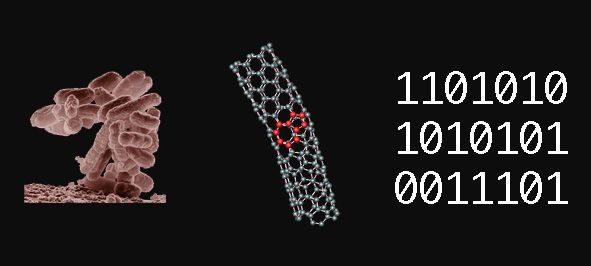
bacteria under magnification, a nanotube, binary code SOURCE: USDA, Vin Crespi, Pennsylvania State Physics, SP

How many bioethics subfields do we really need to grapple with the issues at the cutting edge of contemporary science? Maybe just one. An interview with Gregory Kaebnick and Andrew Light.

Gregory Kaebnick and Andrew Light talk with Managing Editor Andrew Pratt About the Ethics of Emerging Technologies

Listen online or download the full conversation:

icon for podpress All Together Now - The Ethics of Emerging Technologies [50:38m]: Hide Player | Play in Popup | Download (58)

Subscribe to Science Progress podcasts through iTunes.

Nanoethics. Neuroethics. Synbioethics. How many bioethics subfields do we really need to grapple with the issues at the cutting edge of contemporary science? Maybe just one, suggest the authors of a recent report from the Hastings Center and the Woodrow Wilson Center for International Scholars: an ethics of emerging technologies. The reason being that emerging technologies are not diverging from one another—rather, they are converging. As these fields begin to overlap, sharing tools and techniques, so too do the ethical questions converge. Namely, they raise the potential for both physical harms we must consider—unforeseen environmental damage from nanomaterials or synthetically engineered bioterrorism weapons—as well as nonphysical harms that might result from the inequitable distribution of, for instance, new drugs or energy sources built on nanotech or synthetic biology.

To explore these ethical approaches to emerging technologies Science Progress spoke with Gregory E. Kaebnick, editor of the Hastings Center Report and principal investigator on the Center’s “Ethical Issues in Synthetic Biology” project, and Andrew Light, a Senior Fellow at the Center for American Progress. Because the field is advancing so rapidly, scientists, ethicists, and policymakers must address the social and ethical issues now, as it still matures, argue Kaenick’s colleagues, the authors of the new study. (To listen to the podcast of our conversation, see the audio player in the sidebar, download the mp3, or subscribe via iTunes.)

Ethical Issues in Synthetic Biology

By Erik Parens, Josephine Johnston, and Jacob Moses of The Hastings Center

Synthetic biology, commonly referred to as “synbio,” is not one particular technology, but “more of an agenda” to use existing scientific tools to do rather than simply understand biological science, Kaebnick explained. Synbiologists “create and modify biological parts and organisms” using “a confluence of a variety of technologies” including DNA synthesis, information processing, and DNA sequencing, he said. The techniques can yield medicines, fuel, and industrial chemicals. Moreover, Light added that synbio shares many important concepts and jargon with information technology. Synthesizing DNA, for instance, is analogous in some ways to programming a machine to make it perform a specific task.

But what about the potential benefits promised by emerging technologies like synthetic biology and nanotech? One likely benefit, Light explained, may come from the intersection of nano and synbio energy research. Scientists in multiple U.S. labs are working to develop artificial photosynthesis, a process in which engineered cells turn water, sunlight, and carbon into biofuel. Light pointed to this as an important area of renewable energy research because it could help harness the 800 terawatts of solar energy striking the Earth at any given moment and transform it into useable resources. “This is at least one reason why I think we could see a big benefit if this technology develops in a responsible way,” he said.

Another important advance is in the artificial production of artemisinic acid, the precursor for artemisinin, an effective treatment for drug-resistant malaria. Kaebnick called it the “poster child for synbio,” as natural wormwood sources for the compound are expensive and rare.

Despite these potential benefits, synbio raises a number of concerns. One of the greatest risks is bioterrorism, Kaebnick said, as DNA synthesis techniques could be used to reproduce a variety of pathogens. For example, with the appropriate gene sequences, rogue scientists could recreate the polio virus or smallpox. They could even reengineer smallpox so it is more deadly than the original disease, he explained.

Bioterrorism is a clear potential physical harm. In contrast, potential nonphysical harms present philosophical questions that range from “Are we over stepping our bounds as humans?” by engineering artificial life forms to “Who should have access to life-extending drugs?”

For example, Light suggested, if scientists develop a drug that radically extends the human lifespan, it may not be immediately accessible to the whole population although there would be “enormous pressure to invest in this technology,” he said.

A similar concern is creating whole organisms with synthetic DNA, Kaebnick said. Environmental preservation champions who believe “we ought to preserve biodiversity and rare organisms” even if it is “economically disadvantageous” oppose such synbio research. He went on: “Down the road, we may have the ability to control our children’s development in utero,” using emerging technologies. Ethical issues in this area of synbio are similar to existing concerns raised by assisted reproductive technologies.

A number of regulations are already in place for synbio, Kaebnick said, as rules for biotechnology often spill over to technologies used in synbio. Regulations enforced by the Environmental Protection Agency, Department of Agriculture, and other federal agencies may apply to emerging technologies as well, he explained. However, Light said there are still gaps left when considering synbio research, and due diligence will be necessary to prevent their exploitation. “The attitude is not to keep synbio from happening,” he said, but rather to create and maintain public confidence in its benefits.

Interview produced by Andrew Plemmons Pratt, managing editor for Science Progress, and Vivian Cheng, intern with Science Progress.


http://www.scienceprogress.org/2009/07/all-together-now/

Etiquetas: ,

martes, junio 16, 2009

From Marion Nestle's blog

Nanotechnology: threat or promise?

A recent meeting of the Institute for Food Technologists included presentations on applications of nanotechnology to food. These, say food technologists, have the potential to improve the safety, quality, and shelf life of foods. They cite as examples anti-microbial coatings on food packaging materials and improved delivery systems for vitamin and flavor ingredients.

Nanotechnology deals with substances at the atomic and molecular levels, which means really, really small. One nanometer is 0.000,000,001 meters (10 to the minus 9, or one millionth of a millimeter).

Until now, I haven’t said anything about food nanotechnology because I really don’t know what to say about it. Is it safe? How would we know? Friends of the Earth says nanotechnology is the antithesis of organic agriculture and represents a new threat to our food supply. Even Food Technology thinks it should be disclosed on package labels.

The FDA says it already has the authority to regulate food nanotechnology. The industry says that overly strict regulations are impeding progress in this industry (sounds like the GMO arguments, no?).

What’s going on here? I’m having trouble getting a handle on this one.

If you know something about this, comments are most welcome.

- Marion Nestle


SOURCE: http://www.foodpolitics.com/2009/06/nanotechnology-threat-or-promise/

Etiquetas: ,

sábado, mayo 16, 2009

Nuevas tecnologías: modas, mentiras y peligros


Grupo de Acción sobre Erosión, Tecnología y Concentración Grupo ETC

Nuevas tecnologías y tiranía de las corporaciones

Por todos lados escuchamos noticias preocupantes sobre los distintos aspectos de la crisis: las finanzas, el clima, la salud, la escasez de alimentos y agua. Frente a ello, los gobiernos y empresas que propiciaron la crisis insisten en que la solución no está en cambiar radicalmente los modos de producción y consumo ni terminar con el acaparamiento de tierras, la injusticia social, o con la relación explotadora y contaminante con el ambiente y la naturaleza. Que lo necesario es promover remedios tecnológicos nuevos.
Nos encontramos ante un triple ataque a la humanidad y al planeta: por un lado, hambre, caos climático, contaminación y enfermedad ocasionados por la industrialización; por otro, riesgos de salud, ambientales y económicos provocados por nuevas tecnologías (biotecnología, nanotecnología, geoingeniería, biología sintética); finalmente, la tiranía de las corporaciones —que imponen estas tecnologías como “necesarias” para salir de las crisis. Muchos gobiernos tienden a aceptar los remiendos tecnológicos impuestos por las corporaciones y las subsidian con recursos públicos. Este triple ataque ocurre en distintas versiones, en todos los rincones del planeta.

Las tecnologías de moda

Las universidades, los medios de comunicación y el mercado pregonan los nuevos descubrimientos sobre el genoma humano, las infinitas posibilidades de chips electrónicos cada vez más pequeños, la inminente creación de nuevas formas de vida, el dominio sobre los átomos y las moléculas, el control de las condiciones climáticas. Quieren convencernos de que todas las modas tecnológicas son buenas para todos y de que no aceptarlas es una necedad porque la humanidad y el planeta necesitan de ellas para resolver sus problemas. ¿Cuáles son estas modas tecnológicas y porqué debemos considerarlas y evaluarlas de un modo crítico?

El delirio por dominar la materia

Cuando escuchamos “nanotecnología”, “nanopartículas”, “nanómetro”, “nano”, nos hablan del reino de lo inmensamente pequeño, más pequeño aún que lo microscópico. Nanotecnología es el conjunto de técnicas utilizadas para manipular la materia desde de los átomos y las moléculas. Un nanómetro equivale a la millonésima parte de un milímetro. Un cabello humano mide unos 80 mil nanómetros de grosor.
Y es que los bloques de construcción de toda la materia son así de minúsculos. Son los átomos y las partes de los átomos que forman los elementos químicos. Por eso, los instrumentos y procesos de la nanotecnología se pueden aplicar a casi cualquier cosa fabricada en algún sector de la industria. La materia manipulada desde sus moléculas puede mostrar propiedades que antes no aparecían: mayor conductividad eléctrica, elasticidad, resistencia, o reactividad. Con tecnologías que manipulan lo inmensamente pequeño se están produciendo computadoras más rápidas, medicamentos dirigidos a sitios específicos del cuerpo humano, materiales a prueba de balas, cosméticos, filtros solares, insumos agrícolas, aditivos para los alimentos, embalajes, textiles, enseres electrodomésticos.
Hay en el mercado más de 700 productos que contienen nanopartículas, sin regulación en ningún país y sin etiqueta (es decir, sin que sepamos que las contienen) aunque cada vez hay más evidencias de sus posibles impactos en la salud y el ambiente y de que son un riesgo para los trabajadores que las manipulan. El sistema inmunológico no detecta las nanopartículas, por eso pueden atravesar la barrera sanguínea que protege al cerebro, llegar a la placenta o depositarse en otros órganos, intoxicando las células, causando tumores y cáncer.
Por si fuera poco, la posibilidad de trabajar con los pedazos de los átomos y de inventar moléculas, ha provocado una absurda fiebre de patentamiento de los elementos químicos, que son el punto de partida de todo lo existente, de lo vivo y lo inerte (lo “no vivo”).

Jugar a Dios

Otra moda tecnológica es la biología sintética, que busca construir en laboratorio nuevas formas de vida para desempeñar tareas particulares. La biología sintética quiere reescribir la vida ensamblando grupos de genes de modos nuevos y hacer organismos “diseñados a la medida” que produzcan compuestos químicos, fármacos o combustibles.
Las compañías de biología sintética, que reciben muchos fondos de los gobiernos, se promueven alegando que producirán la cura para la malaria, plásticos biodegradables, bacterias que limpien los desechos tóxicos, árboles especiales para producir etanol. El poder para crear vida artificial se está concentrando en manos de las mayores corporaciones petroleras, farmacéuticas, semilleras y agroindustriales, cuestionadas por su modo salvaje de usar los derivados del petróleo y ocasionar gran parte del calentamiento global.
La vida no es un diseño electrónico ni un código de cómputo: los errores podrían ser letales e irreversibles. Las compañías buscan ganancias en vez de preocuparse por las necesidades sociales o por el mal uso de sus inventos, deliberado o accidental. Con esa actitud pueden provocar nuevas y desconocidas catástrofes.

Pretenden “mejorar” a los humanos

La genómica estudia el funcionamiento, origen y evolución de la herencia biológica. La genómica humana, especialmente, promete un nuevo paraíso de salud basado en el conocimiento profundo de esta herencia personal. A partir de entender las diferencias en esta herencia, la genómica humana pretende desarrollar una medicina personalizada y fármacos, para según ellos, mejorar el desempeño humano.
La medicina personalizada se basa en la creencia de que podemos detectar, prevenir y curar las enfermedades según los genes de cada quien y, aunque todavía este argumento está muy lejos de demostrarse, ya están a la venta más de mil pruebas genéticas personales diferentes (sin regulación alguna) para detectar identidades raciales, tendencias a enfermedades, deficiencias o genialidades de personalidad y supuestos defectos de crecimiento físico. La publicidad de las empresas pretende hacernos creer que nuestros genes marcan absolutamente nuestro destino, pero pueden ser la llave de la salud, el bienestar y ¡hasta el éxito!, si se manipulan mediante los remedios que nos promete esta nueva moda científica.
La información derivada de estas pruebas le sirve sobre todo a las empresas que quieren demostrar la relación entre las enfermedades o “deficiencias” y las variaciones genéticas. Además, estas pruebas son costosas y con ellas ya hay instancias privadas y gubernamentales en varias partes del mundo que violan la privacidad y promueven la discriminación.
La idea de “mejorar el desempeño humano” es una idea exitosa para las empresas porque al convencernos de que podemos ser mejores, más precisos, más agudos, más eficientes, con fármacos y “alimentos especiales”, pueden obtener más ganancias. Son entonces medicamentos para gente sana, que espera ser más guapa o más feliz a punta de pastillitas. Las drogas para personas sanas son mucho más rentables que los medicamentos para los enfermos. La genómica sueña con un futuro de personas diseñadas para ser perfectas. Millones hoy en día están ansiosos de superar limitaciones reales o imaginadas (incluidas las emocionales) mediante remedios genómicos. ¿Serán considerados buenos ciudadanos los que no se “mejoren”? ¿Serán discriminados aquéllos que no se sometan a los tratamientos de mejora? Tenemos ante nosotros un panorama aterrador donde las empresas y el mercado tal vez lleguen a definir qué es un ser humano “normal”.

Etiquetas: ,

viernes, noviembre 21, 2008

Nanoenergy

http://www.innovationwatch.com/choiceisyours/choiceisyours-2008-09-15.htm

NANOENERGY

Gregor Wolbring

I have covered nanosolar before. In this column I will highlight generic nanoenergy, starting with the late Nobel laureate who received the award for his work on buckyballs. According to Richard Smalley, humanity’s Top Ten Problems for next 50 years are: (1) energy; (2) water; (3) food; (4) environment; (5) poverty; (6) terrorism and war; (7) disease; (8) education; (9) democracy; and (10) population.

In a 2003 talk, he foresaw the following shift in energy generation and demand between 2003 and 2050…


Energy has been seen for a while as one of the main areas nanotechnology should tackle.

According to a 2006 Nano energy conference: “There is a growing awareness that nanoscience and nanotechnology can have a profound impact on energy generation, storage, and utilization by exploiting the significant differences of energy states and transport in nanostructures and macrostructures. Nanotechnology-based solutions are being developed for a wide range of energy problems such as: solar electricity, hydrogen generation and storage, batteries, fuel cells, and thermoelectrics.”

“From energy saving to revolutionary approaches” was the tagline of the Nano Energy 2008 conference. The conference materials elaborated: “Today, nano-materials are the foundation for a fast-growing approach to energy saving. Indeed, nanotechnology offers the ability to enhance many key properties of energy technologies to achieve sustainability and secure the future energy supplies.”

The European Nanoroadmap Synthesis Report prepared for the European Commission stated: “Modern society is heavily depending on energy and any progress in this field is affecting a very large spectrum of sectors which are important for the EU policy as, for example, security and diversification of energy supply, climate changes and pollution, industrial competitiveness and sustainable growth.”

It identified 10 areas of Nanoenergy applications and examined four in the report:

  • solar cells;
  • thermoelectricity;
  • rechargeable batteries and supercapacitors; and
  • heat insulation and conductance.

A report from Cientifica -- “Nanotechnologies for the Automotive Energy Markets” -- indicates that the primary impact of nanotechnologies will be in more efficient use of existing resources, rather than the creation of new supplies from solar and hydrogen based technologies.

The report concludes that:

  • The most immediate opportunities lie in saving energy through the use of advanced materials and this is already a $1.6 billion dollar market, predicted to rise to $51 billion by 2014
  • Despite advances in battery technology, hydrogen storage and fuel cells, energy saving technologies will exhibit faster growth, accounting for 75% of the market for nanotechnologies in 2014, up from 62% in 2007
  • The adoption of energy generation technologies is highly sensitive to geopolitical factors and consumer acceptance, while energy saving technologies exhibit no such problems
  • Solid state lighting, nanocomposite materials, aerogels and fuel borne catalysts will have the greatest impact between now and 2014
  • Compound annual growth rates are 64% for energy saving technologies and 90% for energy generation, while energy storage applications show a comparatively lowly 30%.
  • Applications in transportation will increase to $50 billion by 2014 with a CAGR of 72%

Nanoenergy does not come without challenges, however. The European Nanoroadmap outlines timeframes to 2015 for the development of solar cells, thermoelectricity, rechargeable batteries and supercapacitors, and heat insulation and conductance. Challenges, barriers, and bottlenecks are identified.

A presentation at a meeting at Rice University in May 2003 outlined the following Energy Nanotech Grand Challenges:

  • Photovoltaics -- drop cost by 100 fold
  • Photocatalytic reduction of CO2 to methanol
  • Direct photoconversion of light + water to produce H2
  • Fuel cells -- drop the cost by 10-100x + low temp start
  • Batteries and supercapacitors -- improve by 10-100x for automotive and distributed generation applications
  • H2 storage -- light weight materials for pressure tanks and LH2 vessels, and/or a new light weight, easily reversible hydrogen chemisorption system
  • Power cables (superconductors, or quantum conductors) with which to rewire the electrical transmission grid, and enable continental, and even worldwide electrical energy transport; and also to replace aluminum and copper wires essentially everywhere -- particularly in the windings of electric motors and generators (especially good if we can eliminate eddy current losses)
  • Nanoelectronics to revolutionize computers, sensors and devices
  • Nanoelectronics based Robotics with AI to enable construction maintenance of solar structures in space and on the moon; and to enable nuclear reactor maintenance and fuel reprocessing
  • Super-strong, light weight materials to drop cost to LEO, GEO, and later the moon by > 100 x, to enable huge but low cost light harvesting structures in space; and to improve efficiency of cars, planes, etc.
  • Thermochemical processes with catalysts to generate H2 from water that work efficiently at temperatures lower than 900 C
  • Nanotech lighting to replace incandescent and fluorescent lights
  • NanoMaterials/ coatings that will enable vastly lower cost of deep drilling, to enable HDR (hot dry rock) geothermal heat mining
  • CO2 mineralization schemes that can work on a vast scale, hopefully
  • starting from basalt and having no waste streams

Etiquetas: , ,

miércoles, noviembre 19, 2008

Balas de plata tóxicas

Por Silvia Ribeiro

Uno de los argumentos favoritos de los poderosos es que la crisis alimentaria, climática, energética, ambiental, se resolverá con nuevas tecnologías.

Mas allá del discurso coyuntural de los que intentan salvar sus privilegios de la hecatombe, es verdad que la tecnología es uno de los pilares que han permitido al capitalismo renacer de sus propias cenizas, dando ventajas comparativas a quienes controlan las innovaciones tecnológicas. A diferencia de la especulación financiera, son ventajas reales porque potencian procesos productivos.

Pero esto no tiene nada que ver con cambios deseables ni justicia social -las innovaciones tecnológicas en cualquier sociedad desigual son herramientas que preservan y ahondan las brechas que ya existían. Los desastres ambientales, sanitarios, climáticos, provocados por el modelo tecnológico dominante, son efectos secundarios, "externalidades" del sistema, pero aprovechados por las empresas para hacer más negocios. Al fin, si hay destrucción de bienes y recursos, hay escasez y por tanto más necesidades y "oportunidades de mercado".

Una de las tecnologías claves para esta renovación capitalista, es la nanotecnología -la manipulación de la materia a nivel de átomos y moléculas-, por ser la plataforma de innovación de casi todas las otras (informática, biotecnología, ingeniería de materiales, genómica, automovilística, tecnologías agrícolas, alimentarias, petroleras, mineras, farmacéuticas…).

A nanoescala (un nanómetro es la mil millonésima parte de un metro), las propiedades físicas y químicas de la materia cambian: puede ser su color, resistencia, elasticidad, conductividad eléctrica, reactividad u otras. Los usos potenciales son vastos. Actualmente hay más de 700 productos en el mercado basados en aplicaciones nanotecnológicas, que incluyen cosméticos y bloqueadores solares, textiles, ropa, materiales de construcción, barnices, llantas, plaguicidas, nano-celdas de captadores solares. La cuarta parte de la industria farmacéutica utiliza nanopartículas construídas fundamentalmente para administración de medicamentos. Todo signado por las patentes monopólicas más amplias de la historia, en manos de trasnacionales como IBM, DuPont, Hitachi, Procter and Gamble, así como ejércitos (Estados Unidos y Europa) y universidades que pese a estar sustentadas con dinero público, licencian las patentes en forma monopólica a empresas.

3D model of three types of single-walled carbon nanotubes.

Un aspecto particularmente pertubador es que las nanopartículas construídas muestran importante toxicidad en plantas, animales y humanos, debido justamente a su tamaño, que aumenta su reactividad pero impide que sean detectadas por el sistema inmunológico. Como las sustancias están autorizadas para su uso en partículas mayores, los que manipulan y venden nanopartículas o productos que las contienen, no necesitan hacer test toxicológicos previos. Sin embargo, estamos frente a un fenómeno masivo y global de nuevas y graves formas contaminación del ambiente y la salud de todos los seres vivos, que los promotores de la nanotecnología prefieren obviar. Países como México, Argentina y Brasil tienen, además de empresas, programas universitarios de nanotecnología apoyados por el erario público. El 99 por ciento de su discurso es sobre las maravillas de la tecnología, con escasa o ninguna mención a los problemas que conlleva.

Veamos un caso. Por sus propiedades microbicidas y antobacterianas, las nanopartículas de plata se están usando en productos farmacéuticos y quirúrgicos, en ropa interior, guantes, medias y calzados deportivos, en productos para bebés (biberones, almohadas), contenedores para alimentos, productos de higiene personal, cubiertos, refrigeradores y lavarropas. Ya se sabía que la plata -en partículas mayores- es tóxica además para la vida acuática. En 2005, un estudio encontró que la plata en nanopartículas es 45 veces más tóxica que la usada anteriormente. En 2008, otro estudio mostró que el lavado de prendas que tienen nanopartículas de plata, o el uso de lavarropas con nano plata, desecha parte de estas nanopartículas sintéticas a los desagües, con fuerte toxicidad para la vida acuática, matando también bacterias benignas en los sistemas de drenaje. Usar este tipo de productos con los bebés, es como acostarlos sobre una cama de químicos ultra tóxicos, mucho más que cualquier plaguicida permitido en el mercado. Lo que se usa en alimentos va a parar al sistema digestivo.

Basados en estos estudios, el Centro Internacional de Evaluación Tecnológica de Estados Unidos, con apoyo de trece organizaciones ambientalistas y de consumidores, (Grupo ETC, Greenpeace, Amigos de la Tierra, Consumers Union y otros) presentó una demanda a la Agenda de Protección Ambiental de Estados Unidos, por haber permitido la liberación al ambiente y al consumo de un tóxico de alta potencia presente en más de 260 productos de venta libre. Este es apenas uno de los usos de nanopartículas.

Urge estar alertas a esta nueva invasión tóxica que gobiernos y científicos acríticos nos quieren vender como la nueva panacea.

Silvia Ribeiro es Investigadora del Grupo ETC

La Jornada, México, 8 de noviembre de 2008.


Etiquetas: ,

jueves, octubre 02, 2008

Molecular manufacturing

http://www.innovationwatch.com/choiceisyours/choiceisyours-2008-08-15.htm

MOLECULAR MANUFACTURING

Gregor Wolbring

The term ‘nanotechnology’ was used first to describe a way to manufacture something from atomic molecules (such as the food replicator in many science fiction films where, when one says “coffee,” the machine synthesizes the coffee molecule by molecule) (1; 2). In 2000, nanotechnology became linked to nanobots and nanoreplicators (3). Many use the term in the very narrow meaning of nano material sciences. It is also used to mean ‘nanoscale technology’ and nanoscale sciences covering ‘nanotechnology’ R&D products, ideas and processes with controlled size below 300nm (some say 100nm) (4; 5).

The original meaning of the term has been altered, and now ‘nanotechnology’ is generally known as molecular manufacturing or molecular nanotechnology (4). The International Organization for Standardization Technical committee 229 on Nanotechnology (ISO/TC229) that produces standards for classification, terminology and nomenclature, basic metrology, calibration and certification, and environmental issues related to nanotechnology uses the following definition:

  1. Understanding and control of matter and processes at the nanoscale, typically, but not exclusively, below 100 nanometres in one or more dimensions where the onset of size-dependent phenomena usually enables novel applications, where one nanometre is one thousand millionth of a metre,
  2. Utilizing the properties of nanoscale materials that differ from the properties of individual atoms, molecules, and bulk matter, to create improved materials, devices, and systems that exploit these new properties (6)

The ISO/TC229 business plan states:

“Nanotechnology is expected to evolve through four overlapping stages of industrial prototyping and commercialization. The first stage, already begun, involves the development of passive nanostructures: materials with fixed structures and functions often used as parts of a product. Products containing nanomaterials already in the marketplace mainly involve manufactured nanoparticles (metal oxides, quantum dots, carbon nanotubes, etc.) serving as raw materials, ingredients or additives in existing products. The second stage, also already begun, focuses on active nanostructures that change their size, shape, conductivity or other properties during use. For example, drug-delivery particles that release therapeutic molecules in the body when they reach their targeted diseased tissues. The third stage (projected to begin around 2010) will see the further development of expertise with systems of nanostructures and the directing of large numbers of intricate components to specified ends (for example, the guided self-assembly of nanoelectronic components into three-dimensional circuits and whole devices). In the fourth stage (projected to begin around 2015-2020), nanotechnology will expand to include molecular nanosystems --heterogeneous networks in which molecules and supramolecular structures serve as distinct devices. Computers and robots could be reduced to extraordinarily small sizes.” (6)

The ISO/TC229 uses a definition first promoted by the International Risk Governance Council 2006 nano white paper (7). This definition covers all the different nanotechnology definitions used so far, including the original one now called ‘molecular manufacturing.’

******

The jury is still out on whether the Star Trek food replicator will appear. If the move toward atomic commodities (molecular manufacturing) takes place, it is logical to expect a change in the nature of the commodity market and, in the end, in local, regional and global trade.We could also expect a change in labour force requirements and labour relations, and many other areas that are linked today to trade.

We often disregard research that does not offer concrete near-term results as “science fiction,” and question its feasibility. However, using a science fiction or “it-won’t-be-possible” argument with respect to molecular manufacturing or any other research with long term timelines is short-sighted and problematic. It leaves us unprepared in the event of a scientific breakthrough. It prevents us from taking a hard look at what the consequences of success would be, what societal changes it would precipitate or require, and what safeguards it would necessitate.

The neglect of taking a foresight look at possible developments is often justified by stating that there is enough time to deal with the product when it becomes feasible. That sentiment depends on a long lag phase between the scientific breakthrough and deployment of the market-ready product, so we can prepare ourselves for the consequences. This reality seems to be less and less true.

I call this it-will-not-happen dynamic the ‘Berlin Wall Syndrome’ (11). Prior to 1989, the fall of the Berlin Wall was seen as impossible by most, and the discourse around German reunification reflected that belief. West Germany (in particular) and the rest of the Western World (more generally) were totally unprepared for the dismantling of the Wall.

Molecular nanotechnology or molecular manufacturing is treated as such a wall. Hardly anyone develops plans for the eventuality that this wall will fall, which leaves us unprepared for the disruptions which will inevitably appear in trade and other areas if and when it falls. The Centre for Responsible Nanotechnology (12) and the Foresight Institute for Nanotechnology(13) are the main promoters of molecular manufacturing. And while they do consider its social impact, the consideration is limited, and the people involved in the governance of molecular manufacturing are a narrow group of potential stakeholders -- making it a problematic discourse.

The choice is yours to get involved in the governance of molecular manufacturing, so plans are in place to deal with it, in case the vision becomes a reality.

Gregor Wolbring is an ability governance, science and technology governance, disability studies and health policy scholar. He is an Assistant Professor at the University of Calgary, Faculty of Medicine, Department of Community Health Sciences, Program in Disability Studies and Community Rehabilitation. He is a member of the Center for Nanotechnology and Society at Arizona State University; Part Time Professor at Faculty of Law, University of Ottawa, Canada; Adjunct Faculty, Critical Disability Studies, York University, Toronto, Canada; Member CAC/ISO - Canadian Advisory Committees for the International Organization for Standardization section TC229 Nanotechnologies; Member of the Review Board for the journal Review in Disability Studies; Member of the International Editorial Advisory Board for the journal Studies in Ethics, Law and Technology; Chair of the Bioethics Taskforce of Disabled People's International; and former Member of the Executive of the Canadian Commission for UNESCO (2003-2007 maximum terms served). He publishes the Bioethics, Culture and Disability website, authors a weblog on NBICS and its social implications and is a regular contributor to the What Sorts of People blog.

Etiquetas: , ,

jueves, julio 24, 2008

Nanotechnology, transhumanism and the bionic man

http://www.nanowerk.com/spotlight/spotid=5848.php

Nanomedical and bionic products that could directly improve sensory, motoric and other functions cover all aspects of the human body. A 2002 report by the U.S. National Science Foundation ("Converging Technologies for Improving Human Performance"; pdf download, 5.9 MB) describes several nanotechnology-based areas for the improvement of human health and capabilities in the next 10-20 years. These visions go far beyond the current implant technologies (bionic ears and limbs, neural and retinal implants, artificial muscles, nanotechnology skin for prosthetic arms, etc) under development:
  • Nano-Bio Processor – A device for programming complex biological pathways on a chip that mimics responses of the human body and aids the development of corresponding treatments. An example would be the precise “decoration“ of nanoparticles with a tailored dosage of biomolecules for the production of nanomedicines that target specific early biomarkers indicative of disease.
  • Self-Monitoring of Physiological Well-Being and Dysfunction Using Nano Implant Devices – One outcome of combining nanotechnology with biotechnology will be molecular prosthetics – nano components that can repair or replace defective cellular components such as ion channels or protein signaling receptors. Another result will be intracellular imaging, perhaps enabled by synthetic nano-materials that can act as contrast agents to highlight early disease markers in routine screening. Through self-delivered nano-medical intervention, patients in the future will be able in the comfort of their homes to perform noninvasive treatments autonomously or under remote supervision by physicians.
  • Nano-Medical Research and Intervention Monitoring and Robotics – Nano-enabled unobtrusive tools will be invaluable for medical intervention, for example, nanorobots accomplishing entirely new kinds of surgery or carrying out traditional surgeries far less invasively than does a surgeon’s scalpel.
  • Brain-to-Brain and Brain-to-Machine Interfaces – One goal is to establish direct links between neuronal tissue and machines that would allow direct control of mechanical, electronic, and even virtual objects as if they were extensions of human bodies. Researchers are already closing in on this sci-fi sounding scenario.
  • "'Enhancement medicine' is a new field providing remedy through surgery, pharmaceuticals, implants and other means that increasingly will blur the boundaries between therapeutic interventions and performance/ability enhancement" says Wolbring. "In the transhumanist enhancement model the notions of disease prevention, public health, healthy community, health promotion and the actions they entail, all change substantially."
    Putting permanent, especially nanotechnology-enabled, body enhancements into a broader societal context, the issues of their (legal or illegal) use in sports becomes almost trivial. Wolbring says that the sport regulatory system is not prepared for what is coming. It appears that not only the general legal system but all levels of our society are not prepared either.

    Image:Trans-post-human2.jpg

    Etiquetas: ,

    sábado, mayo 24, 2008

    NanoAlimentos: el futuro de su comida


    Gian Carlo Delgado Ramos

    La nanotecnología manipula la materia a escala nanométrica, es decir a la mil millonésima de metro. Alude al diseño, caracterización y producción de nanoestructuras, esto es dispositivos y sistemas a partir de “controlar” la forma, el tamaño y las propiedades de la materia a dicha escala. Las aplicaciones son amplias y abarcan lo civil y lo militar.

    Por ejemplo, los materiales nanoestructurados ya son utilizados, desde la fabricación de neumáticos de alto rendimiento o de telas con propiedades antimanchas, hasta la de cosméticos, fármacos y nuevos materiales para usos en electrónica, aeronáutica o armas de última generación (más potentes, ligeras, etcétera).

    El avance de la nanotecnología ha generado una doble atención. Por un lado, se observan amplios beneficios que posibilitarían la potencial reestructuración, en principio, de todo el entorno material que nos rodea. Y, por el otro, se identifican posibles implicaciones que esa transformación generaría en el medio ambiente y, de ahí, en la salud, puesto que estarían presentes novedosas nanoestructuras diseñadas por el ser humano y cuyas características, en su gran mayoría, son todavía desconocidas. A pesar de ello, el entusiasmo es creciente. La expansión del negocio, calculado en ventas por unos 50 mil millones de dólares (mmdd) en 2006, alcanzará al cierre de 2008 un monto de entre 100 y 150 mmdd. Para 2010 se habla conservadoramente de 500 mmdd y para 2015 del billón de dólares. No es casual que el gasto mundial en investigación se ha elevado: pasó de unos 430 millones de dólares en 1997, a 3 mmdd en 2003; a 8.6 mmdd en 2004; y a 12.4 mmdd en 2006.

    La nano-agroindustria. Con pocas aplicaciones en el mercado, las ganancias “nano” del sector se estiman en 2.6 mmdd para 2003 y siete mmdd para 2006. Las proyecciones sugieren hasta 20 mmdd al cierre de esta década. Tal boom se debe a que la nanotecnología promete revolucionar la agroindustria como un todo. Es decir, en tanto la producción agrícola, el procesamiento de alimentos y su empaquetamiento.

    1. En la producción agrícola se habla de “cultivos de precisión”, sobre todo de bienes relativamente caros y que por tanto permiten fuertes inversiones. Dígase, por ejemplo, la uva para vino o el tomate cherry de cultivo hidropónico. El paquete nanotecnológico incluye, además del eventual “perfeccionamiento” de la manipulación a nivel atómico-molecular del ADN, el uso conjunto de computadoras, sistemas de posicionamiento global, micro/nano dispositivos sensoriales remotos, así como nuevos agroquímicos “nanomejorados”; todo con el objeto de: a) monitorear en tiempo real las condiciones ambientales y del suelo, así como del desarrollo de las plantaciones (incluyendo el estrés); b) controlar los insumos empleados; y c) identificar eventuales patógenos, plagas u otros inconvenientes como los relacionados a las condiciones óptimas de almacenamiento de granos u otros productos agrícolas (humedad, temperatura, etcétera).

    Y es que se considera posible un “tratamiento inteligente” que, similar al de la nanomedicina, pueda monitorear y diagnosticar la salud de los cultivos y, consecuentemente, a partir de desarrollar “nanoestructuras inteligentes”, entregar dosis adecuadas de herbicidas, pesticidas, nutrientes, etcétera. De modo similar funcionaría la nanoveterinaria tanto en lo que refiere al monitoreo, diagnosis, tratamiento e intervención terapéutica de animales. Monsanto (Estados Unidos), Syngenta (Suiza), Bayer y BASF (Alemania) se perfilan a la cabeza del negocio.

    2. En los alimentos procesados las nanoaplicaciones son diversas, aunque el grueso gira en torno al uso de diversas nanoestructuras como plataformas ideales para el nanodiseño, introducción y funcionalidad de conservadores, saborizantes, nutriceúticals (vitaminas, etcétera) y otros aditivos para la elaboración de alimentos “a la medida” del consumidor. El sostén tecnológico es el diseño de nanoestructuras que puedan ser “activadas” al contacto con la saliva o los jugos gástricos, entre otros medios. En el primer caso se habla de intensificadores de sabor, mientras que en el segundo, de bloqueadores del mismo. El pan de caja de la autraliana Tip Top ya hace uso de nanopartículas rellenas de aceite de pescado como fuente de Omega 3, mismas que se rompen una vez ingeridas de modo que el consumidor no detecte el “mal sabor”.

    Las expectativas han llevado al grueso de los gigantes de la industria a desarrollar todo tipo de nanoestructuras multi-funcionales, muchas de las cuales tendrán a su estómago como destino. Tal es el caso de Nestlé (dueña también del 49 por ciento de L'Oreal; en la vanguardia de nanocosméticos), Kraft (EUA; que encabeza la iniciativa privada involucrada en el diseño del plan de acción de ese país en nanoalimentos), Heinz (EUA), Unilever (Reino Unido/Holanda), entre otras.

    3. Las nanoaplicaciones en empaquetamiento son revolucionadoras. De las investigaciones más sonadas está la “lengua electrónica” de Kraft, una plataforma de nanosensores extremadamente sensibles a gases que desprenden los alimentos cuando se echan a perder y que hacen que un indicador cambie de color. Se suman materiales como la película de embalaje Durethan (de Bayer Polymers) que es más fuerte y resistente al calor que el resto de las que se encuentran en el mercado. Además, protege los alimentos envasados de la humedad y del oxígeno por la vía de nanopartículas de silicate introducidas a la película nanoestructurada. El uso de nanopartículas bloqueadoras de rayos UV (de dióxido de titanio), antimicrobianas y antibacterianas (de plata) también prometen alargar el tiempo de vida de productos perecederos.

    Se suma el “empaquetamiento inteligente” y que incluye técnicas de “nano-impresión” (nanocódigos de barra) y de nanocodificación de materiales plásticos y de papel para propósitos de autentificación por radio frecuencia. Se trata de rasgos útiles tanto para la protección de marcas y patentes, como para el rápido y fácil manejo de millones de paquetes por parte de cadenas como Walmart o Carrefour.

    Etiquetas:

    sábado, marzo 01, 2008


    Nanotoxicology

    Gregor Wolbring

    February 28th 2008

    I covered some what I see as the start of the nanotoxicology debate in my recent column Nano-cosmetics, sunscreen and personal care . There I observed that “the Nanoparticle toxicology debate appears to have started with sunscreen. The nanoformulated titanium dioxide available in sunscreens captured the attention of NGO’s and led to a number of significant questions being raised.” I emphasized in that column that the investigation of the toxicology of nano particles is not new but that the term used in earlier investigations was not "nanoparticles" but "ultrafine particles." I listed some ultrafine particle toxicology research papers in that column. The column presented here covers the field of nanotoxicology and its future in more detail. I will cover the broader Environment, Health and Safety of Nanotech in a future column.

    A number of review article and bibliographies on nanotoxicology that are worth reading are online (1-11). Some are free. The Journal Particle and Fibre Toxicology is an open access journal with many articles on the biological effects of Nanoparticle. A non open access journal is the journal Nanotoxicology. A paper which summarizes some Risk Asessment Studies of Nanomaterials in Japan and Other Countries can be found here. The fact that Nanotoxicology is an important agenda for many people is seen in the many conferences and forums that focus on this topic. The 1st Nobel Forum mini-symposium on nanotoxicology was held 2007 in Stockholm, Sweden (12). An International Conference on Nanomaterial Toxicology organized at Lucknow by Industrial Toxicology Research Centre and Indian Nanoscience Society ICONTOX 2008, took place in Lucknow, India, February 5-7, 2008 (13).The 2nd International Conference on Nanotoxicology will take place in Switzerland on 7-10, September 2008. The Nanorisk Conference , which will take place in October in Paris France, will among others look at the methodologies used to estimate toxicity.


    READ THE REST: http://www.politicsofhealth.org/wol/2008-2-29.htm

    Image:Types of Carbon Nanotubes.png

    Etiquetas: ,

    viernes, febrero 15, 2008

    Nano South Africa

    http://www.innovationwatch.com/choiceisyours/choiceisyours-2008-02-15.htm


    Nano South Africa

    by Gregor Wolbring

    February 15, 2008

    In this column I will outline the state of Nano South Africa. South Africa plays a crucial role in the introduction of new and emerging sciences and technologies in the sub-Sahara, and developments there influence how new and emerging sciences and technologies are perceived in sub-Sahara Africa and in Africa in general.

    I have just returned from a visit there. A lot has changed since I talked about nanotechnology for the first time in 2002. There are also new developments in synethic biology, which I will deal with in a Synbio 4.0 column to be published later this year.

    The World Nano-Economic Congress (WNEC) South Africa 2007 took place recently, presented by the Department of Science and Technology of the Republic of South Africa, and Cientifica, a leading nanotechnology consultant group. WNEC South Africa is the eighth international event in the series since it first began in Washington, D.C., in 2003.

    Etiquetas: , , ,

    Nano aerospace

    http://www.innovationwatch.com/choiceisyours/choiceisyours-2008-01-15.htm

    Nano-Aerospace

    by Gregor Wolbring

    January 15, 2008

    Nanoscale will increasingly have an impact on numerous commercial, military and space aero-applications.

    A NATO lecture series has been developed on nanotechnology aerospace applications. Interestingly, a paper published in 1999 covered the application of molecular nanotechnology in aerospace.

    The Open-Site free internet encyclopedia has a write-up about the purpose, needs, problems and solutions of nanotechnology research for aerospace.

    The most complete publicly available report on nanotechnology applications in non-military aerospace was published recently by the Nanoforum. It says this Nanotechnology in Aerospace report “presents a concise introduction and contribution to the expert debate on trends in nanomaterials and nanotechnologies for applications in the civil aeronautics and space sectors in Europe and explicitly excludes any military R&D and applications.”

    The following table reports timelines and expected trends. Table entries refer to chapters in the report.

    Level of integration

    0-5 years

    5-10 years

    >10 years

    Societal boundary conditions for nanotechnology in aerospace

    Current treaties and regulations guide nanotechnology R&D (ch8)

    More stringent regulations incl. EHS regulations require (nano) innovations in aeronautics (ch3)

    Global & national aims: space exploration & exploitation (ch6)


    Nanotoxicology and occupational nanosafety research ongoing (ch7)


    Aircraft passenger numbers will increase by 5%/year until 2023 (ch3,6)

    Impact of nanotechnology in aerospace on society

    Need to start life cycle analysis & exposure scenarios for aerospace applications of nanomaterials (ch7)

    Need action to stimulate EHS benefits of nanotechnology for aerospace (ch7)

    Nanotechnology applications in aerospace will enable new activities and require changes in legislation (ch8)


    Nanotechnology applications in aerospace will enable new activities and require changes in legislation (ch8)


    Economic factors affecting nanotechnology uptake in aerospace

    Space budgets amount to billions of euros per year (ch6)


    European public and private aeronautic R&D funding €100 billion by 2020 (ch6, EU STAR21)


    EU stimulates SMEs in space sector (ch6)


    2023: 16,601 new aircraft needed, market size €1.48 trillion (ch6, Airbus)

    Technical system

    Nano/picosatellites (ch4)

    Russia: new reusable spacecraft (ch6)

    ESA: new systems, architectures & technologies to reinvent design of space missions (ch6)


    Satellite on chip, autonomous satellites swarm (ch4)

    Aircraft weight half of current conventional (ch3, NASA 2001)


    Space elevator, colonisation, autonomous nanorobot swarm (ch4)

    Technical subsystem

    Black box using nanosensors, CNT based electronic noses; CNT based lab on a chip/biochip (ch4)

    2015: fuel cells for onboard aircraft systems (ch3, Boeing, ch4)

    Quantum devices for information management (ch4)


    Battery using nanoelements, quantum dot solar cells, drug delivery, CNT based imaging instruments (ch4)


    Material / component

    2009: apply metallic materials in mass markets (ch2, Lux 2006)

    Industrial scale Severe Plastic Deformation process for metallic nanomaterials? (ch2)

    2020: over 163 million kg nanomaterials in composites, value $2 billion (ch2, Freedonia, 2006)


    2006: 62 patented inventions of nanotech for aerospace (ch6)

    Need for lighter, stronger materials for aeronautics (ch3)

    2020: 40% of nanoclay/CNT polymer composites will be applied in aerospace (ch2, Freedonia, 2006)


    Clay-polymer nanocomposites for flame retardant panels and high performance components in aerospace (ch2)

    CNT filled polymer composites (ch2,4) CNT reinforcing coatings, CNT in transistors, CNT based memory, MRAM (ch4)

    Smart materials, bio memory (ch4)


    Nanoparticles reinforcing polymers and composites, nanoparticles in propellants (ch 4)

    High performance polymer nanocomposite resins (ch2)


    Smart textiles (ch4)


    Nanotechnology is everywhere, and every area deserves our attention. Advances made in nano related to aerospace will find their way into other areas and vice versa. It is essential that every area be monitored -- for its own sake and for its potential impact on other fields.

    Etiquetas: ,