jueves, julio 07, 2016

Pro-GMO campaign exploits Nobel laureates to attack Greenpeace and fool the people

http://www.gmwatch.org/news/latest-news/17077-pro-gmo-
campaign-exploits-nobel-laureates-to-attack-greenpeace-and-fool-the-people

Greenpeace is being criticized for blocking GMO golden rice – even though the crop is years away from being ready, reports Claire Robinson

Etiquetas: , , , ,

jueves, septiembre 17, 2015

Science must be protected from commercial interests

New peer-reviewed paper exposes criticisms of the Seralini study. Claire Robinson reports

Science must be defended against commercial interests that attempt to get important papers on GMOs and pesticides retracted rather than encouraging further research to clarify any uncertainties, says an important new peer-reviewed paper published in Environmental Sciences Europe.

The paper, authored by Drs John Fagan, Terje Traavik and Thomas Bøhn, details the events that followed the publication of the research study led by Prof Gilles-Eric Séralini on GM maize NK603 and Roundup. The Séralini study found toxic effects in rats, notably liver and kidney damage, from NK603 maize and Roundup, both individually and in combination.


The paper was attacked by pro-GMO scientists, who argued that it should be retracted. Eventually the journal editor capitulated and retracted the paper, though it was subsequently republished in Environmental Sciences Europe.


The authors of the new paper comment on this row, lamenting the growth of “a trend in which disputes, between interest groups vying for retraction and republication of papers that report controversial results, overshadow the normal scientific process in which peer-reviewed publication stimulates new research, generating new empirical evidence that drives the evolution of scientific understanding”.


The paper also reviews the research on the safety of NK603 maize and Roundup herbicide for human and livestock health. The authors’ analysis confirms that NK603 maize and Roundup are kidney and liver toxicants at levels below current regulatory thresholds and that “consequently, the regulatory status of NK603, glyphosate and Roundup requires reevaluation”.


The authors also say that preliminary evidence from the Séralini study indicates that Roundup and NK603, individually and in combination, may increase tumour incidence and mortality. They conclude, “Follow-up long-term carcinogenicity studies, using test animal strains and numbers of animals that assure robust conclusions, are required to confirm/refute this preliminary evidence.”


The paper represents a comprehensive summary of the gaping holes in the pro-GMO lobby’s critiques of the Séralini study. Sadly, the European Food Safety Authority (EFSA) must consider itself part of this lobby. This is because EFSA followed the pro-GMO lobby in portraying the Séralini study as a failed carcinogenicity study, rather than what it really was – a chronic toxicity study that unexpectedly found increased tumour and mortality incidence in treated rats and which must therefore be followed up with a dedicated carcinogenicity study using larger numbers of animals.


Thus EFSA effectively pretended not to notice the main findings of the Séralini study: that NK603 GM maize and Roundup caused an increase in liver and kidney damage. The new paper sets the record straight and gives the Séralini study its due status as evidence of these serious toxic effects. It also recommends reforms in the regulatory process that would help protect due scientific process from interference by commercial interests.

—

The Seralini affair: degeneration of Science to Re‑Science?

John Fagan, Terje Traavik and Thomas Bøhn
Environ Sci Eur (2015) 27:19
http://www.enveurope.com/content/27/1/19 (open access)

Abstract

A paper reporting findings relevant to safety of the genetically modified (GM) maize NK603 and the herbicide Roundup (Séralini et al., Food Chem Toxicol. 50:4221–4231, 2012) was retracted against the wishes of the authors, and subsequently republished in another peer-reviewed journal (Séralini et al. Environ Sci Europe, doi:10.1186/s12302-014-0014-5, 2014). These events exemplify a trend in which disputes, between interest groups vying for retraction and republication of papers that report controversial results, overshadow the normal scientific process in which peer-reviewed publication stimulates new research, generating new empirical evidence that drives the evolution of scientific understanding. This paper reviews the current status of research on safety of NK603 maize and Roundup
herbicide for human and livestock health, and attempts to glean from recent developments insights relevant to risk assessment policy for GM crops and pesticides, as well as relevant to the scientific process in general. Our analysis of currently published evidence confirms NK603 and Roundup are kidney and liver toxicants at levels below current
regulatory thresholds. Consequently, the regulatory status of NK603, glyphosate and Roundup requires reevaluation. Additionally, preliminary evidence indicates Roundup and NK603, individually and in combination, may increase tumor incidence and mortality. Follow-up long-term carcinogenicity studies, using test animal strains and numbers of
animals that assure robust conclusions, are required to confirm/refute this preliminary evidence. The inherent tension between the scientific process and commercial interests of product developers necessitates implementation of safeguards that protect the scientific process and prevent degeneration of Science to Re-Science (typified by retraction and republication disputes).

Etiquetas: , ,

sábado, agosto 29, 2015

Lessons in critical thinking and William Saletan – Part 1

http://www.gmwatch.org/news/latest-news/16355

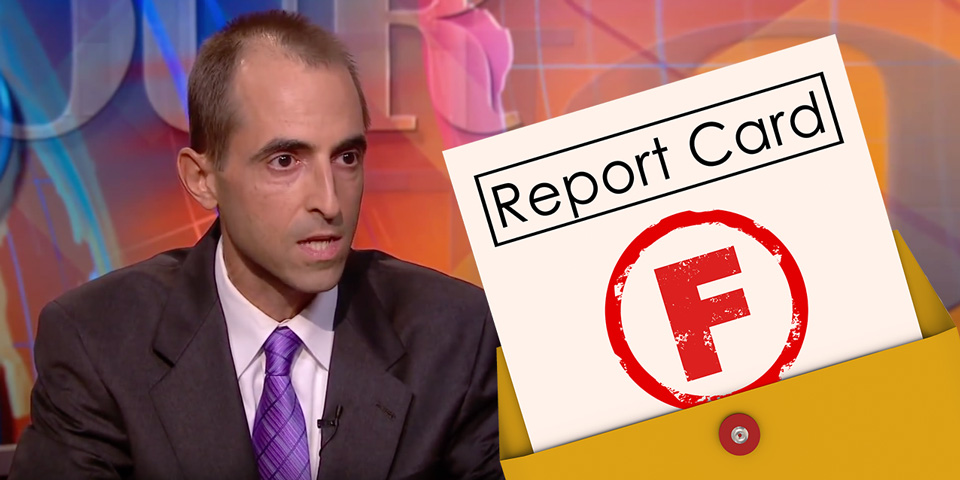
Slate magazine's William Saletan with Fail Report Card
In the first of a two-part series, Claire Robinson responds to journalist William Saletan’s recent attack on her and other GMO critics
In a recent incisive article on the GMO debate, Timothy Wise of Tufts University laments the "current vehemence" of the battle. He singles out Slate magazine’s William Saletan as one of the more extreme examples of those ready to tar "anyone who dares call for precaution with the stain of being another science-denying zealot". Wise accuses pundits like Saletan of "polarizing" the debate so much that they actually contribute to the suppression of scientific inquiry.

This couldn’t contrast more with how Saletan himself sees things. He responded to my three-part critique of his recent GMO promotional in Slate with a lecture on “how to think critically”. The implication is that this is something he is rather good at, whereas I and other GMO opponents are not.

So let’s take a look at the supposed gold standard of critical thinking, as exemplified by Saletan. And because we all have a life beyond the wit and wisdom of gullible journalists, I’ll restrict myself to a few major lessons in critical thinking in which Saletan gets a big “F” for “fail”.

Etiquetas: , , ,

sábado, marzo 28, 2015

Is Monsanto on the side of science?

The article below by GMWatch’s Claire Robinson has been published in the New Internationalist magazine as part of a special issue on Monsanto. Brits can buy a copy in newsagents or everyone can read the articles on their website (http://newint.org/) as they are published over the next month.

EXCERPT: Following the attacks, [Dr Judy] Carman says she was forced out of two successive university posts. She is fortunate not to need income from a university position, but points out that isn’t true of most scientists: ‘Any scientist in my shoes relying on a university income to eat or pay a mortgage would feel forced to stop investigating GMOs.’

—

Is Monsanto on the side of science?

Claire Robinson
New Internationalist, April 2015
http://newint.org/features/2015/04/01/monsanto-science-safety/
[references and links to sources are at the URL above]

Etiquetas: , , ,

martes, septiembre 30, 2014

GM Lags Behind Conventional in Drought-Resistant Maize Breeding Efforts, by GM Watch's Claire Robinson

http://sustainablepulse.com/2014/09/17/gm-lags-behind-conventional-
drought-resistant-maize-breeding-efforts/#.VBwzyy5dVe4

An important article has been published in Nature journal. “Cross-bred crops get fit faster”, by Natasha Gilbert, explains how genetic engineering lags behind conventional breeding in efforts to create drought-resistant maize for Africa.
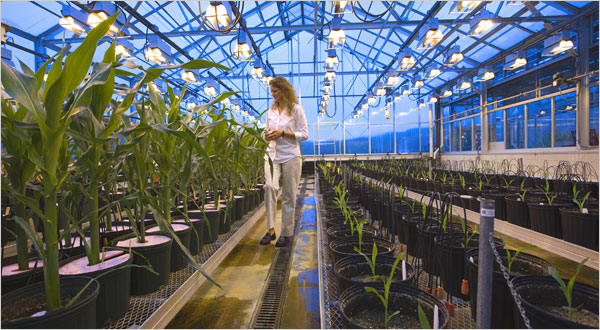
drought maize
Source: Comment by Claire Robinson of GMWatch
Gilbert writes, “Old-fashioned breeding techniques seem to be leading genetic modification in a race to develop crops that can withstand drought and poor soils.”
The article foregrounds the Drought Tolerant Maize for Africa project, launched in 2006 with $33 million. The project has developed 153 new varieties to improve yields in 13 countries. In field trials, these varieties matched or exceeded the yields from commercial seeds under good rainfall conditions, and yielded up to 30% more under drought conditions.
Reiterating a point that the Earth Open Source report GMO Myths and Truths, GMWatch, and many others have repeatedly made over the years, Gilbert notes, “Drought tolerance is a complex trait that involves multiple genes. Transgenic techniques, which target one gene at a time, have not been as quick to manipulate it.”
Gilbert reports that the International Maize and Wheat Improvement Center (CIMMYT) in Mexico City and six other research organizations are also developing GM varieties of drought-resistant maize, in collaboration with Monsanto. But any GM variety that comes out of the project won’t be ready for African farmers before 2016 “at the earliest”.
So much for the GMO lobby meme that GM is quicker and more efficient than conventional breeding!
There are many more non-GM successes in the GMWatch database.

Etiquetas: , , ,

viernes, septiembre 19, 2014

GM Watch: Biofortified continues to misrepresent GMO facts

http://www.gmwatch.org/index.php/news/archive/2014/15630-
biofortified-continues-to-misrepresent-gmo-facts


Pro-GMO group claims to champion science but promotes corporate talking points, writes Claire Robinson

Etiquetas: , , ,

sábado, septiembre 13, 2008

Exposed: Europe’s GM-Hype in Times of Food and Fuel Crisis

http://www.i-sis.org.uk/Exposed_GM-hype.php

By Claire Robinson


Excerpt:

No evidence that GM crops will solve the food and fuel crisis

Most of the EU’s animal feed comes from Brazil and Argentina, which are careful to grow only those varieties of feed, both GM and non-GM, that are approved in the EU, so as not to harm their export markets [10]. An article in the Financial Times quotes a Brazilian diplomatic source saying, “We produce to satisfy our clients. We are not going to produce something they are not going to buy.” The article goes on to say that neither Argentina nor Brazil share the “apocalyptic” scenario currently being put forward by the biotech and livestock industries and intensive farmers [11].

Such scaremongering ignores the well-known fact that GM crops have at best, variable impacts on yields and are therefore not a solution to the food crisis, as was confirmed by the recent IAASTD (International Assessment of Agricultural Knowledge, Science and Technology for Development) report on the future of agriculture [12].

More importantly, it ignores the fact that the major cause of the food and feed crisis is not European GM policy, but the rush to biofuels. Even the World Bank has now confirmed what NGOs have been saying ever since the notion of a food crisis was first mooted, that the Bush-subsidised ethanol boom (with the EU's agrofuel boom following in its wake) is by far the single most important factor in creating the food crisis that is driving 100m people worldwide below the poverty line. The report, which has not been published but was leaked to the UK’s Guardian newspaper, says biofuels have forced global food prices up by 75 percent. The figure emphatically contradicts the US government's claims that plant-derived fuels contribute less than 3 percent to food-price rises. Senior development sources believe the report, completed in April, has not been published to avoid embarrassing President George W. Bush [13].

The irony is that exactly the same people who created this disaster by promoting the rush into agrofuels are now promoting a rush for GMOs as the solution. It is this hype that the European Commission and British politicians appear to be swallowing, without being honest about the vested interests at stake.

Monsanto does a complete about-turn on GMOs being needed to feed the world

And here’s another irony. The truth about GMOs as the solution to the global food crisis is not coming from politicians but from industry itself. Previously, in the face of growing global opposition, Monsanto has long proclaimed that GM crops are vital for feeding a hungry world, while critics countered that the food is there and that distribution is the key to tackling hunger. But as opposition to biofuels is rising in Europe and even in the US on the grounds that they are not a solution to climate change and are contributing to the food crisis, Monsanto is now keen to defend the biofuels gravy-train that sent food prices sky-rocketing, and the company's spin has suddenly gone into complete reverse.

The ethanol boom may be pushing millions towards starvation and hundreds of millions deeper into poverty, but, says Monsanto's chief technology officer Rob Fraley [14], "From a production perspective, we have abundance [of food]". Fraley now says the "challenges" are in distribution and access to food because of wealth distribution, in other words, poverty.

Fraley made his pitch at the launch of a new multi-million dollar lobby group for ethanol, the Alliance for Abundant Food and Energy, that Monsanto has helped set up. There could be no clearer demonstration that Monsanto's concern has never been feeding the hungry; its leading role in the ethanol lobby shows that the hungry can happily starve, just so long as it's good for the company's bottom line.

Given that industry has revealed the truth behind its biofuels agenda, is it too much to ask of Europe’s politicians that they should be equally honest about the vested interests behind the hyping of GM crops?
Claire Robinson is an editor of GMWatch www.GMWatch.org

Etiquetas: , ,