miércoles, marzo 16, 2016

The spurning of Monsanto, tip of the iceberg?


http://foodfirst.org/the-spurning-of-monsanto-tip-of-the-iceberg/

By Carmelo Ruiz

The US-based agrochemical corporation, a world leader in the plant biotechnology and seed sectors, had pinned its hopes on buying Syngenta and was not counting on the Chinese government stepping in with a higher bid. It is no secret that Monsanto is having a hard time. At the end of 2015 it fired 2,600 employees and announced 1,000 more layoffs this year—16% of the company’s workforce. (2)

Since 2000, Monsanto has based its business model on an extremely simple product line, selling genetically modified (GM) seeds (mostly corn and soy) that have been engineered to tolerate their trademark Roundup herbicide. These seeds, known as Roundup Ready, sold along with the herbicide, became one of the biggest agribusiness success stories of all time. But this business model is fast becoming more of a liability than an asset. Quite predictably, weeds are developing resistance (3), and evidence of Roundup’s toxicity is becoming ever harder to discredit and deny.(4) Monsanto is trying to extricate itself from the Roundup Ready wreckage.

Etiquetas: , , , , , ,

miércoles, febrero 10, 2016

Syngenta Megamerger Must Be Blocked, by Wenonah Hauter

TO READ THE FULL ARTICLE:
http://ecowatch.com/2016/02/03/syngenta-merger/

The proposed takeover of Swiss agrochemical company Syngenta by China National Chemical Corporation would accelerate the hyper-consolidation in the global seed and agrochemical market.
The move by the state-owned ChemChina comes on the heels of last year’s announced megamerger between DuPont and Dow Chemical—a deal that would leave only three firms controlling more than three-quarters of the corn and 80 percent of the soybean seeds in America. Today’s deal dwarfs the takeover of formerly U.S.-owned Smithfield by WH Group in 2013. The Department of Justice and antitrust authorities of governments across the world must act to block these seed megamergers.


Etiquetas: , , , ,

domingo, febrero 07, 2016

Standing up for transparency: A letter to Nature Biotechnology


To the Editor:

I am writing to you as co-director of the consumer group US Right to Know (USRTK). Your editorial in the October issue entitled “Standing up for science” contained many indefensible statements. It falsely accused us of a “smear campaign” in investigating the food and agrichemical industries, their public relations firms and front groups, and the professors who speak for them.

Our aim is to expose the ties between the food and agrichemical industries and those who assist in their public relations efforts. The documents we obtained show that University of Florida Professor Kevin Folta accepted a $25,000 unrestricted grant from Monsanto (St. Louis). In accepting the grant, he promised Monsanto “a solid return on the investment.” Just a couple weeks later, he publicly claimed no association with Monsanto, and repeatedly denied ties to Monsanto. Although the grant was paid to the University of Florida Foundation, Monsanto's grant letter is addressed to Folta and specifically states that the funds could be used “at your discretion in support of your research and outreach projects.” The documents show that Folta's proposal to Monsanto was crafted to evade disclosure and conflict-of-interest reporting. As Folta notes in his proposal, the purpose was “to eliminate the potential concern of the funding organization influencing the messaging,” by placing the funds into an account that is “not publicly noted.”

Just because it is legal to lie and hide corporate contributions doesn't make it ethical. At one point, Folta even wrote to a Monsanto executive, “I'm glad to sign on to whatever you like, or write whatever you like.” This is not a shining example of integrity in science.

Your editorial neglects to mention that Folta used text that was ghostwritten by the public relations firm Ketchum (New York) for the website GMO Answers (https://gmoanswers.com/), and—incredibly—in a recent interview he defended this as an acceptable practice for scientists (http://www.buzzfeed.com/brookeborel/when-scientists-email-monsanto).

For the record, USRTK is not an anti-GMO group. We are a consumer group. We believe genetic engineering of crops may someday have benefits; however, it should proceed only with full transparency, as well as stringent health and environmental testing and safeguards.

We are working for transparency, accountability, the integrity of science and public institutions, and to improve our nation's food system. We are not out to 'get anyone'. Folta's main complaint is that his e-mails were cherry-picked; however, unlike WikiLeaks, we chose not to post thousands of pages of documents obtained through the US Freedom of Information Act exactly because they contain personal e-mails and other material that are not relevant to our investigation. We do release to journalists, or in some cases directly to the public, specific newsworthy documents about food and agrichemical industry PR and lobbying tactics that highlight what they do not want consumers to know about our food.

But a larger issue looms beyond the specifics of Folta's relationship with Monsanto; the incident highlights a wider problem in the systems we have for assuring transparency concerning disclosure of financial interests of academic scientists. Although drug and medical device manufacturers are required under the Physician Payments Sunshine Act to disclose payments to doctors and teaching hospitals, at this time, there is no similar requirement for food or agrichemical companies. USRTK believes there should be.

Collaboration between industry and academia can be beneficial as well as problematic; transparency must be the guiding principle for such relationships. Scientific journals, such as Nature Biotechnology, have an important role to play in advocating for transparency in funding, lobbying and public relations conducted by university scientists. We hope to hear more from your team on that topic.

We want to encourage scientists to communicate with the public to create a thriving science-based society. The problem comes when such communication is reduced to misleading PR talking points to promote commercial products and corporate profits.

- Stacy Malkan

Etiquetas: , , ,

domingo, septiembre 06, 2015

No substantial equivalence

http://www.biosafety-info.net/article.php?aid=1172

Biosafety Information Centre 

Systems Biology Study Finds GMOs not “substantially equivalent”

The safety assessment of genetically modified organisms (GMOs) is a contentious topic. In the U.S., the debate centres around the methodology used to determine the criteria for substantial equivalence (whether GMOs are “equivalent” to their non-GMO counterparts).
A new peer reviewed study (Item 1), based on a computational systems biology analysis, has found that the genetic modification/engineering of soy disrupts the plant’s natural ability to control stress and causes an accumulation of formaldehyde, a known Class 1 carcinogen, as well as a dramatic depletion of glutathione, an important anti-oxidant necessary for cellular detoxification. Systems biology looks at the complexity of the whole organism as a system rather than just studying its parts, which the authors contend would provide a framework for more appropriate criteria to measure how GMOs affect the emergent properties of a whole system.
The study concludes the U.S. government’s current standard for safety assessment of GMOs, based on the principle of “substantial equivalence,” is outdated and unscientific for genetically engineered food as it was originally developed for assessing the safety of medical devices in the 1970s. If formaldehyde and glutathione were used as distinguishing criteria, the GM soy would likely not be deemed “equivalent” to its non-GMO counterpart. This calls into question the FDA’s food safety standards for the entire country. (Item 2)
The study underscores the urgent need to modernize safety assessments of GMOs, and the author argues that “This is not a pro- or anti-GMO question. But, are we following the scientific method to ensure the safety of our food supply? Right now, the answer is ‘no’. We need to, and we can, if we engage in open, transparent, and collaborative scientific discourse, based on a systems biology approach.”

Etiquetas: ,

sábado, agosto 29, 2015

Lessons in critical thinking and William Saletan – Part 1

http://www.gmwatch.org/news/latest-news/16355

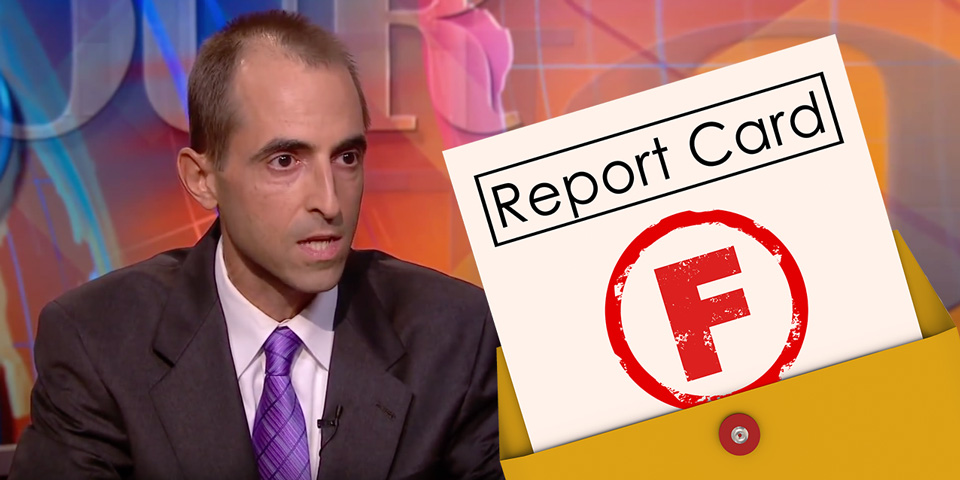
Slate magazine's William Saletan with Fail Report Card
In the first of a two-part series, Claire Robinson responds to journalist William Saletan’s recent attack on her and other GMO critics
In a recent incisive article on the GMO debate, Timothy Wise of Tufts University laments the "current vehemence" of the battle. He singles out Slate magazine’s William Saletan as one of the more extreme examples of those ready to tar "anyone who dares call for precaution with the stain of being another science-denying zealot". Wise accuses pundits like Saletan of "polarizing" the debate so much that they actually contribute to the suppression of scientific inquiry.

This couldn’t contrast more with how Saletan himself sees things. He responded to my three-part critique of his recent GMO promotional in Slate with a lecture on “how to think critically”. The implication is that this is something he is rather good at, whereas I and other GMO opponents are not.

So let’s take a look at the supposed gold standard of critical thinking, as exemplified by Saletan. And because we all have a life beyond the wit and wisdom of gullible journalists, I’ll restrict myself to a few major lessons in critical thinking in which Saletan gets a big “F” for “fail”.

Etiquetas: , , ,