lunes, agosto 15, 2016

Millions Spent, No One Served: Who Is to Blame for the Failure of GMO Golden Rice?

by Angelika Hilbeck and Hans Herren

The recent Nobel laureates’ letter accusing Greenpeace of a “crime against humanity” for opposing genetically modified (GMO) golden rice reveals a deep division not only between civil societies and some science circles but also within the science community – a division in the visions for our common future and which path to take for our joint development. A division we see growing and escalating. A strong indication of this division is that among the Nobel laureate signatories, there seems to be hardly anybody with a solid scientific track record in agriculture, food production, development, or the socio-ecological and political causes of poverty and hunger. Others with notable competence – at least in the economic and social domains of development, poverty, and hunger – are not among the signatories. Signs of escalation also include the emotional, accusing language in the letter and the ample use of scientifically unsubstantiated claims. What is missing in the letter and among the supporters and developers of GMOs is the recognition and scientific analysis of some tough facts.

Etiquetas: , , ,

jueves, agosto 04, 2016

Golden rice and scientific consensus


http://foodfirst.org/golden-rice-and-scientific-consensus/

Carmelo Ruiz | 07.15.2016

“The GMO debate is over! The alarmist activists have lost and science has won!”

Well – that’s the impression one gets when reading journalist Joel Achenbach’s Washington Post article detailing the open letter that 107 Nobel laureates signed on to, which attacks the environmental group Greenpeace for its opposition to GMO crops (1).

The letter specifically defends GMO vitamin A-enhanced ‘golden rice’, which according to biotech supporters, is needed to alleviate the suffering of millions of Asians who suffer from vitamin A deficiency (2). Ultimately, the text suggests that Greenpeace is the one obstacle preventing the wonder rice from addressing the needs of the world’s poor and hungry.

******

Achenbach writes that the consensus among scientists is that genetically modified organisms (GMOs) do not present new or novel risks, and refers to a US National Academy of Sciences report on the subject published in May (3). The Post article acknowledges that Greenpeace is not alone in its critical position on GMOs, but it does not mention who else is in the opposition, and defines the debate as one between “mainstream scientists and activists.”

However, not all scientists and experts are impressed with the letter. Far from it.

Etiquetas: , , , ,

lunes, julio 11, 2016

Don’t Eat the Yellow Rice: The Danger of Deploying Vitamin A Golden Rice

by Ted Greiner, PhD

What better way to discredit your critics than to rope in 107 naive Nobel Prize winners (all without relevant expertise) to criticize your opposition?

But such tactics are not new. Long ago, the GMO industry spent well over $50 million to promote “Golden Rice” as the solution to vitamin A deficiency in low income countries. They did so well before the technology was completely worked out, let alone tested. Let alone consumer acceptability tested. Let alone subjecting it to standard phase 2 and 3 trials to see if it could ever solve problems in the real world.

So why has this apparently straightforward scientific project not reached completion after so many decades?

Because the purpose of Golden Rice was never to solve vitamin A problems. It never could and never will. It’s purpose from the beginning was to be a tool for use in shaming GMO critics and now to convince Nobel Laureates to sign on to something they didn’t understand.

Etiquetas: , ,

Greenpeace defends its postion

http://www.greenpeace.org/international/en/press/releases/2016/Nobel-laureates-sign-letter-on-Greenpeace-Golden-rice-position---reactive-statement/

Nobel laureates sign letter on Greenpeace ‘Golden’ rice position - statement

Press release - 30 June, 2016
Manila, 30 June 2016 - A number of Nobel laureates have recently signed a letter calling on Greenpeace to review its position on genetically engineered ‘Golden’ rice. In response, Wilhelmina Pelegrina, Campaigner at Greenpeace Southeast Asia, said:
“Accusations that anyone is blocking genetically engineered ‘Golden’ rice are false. ‘Golden’ rice has failed as a solution and isn’t currently available for sale, even after more than 20 years of research. As admitted by the International Rice Research Institute, it has not been proven to actually address Vitamin A Deficiency. So to be clear, we are talking about something that doesn’t even exist.
“Corporations are overhyping ‘Golden’ rice to pave the way for global approval of other more profitable genetically engineered crops. This costly experiment has failed to produce results for the last 20 years and diverted attention from methods that already work. Rather than invest in this overpriced public relations exercise, we need to address malnutrition through a more diverse diet, equitable access to food and eco-agriculture.”
On alternative solutions:
“The only guaranteed solution to fix malnutrition is a diverse healthy diet. Providing people with real food based on ecological agriculture not only addresses malnutrition, but is also a scaleable solution to adapt to climate change.
"We’ve documented communities across the Philippines that continue to express concerns about using GE 'Golden' rice as a solution. It is irresponsible to impose GE ‘Golden’ rice as a quick remedy to people on the frontlines and who do not welcome it, particularly when there are safe and effective options already available.
“Greenpeace Philippines is already working with NGO partners and farmers in the Philippines to boost climate resiliency. There’s a real chance here for governments and the philanthropic community to support these endeavours by investing in climate-resilient ecological agriculture and empowering farmers to access a balanced and nutritious diet, rather than pouring money down the drain for ‘Golden’ rice.”

Etiquetas: , , ,

sábado, julio 09, 2016

Nobel Laureate Attack on Greenpeace Traced Back to Biotech PR Operators

jueves, julio 07, 2016

Pro-GMO campaign exploits Nobel laureates to attack Greenpeace and fool the people

http://www.gmwatch.org/news/latest-news/17077-pro-gmo-
campaign-exploits-nobel-laureates-to-attack-greenpeace-and-fool-the-people

Greenpeace is being criticized for blocking GMO golden rice – even though the crop is years away from being ready, reports Claire Robinson

Etiquetas: , , , ,

sábado, junio 04, 2016

Genetically modified Golden Rice falls short on lifesaving promises

https://source.wustl.edu/2016/06/genetically-modified-golden-rice-falls-short-lifesaving-promises/

Researchers in Bangladesh also are in the early stages of confined field trials of Golden Rice, but it is doubtful that these efforts will progress any quicker than in the Philippines.

Even if genetic modification succeeds in creating a strain of rice productive enough for poor farmers to grow successfully, it’s unclear how much impact the rice will have on children’s health.

As Stone and Glover point out, it is still unknown if the beta carotene in Golden Rice can even be converted to Vitamin A in the bodies of badly undernourished children. There also has been little research on how well the beta carotene in Golden Rice will hold up when stored for long periods between harvest seasons, or when cooked using traditional methods common in remote rural locations, they argue.

Meanwhile, as the development of Golden Rice creeps along, the Philippines has managed to slash the incidence of Vitamin A deficiency by non-GMO methods, Stone said.

Etiquetas: , ,

viernes, julio 31, 2015

We don't need "golden rice"

http://ordinary-gentlemen.com/blog/2015/07/17/we-dont-need-golden-rice/

by Robert Greer
Journalist Will Saletan set the Internet afire yesterday with his long-form piece against anti-GMO activists.  A key component of his argument is that Golden Rice, which has been genetically engineered to contain Vitamin A precursors, has not been welcomed by anti-GMO crowd with open arms.  But what Saletan fails to mention is that the science is still out on whether golden rice is actually the boon it’s claimed to be.
The best evidence we have is that the compounds in the rice are converted to Vitamin A in the human system, but this isn’t enough to say that it’s healthy — Saletan makes a lot of hay out of the fact that anti-GMO activists often can’t point to specific known harms, but instead must rely on fears of unknown future problems.  But unknown side effects are not necessarily inchoate, ad hoc rationales to oppose genetic modification, and are in fact especially salient in the realm of nutrition because of the field’s complexity. The body’s processes for gleaning nutrition from a particular food are highly complex, and depend on many different factors such as the ratios in which the nutrients are presented to the body, the form in which they greet your digestive system, and the composition of your gut biome. For example, iron is difficult for your body to assimilate properly if you’re not getting enough Vitamin C, sugars in juice may be dangerous while sugars in whole fruits are not, and large numbers of people are deficient in Vitamin B12 despite getting plenty of it in their diets, for reasons that are still not entirely clear.

Etiquetas: , ,

jueves, julio 23, 2015

Errors, fraud, lies, and William Saletan – Part 1: Golden rice

William Saletan Loves Golden Rice
The journalist William Saletan’s indictment of GMO critics is being promoted by the GMO lobby. In the first of a three-part series, Claire Robinson looks at his arguments on golden rice

Etiquetas: , , ,

martes, marzo 11, 2014

Unresolved Questions Around Golden Rice

http://www.biosafety-info.net/article.php?aid=1050

Title: Unresolved Questions Around Golden Rice
Publication date: March 11, 2014
Posting date: March 11, 2014


THIRD WORLD NETWORK BIOSAFETY INFORMATION SERVICE

Dear Friends and Colleagues 
Re: Unresolved Questions Around Golden Rice 
An article published by The Ecologist exposes the tangled web of unanswered questions around Golden Rice, genetically engineered to supposedly cure Vitamin A deficiency (VAD) amongst the poor.
Agri-business giant, Syngenta, has reserved its commercial rights over Golden Rice and improvements to the technology, but has granted "humanitarian use" of it (through a sub-licensing agreement) to resource-poor farmers in developing countries, through the Golden Rice Humanitarian Board. The article points out that on the face of it, such terms appear straightforward but give rise to a multitude of concerns.  It questions the full implications and hidden costs of such a ‘gift’ which countries would do well to consider beforehand.   
The full article is reproduced here and is also available at http://bit.ly/1cwzBNY  

With best wishes 
Third World Network
131 Jalan Macalister
10400 Penang
Malaysia

Etiquetas: , ,

jueves, febrero 13, 2014

Golden Rice: Myth, not Miracle

lunes, enero 27, 2014

Golden Rice: Scientific Realities

http://www.gmwatch.org/index.php/news/archive/2014/15255-golden-rice-scientific-realities


 .

Golden Rice Scientific Realities image
Golden Rice is not a realistic solution to the problem of malnutrition and could well create further serious problems for the people who grow and eat it.

GM Watch and GM-Free Cymru, 13 January 2014
Contacts:Claire Robinson claire@gmwatch.org
Brian John brianjohn444@btinternet.com
Golden Rice (GR) is genetically engineered to contain increased levels of beta-carotene, a precursor of vitamin A (also known as provitamin A). The rice is claimed to help cure blindness and other illnesses caused by vitamin A deficiency in the Third World. It is also claimed that opposition to GR by environmentalists and anti-GMO activists has caused millions to die or go blind in the developing world.
However, the claims made for and about GR are factually incorrect and unscientific.

Etiquetas: , , ,

jueves, octubre 17, 2013

Golden Rice and the Children of the Poor

http://www.biosafety-info.net/article.php?aid=1008

October 17, 2013

THIRD WORLD NETWORK BIOSAFETY INFORMATION SERVICE 

Dear Friends and Colleagues 

Re: Golden Rice and the Children of the Poor

The debate on Golden Rice continues to rage since it was first proposed as a solution to vitamin A deficiency more than a decade ago. Golden Rice is genetically engineered to produce betacarotene, a precursor to vitamin A. While the promise of this long-term experiment appears exciting, there remain serious questions regarding the efficacy and risks of Golden Rice, which have not been highlighted nor addressed by its creators and proponents.

We are pleased to share the article below by a TWN Associate in the Philippines, which provides a developing country perspective on the issue. Among the issues discussed are the biosafety institutional weaknesses that leave communities and the environment vulnerable while not providing adequate safeguards in the light of the power relations at play; the successes and remaining challenges of the vitamin A supplementation programme in the Philippines, which can be an efficient and sound alternative; the need to promote diverse diets, for which the country has an abundant resource of green and leafy vegetables; and the need to rethink quick techno-fixes that sidestep more deep-seated and structural concerns such as poverty, gender inequality, landlessness and limited social protection.

With best wishes, 

Third World Network

131 Jalan Macalister

10400 Penang

Malaysia

Email: twnet@po.jaring.my

Website: http://www.biosafety-info.net/ and http://www.twn.my/

To subscribe to other TWN information services: www.twnnews.net

---------------------------------------------------------------------------------------------------------------------------------------

(Com)promised Charity: Golden Rice and the Children of the Poor

By Nina Somera (Third World Network Associate in the Philippines)

To read the article: http://www.biosafety-info.net/article.php?aid=1008

Etiquetas: , , ,

sábado, septiembre 07, 2013

Missing the story on Golden Rice, by Ben Billiston of IATP

http://www.iatp.org/blog/201309/missing-the-story-on-golden-rice#!

Posted September 6, 2013 by Ben Lilliston  

A gaping hole in U.S. coverage is the perspectives of Philippine farm organizations, like the Asian Farmers Association affiliate PAKISAMA, or really anyone from the Philippines who opposes Golden Rice. By not including these voices, these reports miss a fundamental issue at the center of all issues around genetically engineered (GE) foods: power. Who controls the technology? Who controls what farmers can grow, and what people eat? Not coincidently, these questions are also at the center of addressing global hunger.

******

Opposition to Golden Rice needs to be placed in the global context of how the biotech industry has relentlessly and aggressively (with the assistance of the U.S. government) thrust this technology on the rest of the world. Resistance to GE crops is widespread around the world among both developed and developing countries, often led by farmers and aligned organizations. SEARICE (the Southeast Asia Regional Initiatives for Community Empowerment) offers insight by describing the experience of Philippine farmers after the introduction of GE Bt corn: corn farmers lost access to traditional varieties, they can no longer share or exchange seeds with other farmers, and they are paying double the cost for GE seeds for what is largely the same yield, leading to increasing indebtedness.

Used under creative commons license from boyosep.


Etiquetas: , ,

lunes, septiembre 02, 2013

Golden rice is no solution to malnutrition

http://www.grain.org/article/entries/4777-golden-rice-is-no-solution-to-malnutrition

August 29 2013


GM crops are no solution to malnutrition!
Groups in Asia support Filipino farmers' uprooting of Golden Rice
PRESS RELEASE
August 29, 2013
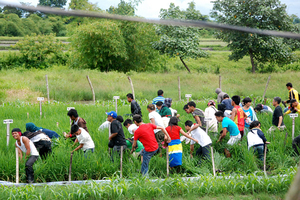
On August 8, 2013 more than 400 farmers, church people, students, academics and consumers uprooted a field trial of genetically modified (GM) rice that was nearly ready for harvest in Pili, Camarines Sur, Philippines. This courageous action undertaken by the Peasant Movement of Bicol and the Sikwal-GMO alliance was necessary to prevent the contamination of Asia's most important food crop by GMOs.
Field trials of Golden Rice, one in

Etiquetas: , , ,

lunes, agosto 26, 2013

Golden rice, not the solution to Vitamin A deficiency

TO READ THE ARTICLE:
http://bulatlat.com/main/2013/08/17/golden-rice-not-the-solution-to-vitamin-a-deficiency/


Farmers, scientists and advocates believe that golden rice is but a “simplistic, techno-fix solution” to the prevalence of Vitamin A deficiency and there are other sustainable measures that have no negative impact on human health and the environment.  

Etiquetas: , ,

More pro-GMO drivel from the New York Times

http://www.nytimes.com/2013/08/25/sunday-review/golden-rice-lifesaver.html?_r=2&

Golden Rice: Lifesaver?


Jes Aznar for The New York Times
Genetically engineered Golden Rice grown in a facility in Los Baños, Laguna Province, in the Philippines.

Etiquetas: , , ,

miércoles, marzo 18, 2009

The Golden Rice Scandal Unfolds

Dr. Mae-Wan Ho and Prof. Joe Cummins

Phase II clinical trials on children have been conducted with unapproved experimental GM rice enhanced in pro-Vitamin A that has the potential to cause birth defects and developmental abnormalities


EXCERPT:

Golden Rice, an exercise in how not to do science

Golden Rice, genetically modified to make pro-vitamin A in the endosperm (the grain remaining after polishing), was announced with great fanfare in 2000 as a cure for widespread vitamin A deficiency in developing countries.

The project had already cost US$100 million, funded by the Rockefeller Foundation, the Swiss Federal Institute of Technology, the European Community Biotech Programme and the Swiss Federal Office for Education and Science, and could cost as much again to develop. It was tied up in at least 70 patent claims on genes, DNA sequences and constructs, a problem only partly solved in the “ground-breaking deal” worked out by Dubock (see above)..

Condemnation was swift and widespread, not least because it was absurd to offer Golden Rice as the cure for vitamin A deficiency when there are plenty of alternative, infinitely cheaper sources of vitamin A or pro-Vitamin A, such as green vegetables and unpolished coloured rice (especially black and purple varieties [11], which would be rich in other essential vitamins and minerals, and hence much more nutritious. The UN Food and Agricultural Organization (FAO) started a project in 1985 to deal with vitamin A deficiency using a combination of food fortification, food supplements and general improvements in diets by encouraging people to grow and eat a variety of green leafy vegetables. One main discovery from the project was that the absorption of pro-vitamin A depends on the overall nutritional status, which in turn depends on the diversity of the food consumed [12].

The main cause of hunger and malnutrition in the Third World is the industrial monocultures of the Green Revolution, which obliterated agricultural biodiversity and soil fertility, resulting in ever-worsening mineral and micronutrient deficiencies in our food. Golden Rice, like other GM crops, is industrial monoculture only worse, and will exacerbate this trend, as well as the destruction of agricultural land, and the impoverishment of family farmers that also accompanied the Green Revolution [13] (see Beware the New "Doubly Green Revolution", SiS 37).

GR1 was made with the standard ‘first generation’ genetic modification techniques, using GM constructs that cause uncontrollable mutations and other collateral damage to the host plant genome, with many unintended, uncharacterized effects [14]. In addition, the viral and bacterial sequences, including antibiotic resistance marker genes, in the construct and in the vectors created for gene transfer enhance horizontal gene transfer and recombination, the main route to creating new pathogens and spreading antibiotic resistance.

GR2 represents an improvement in so far as antibiotic resistance markers were no longer used, but still includes a medley combination of sequences from plant pathogens Agrobacterium (used in a binary vector system) and Erwinia uredovor, and from E. coli, inhabitant of the human gut, which also contains pathogenic strains. We have highlighted the special hazards of the Agrobacterium vector system since 2003 [15] (Agrobacterium & Morgellons Disease, A GM Connection?, SiS 38) (see below).

The main reason for Golden Rice was revealed in the unusually long news feature article [16] accompanying the scientific publication [8] which stated: “One can only hope that this application of plant genetic engineering to ameliorate human misery without regard to short-term profit will restore this technology to political acceptability.”

A detailed audit on the project [14] (The 'Golden Rice', An Exercise in How Not to Do Science, ISIS Report) uncovered “fundamental deficiencies” from the scientific and social rationale to the science and technology involved. It was being promoted “to salvage a morally as well as financially bankrupt agricultural biotech industry.” The situation has changed little since.

The phase II clinical trials of uncharacterized, unapproved, experimental GR2 events on children, some of whom may indeed be suffering from vitamin A deficiency, is morally inexcusable. GR2 has not been assessed for safety, and there are reasons to suspect it is unsafe.

GMO safety in question

The biotech industry has consistently found genetically modified food and feed ‘as safe as their conventional counterparts’, and regulators in the United States and European Union have accepted this assertion overwhelmingly based on studies carried out and interpreted by the industry [17] (GM Food Nightmare Unfolding in the Regulatory Sham, ISIS scientific publication).

There is now a string of evidence that exposure of many species of animals to a variety of genetically modified crops, and food and feed derived from them, can cause illnesses and death, raising the distinct possibility that genetic modification is inherently dangerous [18] (GM is Dangerous and Futile, SiS 40). This is reinforced in results obtained in the most recent studies.

The Austrian government commissioned long term studies showing that mice fed GM maize hybrid (NK603xMON810) with combined glyphosate tolerance and biopesticide Cry1Ab produced fewer and smaller litters with many genes affected compared to controls [19] (GM Maize Reduces Fertility & Deregulates Genes in Mice, SiS 41). At the same time, the Italian National Institute of Research published a study showing that GM maize MON810 fed to mice produced disturbances in the immune system of the young and the old [20] (GM Maize Disturbs Immune System of Young and Old Mice, SiS 41). In India, the first independent assessment of the feeding study submitted by Monsanto and its subsidiary Mahyco to the Indian regulatory authorities showed that Bt Brinjal (aubergine) caused many changes in several species of animals including diarrhoea, increased water consumption and decrease in liver weight in rats [21] (Bt Brinjal Unfit for Human Consumption, SiS 41).

There are several reasons why genetic modification is inherently hazardous, as spelt out more than ten years ago [22] (Genetic Engineering: Dream or Nightmare?) and unfortunately, still not taken on board by the regulatory authorities, let alone systematically investigated. The dangers may come from the transgenic protein itself that may be toxic or immunogenic [23] (Transgenic Pea that Made Mice Ill, SiS 29), the toxicity of herbicides such as glyphosate to which more than 70 percent of GM crops now grown globally are made tolerant [24] (Death by Multiple Poisoning, Glyphosate and Roundup, SiS 42) or it could be totally unexpected, unintended effects resulting from the mutagenic insertion of foreign DNA into the genome, and worse, the instability of transgenic lines, which makes proper safety assessment well nigh impossible [25] (Transgenic Lines Unstable hence Illegal and Ineligible for Protection, SiS 38).

One major hazard inherent to GM organisms (GMOs) is enhanced horizontal gene transfer and recombination [26] (Horizontal Gene Transfer from GMOs Does Happen, SiS 39). This is considerably worse with transgenic plants like Golden Rice (both GR1 and GR2) that have been created using the Agrobacterium binary vector system, basically because the Agrobacterium bacteria as well as the binary vector tend to persist in the transgenic plants, providing a ready vehicle for further horizontal gene transfer to all species that interact with the transgenic plant material, including human cells. Agrobacterium is known to invade human cells. Horizontal transfer of transgenic DNA into human cells has the potential to cause harmful mutations including cancer. In general, horizontal transfer of transgenic DNA facilitates the creation of new pathogens. The identification of Agrobacterium sequences in patients with Morgellons’ Disease raises questions as to whether the widespread use of Agrobacterium vectors in genetic modification has indeed resulted in creating a new pathogen for humans [15].

Golden Rice particularly dangerous

In addition, the unbalanced enhancement of single nutrients in GM crops may do more harm than good [27] (GM Crops and Microbes for Health or Public Health Hazards? SiS 32). As David Schubert at the Salk Institute for Biological Sciences La Jolla, California, in the United States points out [28], plants possess the ability to synthesize between 90 000 and 200 000 nonessential small molecules, with up to 500 in one species. The enormous repertoire is due in part to enzymes with very low substrate specificity, which are unpredictably altered by mutations and pleiotropic effects associated with GM technology. Furthermore, overdose of many single nutrients are known to be toxic, vitamin A being a case in point. Schubert highlights the toxic effects of retinoic acid and other metabolites of b-carotene, only a few of them can be identified and measured in the current state of technology.

Golden Rice is enhanced in b-carotene, which on ingestion, is cleaved in half to generate retinal for use in the visual cycle. Retinal is also reduced to retinol, or oxidized to retinoic acid (RA), which interacts with highly specific nuclear receptors. Essentially all of the biological activity of retinoids, apart from vision, involves RA. While high concentrations of retinol are toxic, RA is biologically active at concentrations several orders of magnitude lower than retinol. Hence, Schubert states [28]: “excess RA or RA derivatives are exceedingly dangerous, particularly to infants and during pregnancy.” RA is required for the development of the nervous system, both by directly controlling nerve differentiation and by generating concentration gradients that direct cell migration, embryonic segmentation, and development. Therefore, RA and synthetic derivative of RA are teratogenic (able to cause birth defects). They can accumulate in fat and plasma, becoming a risk factor for pregnancy for up to 2 years following ingestion, and multiple low doses of retinoids have greater toxicity than a single high dose.

Because of the type of biological functions controlled by low levels of RA, any perturbation of its signalling pathways by plant-derived RA receptor agonists or antagonists will have clinical consequences. “Could the GM modifications used to enhance b-carotene synthesis create such compounds?” (This question remains unanswered to this day.) Six hundred naturally occurring compounds exist in the carotene family, and at least 60 can be precursors to retinoids. “Therefore, plants have the potential to make many potentially harmful retinoid-like compounds when there are increased levels of synthetic intermediates to b-carotene as in golden rice.”

While all retinoids and derivatives are likely to be teratogenic, good assays and information regarding the behaviour and teralogic activity are available for only three: retinol, RA, and retinal. Therefore, at the very least, “extensive safety testing should be required before the introduction of golden rice as a food.”


READ THE WHOLE ARTICLE:
http://www.i-sis.org.uk/goldenRiceScandal.php

Etiquetas: ,