viernes, octubre 30, 2015

Seralini wins whistleblower award

Roundup researcher honoured by Federation of German Scientists (VDW) and the International Association of Lawyers Against Nuclear Arms


Prof Gilles-Eric Séralini will tomorrow be honoured with the 2015 Whistleblower Award by the Federation of German Scientists (VDW) and the German Section of the International Association of Lawyers Against Nuclear Arms (“IALANA”).

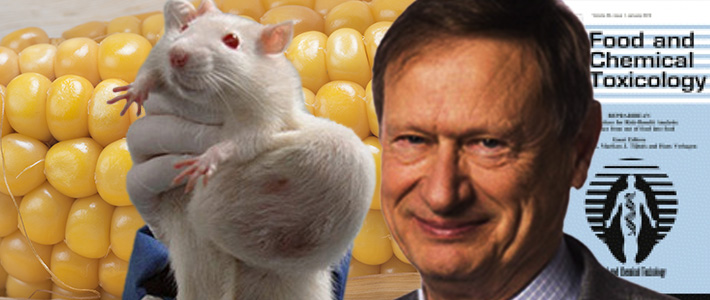
Prof Séralini will receive the award in recognition of his research demonstrating the toxic effects of Roundup herbicide on rats when administered at a low environmentally relevant dose over a long-term period. After the research was published, Prof Séralini was attacked in what the VDW and IALANA call “a vehement campaign by ‘interested circles’ from the chemical industry” as well as from the UK Science Media Centre. This smear campaign led to the retraction of his team’s paper by the first journal that published it. But Prof Séralini and his team fought back, countering the scientific arguments raised against their research and republishing their paper in another journal.

While Prof Séralini’s study was not a carcinogenicity study but a long-term toxicity study, the carcinogenic potential of Roundup was confirmed this year when the World Health Organisation’s cancer agency IARC published its verdict that glyphosate herbicides are “probable” human carcinogens.

VDW and IALANA said that Prof Séralini’s unwavering refusal to abandon his professional ethics since the publication of his paper “gained him the worldwide support of many scientists who defended the methods he chose and deemed his research results to represent genuine scientific progress”. They added, “He greatly furthered the scientific debate on the health risks of the glyphosate-based herbicide Roundup. He revealed systemic weaknesses in the accreditation process for herbicides in particular and pesticides in general. So once again it can clearly be seen that the preservation of our health depends on whistleblowers.”

Prof Séralini will share the Whistleblower Award jointly with the former US drone pilot Brandon Bryant. Bryant quit active service with the US armed forces in 2011 due to his rejection of the secret worldwide drone war carried out by the US. He particularly objected to the innumerable civilian victims and the severe psychological consequences for the drone pilots involved in the killings.

The awards will be presented on Friday, 16 October 2015, at 7.30pm, in the Bürgersaal of Karlsruhe City Hall in the presence of the Mayor, Dr Frank Mentrup.


More information:
http://neu.vdw-ev.de/wp-content/uploads/2015/10/Presseinformation-Whistleblower-Preisverleihung-2015_150917_eng.pdf

Read this article online here: http://www.gmwatch.org/news/latest-news/16458

Etiquetas: ,

jueves, septiembre 17, 2015

Science must be protected from commercial interests

New peer-reviewed paper exposes criticisms of the Seralini study. Claire Robinson reports

Science must be defended against commercial interests that attempt to get important papers on GMOs and pesticides retracted rather than encouraging further research to clarify any uncertainties, says an important new peer-reviewed paper published in Environmental Sciences Europe.

The paper, authored by Drs John Fagan, Terje Traavik and Thomas Bøhn, details the events that followed the publication of the research study led by Prof Gilles-Eric Séralini on GM maize NK603 and Roundup. The Séralini study found toxic effects in rats, notably liver and kidney damage, from NK603 maize and Roundup, both individually and in combination.


The paper was attacked by pro-GMO scientists, who argued that it should be retracted. Eventually the journal editor capitulated and retracted the paper, though it was subsequently republished in Environmental Sciences Europe.


The authors of the new paper comment on this row, lamenting the growth of “a trend in which disputes, between interest groups vying for retraction and republication of papers that report controversial results, overshadow the normal scientific process in which peer-reviewed publication stimulates new research, generating new empirical evidence that drives the evolution of scientific understanding”.


The paper also reviews the research on the safety of NK603 maize and Roundup herbicide for human and livestock health. The authors’ analysis confirms that NK603 maize and Roundup are kidney and liver toxicants at levels below current regulatory thresholds and that “consequently, the regulatory status of NK603, glyphosate and Roundup requires reevaluation”.


The authors also say that preliminary evidence from the Séralini study indicates that Roundup and NK603, individually and in combination, may increase tumour incidence and mortality. They conclude, “Follow-up long-term carcinogenicity studies, using test animal strains and numbers of animals that assure robust conclusions, are required to confirm/refute this preliminary evidence.”


The paper represents a comprehensive summary of the gaping holes in the pro-GMO lobby’s critiques of the Séralini study. Sadly, the European Food Safety Authority (EFSA) must consider itself part of this lobby. This is because EFSA followed the pro-GMO lobby in portraying the Séralini study as a failed carcinogenicity study, rather than what it really was – a chronic toxicity study that unexpectedly found increased tumour and mortality incidence in treated rats and which must therefore be followed up with a dedicated carcinogenicity study using larger numbers of animals.


Thus EFSA effectively pretended not to notice the main findings of the Séralini study: that NK603 GM maize and Roundup caused an increase in liver and kidney damage. The new paper sets the record straight and gives the Séralini study its due status as evidence of these serious toxic effects. It also recommends reforms in the regulatory process that would help protect due scientific process from interference by commercial interests.

The Seralini affair: degeneration of Science to Re‑Science?

John Fagan, Terje Traavik and Thomas Bøhn
Environ Sci Eur (2015) 27:19
http://www.enveurope.com/content/27/1/19 (open access)

Abstract

A paper reporting findings relevant to safety of the genetically modified (GM) maize NK603 and the herbicide Roundup (Séralini et al., Food Chem Toxicol. 50:4221–4231, 2012) was retracted against the wishes of the authors, and subsequently republished in another peer-reviewed journal (Séralini et al. Environ Sci Europe, doi:10.1186/s12302-014-0014-5, 2014). These events exemplify a trend in which disputes, between interest groups vying for retraction and republication of papers that report controversial results, overshadow the normal scientific process in which peer-reviewed publication stimulates new research, generating new empirical evidence that drives the evolution of scientific understanding. This paper reviews the current status of research on safety of NK603 maize and Roundup
herbicide for human and livestock health, and attempts to glean from recent developments insights relevant to risk assessment policy for GM crops and pesticides, as well as relevant to the scientific process in general. Our analysis of currently published evidence confirms NK603 and Roundup are kidney and liver toxicants at levels below current
regulatory thresholds. Consequently, the regulatory status of NK603, glyphosate and Roundup requires reevaluation. Additionally, preliminary evidence indicates Roundup and NK603, individually and in combination, may increase tumor incidence and mortality. Follow-up long-term carcinogenicity studies, using test animal strains and numbers of
animals that assure robust conclusions, are required to confirm/refute this preliminary evidence. The inherent tension between the scientific process and commercial interests of product developers necessitates implementation of safeguards that protect the scientific process and prevent degeneration of Science to Re-Science (typified by retraction and republication disputes).

Etiquetas: , ,

jueves, julio 09, 2015

A challenge to scientific integrity: a critique of the critics of the GMO rat study conducted by Gilles-Eric Séralini et al. (2012)

http://www.enveurope.com/content/27/1/13

This paper reviews the many criticisms of the publication by Seralini et al (2012) which has led to so much controversy, was retracted and then republished in this journal. Seralini et al found that a GM maize and its associated herbicide Roundup resulted in numerous chronic abnormalities in rats. The vehemence of the critics is not matched by their evidence; it is often based on entrenched assumptions and on mis-representing published material. The arguments have challenged normal healthy scientific dialogue, and appear to be driven by other motives. A further interpretation of Seralini et al's results on tumour formation is suggested. The probability that Seralini et al's results are significant is sufficient to justify further study.

Etiquetas: ,

sábado, julio 05, 2014

Seralini VINDICADO

Hoy 24 de junio es un gran día para la ciencia. Hoy la razón triunfó sobre los intereses mercenarios de quienes presentan ideología disfrazada de ciencia. ¡Bravo por Seralini! NO a los transgénicos.

Carmelo
---------- Mensaje reenviado ----------
De: nelson alvarez <alvareznelson@hotmail.com>
Fecha: 24 de junio de 2014


NOTICIA IMPORTANTE:

-----------------------------------
Estimados
Les reenvio este comunicado enviado por Chile Sin Transgénicos, sobre la reposición del estudio de Seralini sobre los efectos del glifosato en la salud. Son muy buenas noticias.
Muchos saludos
Maria Isabel Manzur
COMUNICADO PRENSA / PARA PUBLICACIÓN INMEDIATA:

Re publican estudio sobre toxicidad crónica de maíz transgénico en ratas

El estudio de toxicidad crónica del herbicida Roundup y el maíz transgénico NK603 tolerante al Roundup realizado por el profesor Gilles-Eric Séralini ha sido publicado nuevamente, esta vez  por el grupo Springer, con acceso abierto a los datos sin procesar.

Después de dos años de controversia y de presión -que llevaron a la retractación del estudio  en noviembre de 2013, el cual había sido publicado en 2012 por la revista Food and Chemical Toxicology (grupo Elsvier)- el equipo de investigación del profesor Séralini ha anunciado una republicación del estudio en la revista Environmental Science Europe, del grupo Springer.

Mediante esta nueva publicación, con nuevos datos disponibles en línea, el equipo del profesor Séralini confirma que el herbicida más vendido en el mundo, el Roundup, causa graves deficiencias en el hígado y el riñón, así como alteraciones hormonales, tales como tumores mamarios. Efectos similares se observaron debido al consumo excesivo de maíz transgénico tolerante al herbicida, ocasionados por los residuos del herbicida y por la modificación genética específica del maíz. La formulación del Roundup, así como del maíz tolerante al mismo, deberían por lo tanto ser considerados como alteradores endocrinos (hormonal), y las autoridades tendrían que reevaluar su seguridad.

Winifried Schröder, editor de la revista Environmetal Sciences Europe, del grupo Springer, ha señalado: "Queremos generar  la posibilidad de una discusión racional sobre el estudio de Séralini et. al. (Food Chem Toxicol 2012, 50:4221–4231) publicándolo nuevamente. La competencia metodológica es la energía necesaria para cualquier progreso científico. El único propósito es entregar algo de transparencia científica y sobre esa base, desarrollar una discusión que no trate de ocultar información, sino de enfocarse en estas controversias metodológicas muy necesarias."

El equipo del profesor Séralini eligió una publicación de acceso general, en una revista científica revisada por sus pares, lo que constituye la tercera evaluación del estudio realizada por pares. Los investigadores han publicado en línea  los datos sin procesar, con acceso libre para toda la comunidad científica –algo que la industria de los transgénicos siempre ha rehusado hacer, aduciendo confidencialidad comercial o restricciones de propiedad intelectual. ¿Hay realmente algún secreto que guardar? ¿Cómo podrían los resultados de un estudio de salud violar secretos industriales? ¿Está la industria ocultando la toxicidad real de compuestos  que se acumulan en nuestros cuerpos y en el ambiente?

El Dr. Joël Spiroux de Vendômois, médico y Presidente del Comité de Investigación y de Información Independiente sobre Ingeniería Genética (CRIIGEN), señala: "Los pesticidas como el Roundup y los transgénicos de uso agrícola no pueden ignorarse al momento de explicar  las patologías epidémicas de carácter ambiental". Y enfatiza: "Las deficiencias de las evaluaciones regulatorias de los pesticidas y de los transgénicos ponen en peligro a la salud pública."

CRIIGEN solicita acceso público a los estudios toxicológicos que han autorizado poner en el mercado las diferentes formulaciones de Roundup, y a los datos sin procesar sobre los análisis toxicológicos de orina y de sangre de todos estos productos, e insta a las autoridades responsables a desarrollar mayor investigación estatal con el compromiso de poner a disposición de la opinión pública los resultados relacionados con los posibles efectos toxicológicos y endocrinos de los transgénicos y el Roundup, así como de otros pesticidas usados por largos períodos de exposición,  con el fin de asegurar una protección real de la salud pública.

En nuestro país Chile sin Transgénicos junto a otras organizaciones sociales ha solicitado una moratoria a los cultivos transgénicos y un etiquetado a  dichos productos, toda vez que estos no ofrecen ninguna seguridad a los consumidores por las razone expuestas más arriba.

Contacto Chile:
Iván Andrés Santandreu
9 220-8165
chilesintransgenicos@gmail.com

Etiquetas: ,

jueves, junio 26, 2014

Séralini Group Republishes Study, Confirms Results

http://www.biosafety-info.net/article.php?aid=1075

THIRD WORLD NETWORK BIOSAFETY INFORMATION SERVICE
Re: Séralini group republishes study, confirms results 
The chronic toxicity study on the glyphosate-based herbicide Roundup and a commercialized genetically modified (GM) maize, Monsanto’s NK603, led by Prof Gilles-Eric Séralini, has been republished. The republication restores the study to the peer-reviewed literature so that it can be consulted and built upon by other scientists. 
The study was originally published in 2012 in the journal Food and Chemical Toxicology. It found that the world’s best-selling herbicide, Roundup, causes severe liver and kidney deficiencies and hormonal disturbances, such as mammary tumours, at low environmentally relevant levels. Similar effects were observed from the chronic consumption of Roundup-tolerant GM maize. 
More than a year later and after a concerted campaign to discredit the study and under intense pressure, the journal retracted the study.  
Now the study has been republished by Environmental Sciences Europe. The republished version contains extra material addressing criticisms of the original publication. The raw data underlying the study’s findings are also published. The new paper presents the same results as before and the conclusions are unchanged. 
The republished study is accompanied by a separate commentary by Prof Séralini’s team describing the lobbying efforts to force the editor of Food and Chemical Toxicology to retract the original publication. 
The republished study is available here:
The accompanying commentary "Conflicts of interests, confidentiality and censorship in health risk assessment: the example of an herbicide and a GMO" can be found here:

Etiquetas: , ,

miércoles, junio 25, 2014

Seralini has just been VINDICATED

http://www.biosafety-info.net/article.php?aid=1075

Republication of the Séralini study: Science speaks for itself 
Press release
GMOSeralini.org, 24 June 2014
GMOSeralini.org welcomes the news of the republication of the chronic toxicity study on the glyphosate-based herbicide Roundup and a commercialized genetically modified (GM) maize, Monsanto’s NK603, led by Prof Gilles-Eric Séralini. The republication restores the study to the peer-reviewed literature so that it can be consulted and built upon by other scientists. 
The study found severe liver and kidney damage and hormonal disturbances in rats fed the GM maize and low levels of Roundup that are below those permitted in drinking water in the EU. Toxic effects were found from the GM maize tested alone, as well as from Roundup tested alone and together with the maize. Additional unexpected findings were higher rates of large tumours and mortality in most treatment groups. 
The study was first published in Food and Chemical Toxicology (FCT) in September 2012 [1] but was retracted by the editor-in-chief in November 2013 after a sustained campaign of criticism and defamation by pro-GMO scientists. [2] 
Now the study has been republished by Environmental Sciences Europe. The republished version contains extra material addressing criticisms of the original publication. The raw data underlying the study’s findings are also published – unlike the raw data for the industry studies that underlie regulatory approvals of Roundup, which are kept secret. However, the new paper presents the same results as before and the conclusions are unchanged. 
The republished study is accompanied by a separate commentary by Prof Séralini’s team describing the lobbying efforts of GMO crop supporters to force the editor of FCT to retract the original publication. 
GMOSeralini.org editor Claire Robinson commented: “This study has now successfully passed no less than three rounds of rigorous peer review
“The first was for the initial publication of the study in Food and Chemical Toxicology. It passed with only minor revisions, according to the authors. [3] 
“The second review took months. It involved a non-transparent examination of Prof Séralini’s raw data by a secret panel of unnamed persons organized by the editor-in-chief of FCT, A. Wallace Hayes, in response to criticisms of the study by pro-GMO scientists. [4,5] 
“In a letter to Prof Séralini, Hayes admitted that the anonymous reviewers found nothing ‘incorrect’ about the results presented. However, Hayes pointed to what he said was the ‘inconclusive’ nature of some aspects of the paper, namely the tumour and mortality observations, to justify his decision to retract the study. [6] 
“The rationale given for the retraction was widely criticized by scientists as an act of censorship and a bow to the interests of the GMO industry. [7,8] Some scientists pointed out that numerous published scientific papers contain inconclusive findings, including Monsanto’s own short (90-day) study on the same GM maize, and have not been retracted. [9] The retraction was even condemned by a former member of the editorial board of FCT. [10] 
“Now the study has passed a third peer review arranged by the journal that is republishing the study, Environmental Sciences Europe. 

Etiquetas: , ,

domingo, marzo 16, 2014

Séralini hace pública una declaración sobre la retractación de su trabajo sobre el maíz transgénico NK603

http://noticiasdeabajo.wordpress.com/2014/03/13/seralini-hace-publica-una-declaracion-sobre-la-retractacion-de-su-trabajo-sobre-el-maiz-transgenico-nk603/


botcott_elsevier_3
El equipo del profesor Séralini condena la violación de la ética científica por el editor de la revista Food and Chemical Toxicology, que se retractó del artículo inicialmente publicado, y también dirige su carta al Comité de Conducta Ética (COPE).
Injusta retractación del trabajo sobre el maíz transgénico NK603: confusión en torno a la ética científica

Etiquetas: ,

viernes, marzo 07, 2014

Former member of FCT editorial board condemns Seralini study retraction


Former member of FCT editorial board condemns Seralini study retraction

on .

A former member of the editorial board of Food and Chemical Toxicology, the journal that published and then retracted the Séralini study on GM maize and Roundup, has written a letter to the editor of the journal condemning the retraction.
He writes, "Your decision which can be interpreted as a will to eliminate scientific information that does not help supporting industrial interests is, in my view, unacceptable."
Meanwhile 129 scientists have signed a statement opposing the retraction of the Séralini study. If you're a scientist and agree with the statement, please add your signature:
In a separate initiative, a statement against the retraction and pledging to boycott Elsevier, which publishes FCT, has been signed by over 1200 scientists:
We've been contacted by several scientists who told us that they have withdrawn their manuscripts from the review and/or publication process at Elsevier journals in solidarity with Prof Séralini's team. Some of these manuscripts had already been accepted for publication.
Given the difficulty of publishing critical research in some areas in the journal of the researcher's choice, we are under no illusions about the courage needed for such actions. We take it as an indicator of the shock and disgust caused in the scientific community by FCT's illicit retraction of the Séralini study.


Etiquetas: , , ,

miércoles, febrero 05, 2014

Retraction of Séralini GMO study is attack on scientific integrity

http://www.endsciencecensorship.org/


  • Reason given for retraction - "inconclusiveness" - is unprecedented and violates norms of scientific publishing
  • It is unjustifiable to retract an entire paper because it contains some “inconclusive” findings
  • Conclusive findings are rare in science
  • Attack on scientific integrity could put public health at risk
  • Study must be reinstated

Etiquetas: ,

martes, enero 28, 2014

Genetic Fallacy: How Monsanto Silences Scientific Dissent

miércoles, enero 15, 2014

Rounding Up Scientific Journals

http://www.thehastingscenter.org/Bioethicsforum/Post.aspx?id=6684&blogid=140


It would have been perfectly appropriate for the journal to have written an editorial expressing its concerns. Instead, it seems the editors may have succumbed to industry pressure to do the wrong thing. The media coverage in the U.S. has been one-sided; criticism of Séralini’s study has been widely covered in mainstream press, while information about the conflicts of interest of critics have remained in the alternative press.

Anecdotally, we have heard several stories of journal editors being pressured by industry to suppress publication of papers that cast a commercial product in a poor light. How often does this intimidation occur? It would be a service for the editors and writers involved to make these stories public. Industry should not be allowed to intimidate medical and scientific journals, and journal editors need to have a united front against industry influence and a unified strategy on how best to combat it.

The retraction of the Séralini study is a black mark on medical publishing, a blow to science, and a win for corporate bullies.


Etiquetas: ,

martes, diciembre 24, 2013

Did journal editor actually read the Seralini paper before retracting it?

CLICK HERE TO READ THE FULL ARTICLE

Article by GM Watch


 .

corn-fed tumour rat and A Wallace Hayes
In defending his retraction of the Seralini paper, the journal's editor makes a series of highly damaging admissions.
The Editor-in-Chief of Food and Chemical Toxicology, A. Wallace Hayes, has come under severe criticism after retracting from his journal the paper by Seralini et al on the long term toxicity of Roundup and a Roundup-tolerant GM maize. He has now published a defence of the retraction, which we reproduce below.

Here are some of the major problems with Hayes' defence of his retraction decision:

1. Hayes states that Dr Seralini's "claim (ie, conclusion) that Roundup Ready maize NK603 and/or the Roundup herbicide have a link to cancer is unreliable" because the data on this are "inconclusive". He goes on to say that "Dr. Séralini deserves the benefit of the doubt that this unreliable conclusion was reached in honest error. The review of the data made it clear that there was no misconduct. However, to be very clear, it is the entire paper, with the claim that there is a definitive link between GMO and cancer that is being retracted."

BUT there is no claim or conclusion in the paper "that Roundup Ready maize NK603 and/or the Roundup herbicide have a link to cancer"; nor does the "entire paper" "claim that there is a definitive link between GMO and cancer". IN FACT, THE ENTIRE SERALINI PAPER DOES NOT MENTION THE WORD "CANCER" ANYWHERE!

This was a long term toxicity study - the clue is in the title: "Long term toxicity of a Roundup herbicide and a Roundup-tolerant genetically modified maize". Seralini did not set out to look for carcinogenicity, or to conduct a carcinogenicity study. He has said he did not expect to find evidence of carcinogenicity, but he did find evidence of tumours in the treatment groups during the study, which he reported, as he should. Tumours unexpectedly found in a chronic toxicity study MUST be reported according to OECD452 chronic toxicity protocol ("lesions"), so Seralini had to note them in the paper. But he noted them without drawing definitive conclusions or extrapolating his findings to human carcinogenicity.

His toxicity study has now been retracted on the grounds of claiming "a definitive link between GMO and cancer", which it nowhere makes. So, did Hayes actually read the Seralini paper before retracting it? Because if he did, how come he doesn't know what the paper says?

Hayes not having read the paper is, of course, the charitable interpretation of his actions, because if he is familiar with the paper's contents it might be hard not to conclude that he has deliberately misrepresented them.

2. Hayes defends the study done by Monsanto (Hammond et al., 2004) which his journal also published, but which it has not retracted. The Monsanto study, Hayes says, included 20 rats per sex per group, whereas Seralini et al only included 10 rats per sex per group. But what Hayes fails to acknowledge is that the Monsanto study only *analysed* 10 rats per group (i.e. 50% of the animals) for blood and urine chemistry (the main chronic toxicity endpoints),  meaning selection bias was introduced. Seralini used 10 per sex per group in total, so just as many animals per group were analysed without any possibility of selection bias. Thus, Seralini's methodology was more rigorous than that of Monsanto's, while generating just as much data per group.

Etiquetas: ,

lunes, diciembre 23, 2013

End double standards in evaluating GMO safety studies – say scientists

TO READ THE FULL DOCUMENT:
http://www.ensser.org/media/0813/

Europe’s food safety agency only criticises studies that find risk, new analysis shows

ENSSER Press release

17.12.2013


The controversy about the Séralini et al. study, which reported negative health effects of Monsanto's NK603 GM maize and Roundup herbicide fed to rats over the long term,[1] is still going on. According to a new review published in Environmental Sciences Europe, the European Food Safety Authority (EFSA) used unscientific double standards to dismiss the Séralini study on genetically modified (GM) maize.[2]


The publication of this latest review comes just days after the retraction of the Séralini paper by Elsevier, the publisher of Food and Chemical Toxicology (FCT), on the unprecedented grounds of the “inconclusive” nature of some of the findings. ENSSER condemned the retraction[3] .


******


Hartmut Meyer, one of the authors of the new review, said, “Use of such double standards is a common response from scientists calling for GMO deregulation and, somewhat surprisingly, also from some government authorities, to studies that show negative environmental and health effects of GMOs. Only those studies that find problems are subjected to excessive scrutiny and rejected as defective. This approach appears to be a tactic to avoid dealing with ‘inconvenient’ results, whilst selecting for ‘convenient’ results."

Etiquetas: , ,

miércoles, diciembre 18, 2013

Maíz, censura y corrupción en la ciencia, por Silvia Ribeiro

Para leerlo entero:
http://www.jornada.unam.mx/2013/12/14/opinion/027a1eco#!

EXTRACTO:

Randy Schekman, galardonado con el Nobel de Medicina 2013, al recibir el premio llamó a boicotear a las publicaciones científicas “como Nature, Science y Cell”, (y podría haber incluido a la que ahora retractó a Séralini) por el daño que le están haciendo a la ciencia, al estar más interesados en impactos mediáticos y ganancias que en la calidad de los artículos. Schekman aseguró que nunca más publicará allí y llamó a publicar en revistas de acceso abierto, con procesos transparentes. Se suma a otras denuncias sobre la relación incestuosa de las industrias con este tipo de revistas, para lograr la autorización de productos a través de publicar artículos científicos.

El estudio de Séralini es muy relevante para México, porque las ratas fueron alimentadas con maíz 603 de Monsanto, el mismo que las trasnacionales solicitan plantar en más de millón de hectáreas en el norte del país. Si se aprobara, este maíz entraría masivamente en la alimentación diaria de las grandes ciudades del país, cuyas tortillerías se abastecen principalmente en esos estados. Como México es el país donde el consumo humano directo de maíz es el más alto del mundo y durante toda la vida, el país se convertiría en una repetición del experimento de Séralini, con gente en lugar de ratas, con altas probabilidades de desarrollar cáncer en algunos años, en un lapso de tiempo suficiente para que haya cambiado el gobierno y las empresas nieguen su responsabilidad, alegando que fue hace mucho y no se puede demostrar el maíz transgénico como causa directa.

Etiquetas: , ,

lunes, diciembre 16, 2013

ENSSER Comments on the Retraction of the Séralini et al. 2012 Study

http://www.ensser.org/democratising-science-decision-making/ensser-comments-on-the-retraction-
of-the-seralini-et-al-2012-study/

Journal's retraction of rat feeding paper is a travesty of science and looks like a bow to industry


Elsevier's journal Food and Chemical Toxicology has retracted the paper by Prof. Gilles-Eric Séralini's group which found severe toxic effects (including liver congestions and necrosis and kidney nephropathies), increased tumor rates and higher mortality in rats fed Monsanto's genetically modified NK603 maize and/or the associated herbicide Roundup[1]. The arguments of the journal's editor for the retraction, however, violate not only the criteria for retraction to which the journal itself subscribes, but any standards of good science. Worse, the names of the reviewers who came to the conclusion that the paper should be retracted, have not been published. Since the retraction is a wish of many people with links to the GM industry, the suspicion arises that it is a bow of science to industry. ENSSER points out, therefore, that this retraction is a severe blow to the credibility and independence of science, indeed a travesty of science.


Etiquetas: , ,

miércoles, diciembre 04, 2013

Retraction Watch on the Seralini study

http://retractionwatch.com/2013/11/28/controversial-seralini-gmo-rats-paper-to-be-retracted/

This was published on November 28, before FCT retracted the Seralini study, hence the future tense of this Retraction Watch article. Read the comments also!

Controversial Seralini GMO-rats paper to be retracted


food and chemical toxicologyA heavily criticized study of the effects of genetically modified maize and the Roundup herbicide on rats is being retracted — one way or another.
The paper — by Gilles Seralini and colleagues — was published in Food and Chemical Toxicology last year. There have been calls for retraction since then, along with other criticism and a lengthy exchange of letters in the journal. Meanwhile, the paper has been cited 28 times, according to Thomson Scientific’s Web of Knowledge, and the French National Assembly (their lower house of Parliament) held a long hearing on the paper last year, with Seralini and other scientists testifying.
Now, as reported in the French media, the editor of the journal, A. Wallace Hayes, has sent Seralini a letter saying that the paper will be retracted if Seralini does not agree to withdraw it.


Etiquetas: , ,

martes, diciembre 03, 2013

Nature on the Seralini retraction

http://www.nature.com/news/study-linking-gm-maize-to-rat-tumours-is-retracted-1.14268

Study linking GM maize to rat tumours is retracted

Publisher withdraws paper despite authors' objections, citing weak evidence.

Etiquetas: , ,

Transgénicos: Que hablen los experimentos, por Javier Flores

A Wallace Hayes, editor en jefe de la revista Food and Chemical Toxicology, envió el pasado 19 de noviembre una carta al profesor Gilles Éric Séralini en la que le solicita retirar su artículo –ya célebre– en el que el investigador francés y su equipo muestran que una variedad de maíz transgénico (NK603) provoca cáncer y muerte prematura en ratas. De no hacerlo, dice Hayes en su misiva, la publicación procedería a retractarse del citado estudio y publicaría una declaración. La advertencia del editor se cumplió el pasado jueves 28, ante la negativa de Séralini (expresada con el silencio) de renunciar a sus resultados y a las conclusiones que se derivan de ellos.

El artículo referido ha adquirido una importancia singular, pues para algunos se trata de la primera demostración científica de daños a la salud en seres vivos provocada por transgénicos (este es un punto muy importante, pues es indispensable diferenciar en el actual debate sobre los organismos genéticamente modificados los argumentos ideológicos y de otro tipo –a los que me referiré más adelante–, de aquellos que surgen de las pruebas científicas). La retractación de una revista del prestigio de Food and Chemical Toxicology, representa un golpe muy serio contra quienes se oponen a los transgénicos bajo el argumento de sus efectos adversos para la salud… Pero sería muy ingenuo pensar que esta historia termina aquí.

Etiquetas: , , ,

sábado, noviembre 30, 2013

Retraction of Séralini study is illicit, unscientific, and unethical

Statement by GMWatch
Contact: Claire Robinson, claire@clairejr.com+44 (0)752 753 6923
Thursday 28 November 2013
http://earthopensource.us7.list-manage.com/track/click?u=50141f121d7b3fbaa04918d11&id=57580a8497&e=24cd323b03

The editor of the journal Food and Chemical Toxicology (FCT), Dr A. Wallace Hayes, has decided to retract the study by the team of Prof Gilles-Eric Séralini, which found that rats fed a Monsanto genetically modified (GM) maize NK603 and tiny amounts of the Roundup herbicide it is grown with suffered severe toxic effects, including kidney and liver damage and increased rates of tumours and mortality.[1]

GMWatch believes FCT’s retraction of Prof Séralini’s paper to be illicit, unscientific, and unethical. It violates the guidelines for retractions in scientific publishing set out by the Committee on Publication Ethics (COPE),[2] of which FCT is a member.[3]

COPE guidelines state that the only grounds for a journal to retract a paper are:
•Clear evidence that the findings are unreliable due to misconduct (eg data fabrication) or honest error
•Plagiarism or redundant publication
•Unethical research.

Prof Séralini’s paper does not meet any of these criteria and Hayes admits as much. In his letter informing Prof Séralini of his decision (available at:http://earthopensource.us7.list-manage.com/track/click?u=50141f121d7b3fbaa04918d11&id=f877f8de47&e=24cd323b03), Hayes concedes that an examination of Prof Séralini’s raw data showed “no evidence of fraud or intentional misrepresentation of the data” and nothing “incorrect” about the data.

Hayes states that the retraction is solely based on the “inconclusive” nature of the findings on tumours and mortality, given the relatively low number of rats used and the choice of rat strain, which Hayes says naturally has a “high incidence of tumours”.

Crucially, however, inconclusiveness of findings is not a valid ground for retraction. Numerous published scientific papers contain inconclusive findings, which are often mixed in with findings that can be presented with more certainty. It is for future researchers to build on the findings and refine scientific understanding of any uncertainties.

It is important that scientists do not overstate their findings or draw conclusions that are not justified by the data, but Prof Séralini’s paper does not do this. Because Prof Séralini’s study was a chronic toxicity study and not a full-scale carcinogenicity study, which normally requires larger numbers of rats, he conservatively did not do a statistical analysis of the tumours and mortality findings. Instead he simply reported them, without drawing definitive conclusions. This is in line with the OECD chronic toxicity protocol, which requires that any “lesions” (including tumours) observed are recorded.[4]

The criticisms of the low number of rats and choice of rat strain have been addressed by Prof Séralini’s team
in a comprehensive response to critics that was published in FCT,[5] as well as by independent scientists writing in support of the study.[6]


Experts in statistics writing in support of the study have pointed out that large numbers of animals are only required in safety studies to avoid false negative error, where a toxic effect exists but is missed because too few animals are used. In the case of Séralini’s study, this was not an issue. The toxic effects of the test substances were so pronounced (there was a “large effect size”) that smaller numbers of animals were sufficient for statistical significance.[7,8,9]

Regarding the Sprague-Dawley strain of rat that was used, all strains of rodents develop spontaneous tumours with age, as do humans. The fact that there is a low level of spontaneous tumour occurrence in the control group in Séralini’s study mimics the human condition. For this and other reasons, most toxicology studies use this strain of rat.

Hayes fails to address these responses and arguments in support of the study, raising questions about the expertise, balance, and objectivity of his anonymous review panel. In addition, the legitimate peer reviewers had previously considered these aspects of Séralini’s study and nevertheless decided that “the work still had merit” and should be published.

In a highly irregular process, Hayes now contradicts the outcome of the peer review and editorial process and decides to retract the paper over a year after it was published. His decision is not made on the basis of new data, but on a secret and non-transparent review by unnamed persons, who evidently do not feel able to stand behind their decision publicly or disclose any conflicts of interest they may have.


Hayes’ decision will tarnish the reputation of FCT and will increase public mistrust of science in general and genetically modified foods in particular.

The Goodman factor


Hayes’ decision to retract the paper follows FCT’s appointment of Richard E. Goodman, a former Monsanto scientist and an affiliate of the GMO industry-funded group, the International Life Sciences Institute, to the specially created post of associate editor for biotechnology at the journal, early this year.[10]

Goodman’s appointment in turn followed an orchestrated campaign by GMO supporters to persuade FCT to retract the study. Some critics even accused Prof Séralini of fraud, without presenting any evidence. Many of the critics had undeclared conflicts of interest with the GMO industry.[11]

After Goodman was installed, FCT withdrew a separate study by Brazilian researchers that also raised questions about GM crop safety. The study showed that Bt insecticidal toxins similar to those engineered into GM Bt crops were not broken down in digestion, as is claimed by the industry and regulators, but had toxic effects on the blood of mice. The Brazilian paper, like Prof Séralini’s, had been peer-reviewed and published by FCT prior to Goodman’s arrival. After Goodman’s arrival, the paper was withdrawn without explanation from FCT[12] – only to be immediately published in another journal.[13]

There is no proof that Goodman was responsible for the retraction of Prof Séralini’s study. But his appointment, coming so soon after the “Séralini affair”, along with FCT’s failure to list the interests of its editors, raises questions about corporate influence on the editorial board at the journal.

Notes
1. Séralini GE et al (2012) Long term toxicity of a Roundup herbicide and a Roundup-tolerant genetically modified maize. Food and Chemical Toxicology, 50(11): 4221-4231.2. http://earthopensource.us7.list-manage1.com/track/click?u=50141f121d7b3fbaa04918d11&id=7711718270&e=24cd323b033. http://earthopensource.us7.list-manage.com/track/click?u=50141f121d7b3fbaa04918d11&id=23008d4439&e=24cd323b034. Organisation for Economic Cooperation and Development (OECD) (2009). OECD guideline no. 452 for the testing of chemicals: Chronic toxicity studies: Adopted 7 September 2009. http://earthopensource.us7.list-manage.com/track/click?u=50141f121d7b3fbaa04918d11&id=5f884d2ff0&e=24cd323b035. Séralini GE et al (2013). Answers to critics: Why there is a long term toxicity due to NK603 Roundup-tolerant genetically modified maize and to a Roundup herbicide. Food and Chemical Toxicology 53: 461-468. http://earthopensource.us7.list-manage.com/track/click?u=50141f121d7b3fbaa04918d11&id=70e7e0c5c2&e=24cd323b036. http://earthopensource.us7.list-manage2.com/track/click?u=50141f121d7b3fbaa04918d11&id=30199fa686&e=24cd323b037. Deheuvels P. Étude de Séralini sur les OGM: Pourquoi sa méthodologie est statistiquement bonne [Seralini study on GMOs: Why the methodology is statistically sound]. Le Nouvel Observateur. 9 October 2012. http://earthopensource.us7.list-manage.com/track/click?u=50141f121d7b3fbaa04918d11&id=46d4f6cdc2&e=24cd323b038. Saunders P. Excess cancers and deaths with GM feed: The stats stand up. Science in Society. 16 October 2012. http://earthopensource.us7.list-manage.com/track/click?u=50141f121d7b3fbaa04918d11&id=893088f156&e=24cd323b039. Deheuvels P. L’étude de Séralini sur les OGM, pomme de discorde à l’Académie des sciences [The Seralini GMO study - A bone of contention at the Academy of Sciences]. Le Nouvel Observateur. 19 October 2012. http://earthopensource.us7.list-manage.com/track/click?u=50141f121d7b3fbaa04918d11&id=5d63a01cc2&e=24cd323b0310. http://earthopensource.us7.list-manage.com/track/click?u=50141f121d7b3fbaa04918d11&id=1bb541d8cd&e=24cd323b0311. http://earthopensource.us7.list-manage.com/track/click?u=50141f121d7b3fbaa04918d11&id=9442410b1a&e=24cd323b0312. Mezzomo BP et al (2012). WITHDRAWN: Effects of oral administration of Bacillus thuringiensis as spore-crystal strains Cry1Aa, Cry1Ab, Cry1Ac or Cry2Aa on hematologic and genotoxic endpoints of Swiss albino mice. Food Chem Toxicol. http://earthopensource.us7.list-manage.com/track/click?u=50141f121d7b3fbaa04918d11&id=3cc6af2bc8&e=24cd323b0313. Mezzomo BP et al. (2013). Hematotoxicity of Bacillus thuringiensis as spore-crystal strains Cry1Aa, Cry1Ab, Cry1Ac or Cry2Aa in Swiss albino mice. J Hematol Thromb Dis 1(1).

Etiquetas: , ,

miércoles, enero 16, 2013

New website shows public lied to about GM maize study

GMOSeralini.org press release
7 January 2013
Contact Claire Robinson +44 (0)752 753 6923
Email: claire.robinson@gmoseralini.org

GMOSeralini.org is a new one-stop resource that provides citizens, the media, and scientists with information about the research of Professor Gilles-Eric Séralini and colleagues on genetically modified foods and Roundup. Take action: sign petition demanding long-term tests on GM foods before they are released into our food supply: http://www.avaaz.org/en/petition/Freeze_GM_food_approvals_now/ [can one of the national groups dealing with FDA petition consider submitting this petition as well if it would be helpful?  The originators may be only thinking of European agencies--Phil]

A new website set up by scientists and citizens challenges criticisms of a landmark study[1] that found genetically modified (GM) maize damaged the health of rats. The group concludes there is an urgent need for long-term toxicity and cancer studies on GM foods.

The website, GMOSeralini.org, analyses the study by Prof Gilles-Eric Séralini’s team at the University of Caen, France, which found that rats fed GM maize and tiny amounts of the Roundup herbicide it is designed to be grown with suffered severe organ damage, increased tumours, and premature death. The website examines criticisms leveled at the study and finds that they do not stand up to scientific scrutiny.

Séralini’s study was the first to examine the effects of eating a commercialized GM maize and its associated pesticide over the long term. It was shouted down by a chorus of critics, who claimed it was flawed. But many of the critics were later exposed as having links with the GM industry or to be involved in GM crop approvals, so were not independent.[2]

Spokesperson for GMOSeralini.org Claire Robinson[3] said in the weeks following the publication of Séralini’s study she was contacted by scientists who were unhappy that science was being distorted to protect the GM industry.

Robinson said: “The consensus was that the public was lied to. The criticisms seemed designed to bury the research under a storm of insults, but they do not stand up to analysis.”

GMOSeralini.org systematically answers the criticisms. These included claims that Séralini used a tumour-prone rat and that the small number of rats in the study made it meaningless.

Robinson said: “Séralini used the same rat that Monsanto used in its 90-day study on the same GM maize and its long-term cancer studies on glyphosate, the main chemical in Roundup. And the number of rats was appropriate for a chronic toxicity study.

“Séralini’s study wasn’t a cancer study but a chronic toxicity study that happened to find tumours. Critics claim the tumours were due to chance, but the only way to prove that is by doing a full-scale long-term cancer study – something industry has avoided.”

Robinson said Séralini’s study was “political dynamite” because the longest studies that are normally done on GM foods are only 90 days long. Signs of kidney and liver toxicity appeared in Monsanto’s 90-day tests on the GM maize, but they were dismissed as not biologically meaningful by EFSA. Séralini designed his study to test this claim by extending the study length. He found that the initial signs of toxicity seen in the 90-day tests developed into severe organ damage over the longer two-year period, proving that EFSA’s claim was incorrect.

Also, the first tumours in Séralini’s study only showed up 4-7 months into the study, peaking at 18 months. The findings show that 90-day tests are too short to detect long-term effects like organ damage and cancer.

Robinson said: “The study shows that the way GM foods have been tested for safety since they were introduced is inadequate to protect people’s health.”

GMOSeralini.org has started a worldwide Avaaz petition calling for independent long-term safety tests to be carried out on all GM foods and their associated pesticides.

The website quotes statements of support from many scientists – challenging claims that the scientific community condemned the study.

Robinson said: “Séralini’s study isn’t perfect – no study is – but it is stronger in terms of design, study length, and health effects measured, than the industry studies that claim GM foods are safe.”

ENDS


Notes


1.      Séralini GE, Clair E, Mesnage R, et al. Long term toxicity of a Roundup herbicide and a Roundup-tolerant genetically modified maize. Food and Chemical Toxicology. November 2012; 50(11): 4221-4231.
2.      Matthews J. Smelling a corporate rat. Spinwatch. 12 Dec 2012. The Guardian’s environment correspondent John Vidal called this article “The definitive analysis of the Séralini affair”. Available at http://www.spinwatch.org.uk/-articles-by-category-mainmenu-8/46-gm-industry/5546-smelling-a-corporate-rat
3.      Claire Robinson is also an editor at GMWatch (GMWatch.org) and research director at Earth Open Source (earthopensource.org).

Etiquetas: ,