lunes, octubre 05, 2015

From GM Watch: How “the Biofortified boys” defended the pesticide industry’s secrets in Hawaii

http://gmwatch.org/news/latest-news/16432

March in March to evict Monsanto from Kauai
Industry calls pro-GMO scientists “part of our overall public education strategy”
In 2013 in Kauai, Hawaii, Kauai County Councilman Gary Hooser proposed a bill to protect people from pesticide spraying on GMO crops. Bill 2491 would have enforced buffer zones between sprayed and public areas and required disclosure of the pesticides being sprayed. 

Reasonable demands, you might think – but the pesticide industry disagreed. It launched a massive PR and lobbying exercise to defeat the bill, as revealed by a recent New York Times’ investigation. The industry’s chosen mouthpieces for the Hawaii project were the pro-GMO scientist Kevin Folta and a group of other supposedly independent scientists, who travelled to Kauai to testify against the bill in Kauai County Council hearings.

Etiquetas: , , , ,

domingo, agosto 02, 2015

University of Hawaii faculty condemn persecution of Prof Hector Valenzuela, punished for his research on organic and non-GMO farming

Academics and scientists at the University of Hawaii have united in condemnation of the mistreatment by university authorities of Prof Hector Valenzuela, a researcher in organic and non-GMO agriculture.

There’s more about the campaign to redress the wrongs suffered by Prof Valenzuela on the blog of Derek Bickerton, a retired professor of linguistics.

Derek is hoping to help kick-start similar actions in other universities where Agribiz companies have gained an unhealthy degree of influence and academics and scientists are persecuted for holding critical attitudes on GMOs and pesticides.
—

UHM faculty condemn academic freedom violations

Etiquetas: , ,

domingo, noviembre 16, 2014

Monsanto and Dow sue Maui County over GMO cultivation ban

http://www.gmwatch.org/index.php/news/archive/2014/15760-
monsanto-and-dow-sue-maui-county-over-gmo-cultivation-ban


 .

Law imposes moratorium on the growing of GM crops until scientific studies are conducted on their safety
Monsanto and Dow are suing Maui County, Hawaii to block its new law banning GMO cultivation (item 1 below).

In June this year, the Grocery Manufacturers Association, an industry association funded by Big Food, sued the State of Vermont for instituting its GMO labelling law (item 2).

And last year, Syngenta and Bayer sued the EU for placing a limited ban on their neonicotinoid pesticides, which are implicated in the decline of bees and other beneficial insects.

GMO/chemical companies suing governments is a growing trend that's likely to continue as long as company budgets far exceed the resources of government authorities – and as long as corporations continue to be given the rights of individuals with none of the responsibilities.

The trend will increase exponentially if the TTIP free trade agreement between the US and the EU goes ahead as planned.

1. Two developers sue Hawaii county to halt GMO law
2. Lawsuit challenges Vermont's GMO labeling law
---

1. Two developers sue Hawaii county to halt GMO law


2. Lawsuit challenges Vermont's GMO labeling law

Nancy Remsen
The Burlington (Vt.) Free Press via USA Today, 12 June 2014
http://www.usatoday.com/story/news/nation/2014/06/12/lawsuit-challenges-vermonts-gmo-labeling-law/10402301/

Etiquetas: , , , ,

lunes, septiembre 01, 2014

Kauaʻi residents and community leaders react

http://www.commondreams.org/newswire/2014/08/25/kauai-residents-
and-community-leaders-respond-federal-court-ruling-lawsuit


Kauaʻi residents and community leaders respond to federal court ruling in lawsuit by chemical companies: “This Battle is Far From Over”

LIHUE - Kaua‘i residents are outraged by a magistrate judge’s ruling today in the lawsuit brought by four chemical companies against the County of Kauaʻi to block implementation of Ordinance 960 (previously Bill 2491). The magistrate judge, Barry M. Kurren ruled that Ordinance 960 is pre-empted by the state.  An appeal of the ruling is likely.  
Residents see the ruling as a symptom of a broken system: “It’s discouraging to witness the injustices and inadequacies of the American legal system, which in this case has valued and protected corporate profit and trade secrets over people’s simple, basic human right to know what toxic chemicals they are being exposed to in excessive amounts almost daily,” said West Kaua‘i resident Malia Chun. 
Recent revelations that pesticide use by the chemical companies is some of the highest in the nation, and has transformed parts of Kauai into “one of the most toxic chemical environments in all of American agriculture,” (see article) further reinforced the critical need for disclosure laws and buffer zones. The failures of the State to protect health and environment were made abundantly clear in deliberations over Kauai’s Bill 2491 (partly summarized in this article), and residents are infuriated by the blatancy of injustice. Since the passage of Ordinance 960 last November, several groundbreaking studies by respected scientists and health institutions have revealed the links between disease and pesticides applied on Kaua'i.

Etiquetas: ,

viernes, junio 27, 2014

The Kaua'i Cocktail: Why Residents of Hawai'i Are Outraged by GMO Farming on Kaua'i

http://www.prwatch.org/node/12512

 by Paul Koberstein, Cascadia Times
Source: Klayton Kubo
WAIMEA, HAWAI'I – The island of Kaua'i, Hawai'i, has become Ground Zero in the intense political battle over genetically modified (GMO) crops in the United States. But the fight isn't just about the concerns over GMO technology. It's also about chemical pesticides.

The four transnational corporations that are experimenting with genetically engineered crops on Kaua'i have transformed part of the island into what could be one of the most toxic chemical environments in all of U.S. agriculture.
For the better part of two decades, Syngenta, BASF Plant Science, DuPont Pioneer and Dow AgroSciences have been drenching their test crops near this small town on the southwest coast of Kaua'i with some of the most dangerous synthetic pesticides in use in agriculture today, at an intensity that far surpasses the norm at most other American farms, an analysis of government pesticide databases shows.

Etiquetas: ,

sábado, noviembre 30, 2013

On the Front Lines of Hawaii's GMO War

http://truth-out.org/news/item/20170-on-the-front-lines-of-hawaiis-gmo-war

2013 1121-5Biotech agriculture facility and irrigation ditch near the beach on the Hawaiian island of Kauai. (Photo and article by Mike Ludwig)

Etiquetas: , ,

lunes, octubre 21, 2013

PBS report: GMO Seeds Grow into Big Fight on Kauai

miércoles, octubre 16, 2013

Unease in Hawaii’s Cornfields, NY Times article by Andrew Pollack

http://www.nytimes.com/2013/10/08/business/fight-over-genetically-altered-crops-flares-in-hawaii.html?pagewanted=all&_r=2&


Cory Lum for The New York Times
A research scientist at Pioneer in a Dupont Pioneer cornfield near Koloa, Kauai. The county is considering limits on growers.


Etiquetas: , , ,

lunes, marzo 11, 2013

Go Hawaii, GO!


Etiquetas: ,

viernes, octubre 05, 2012

GOOD NEWS FROM HAWAII


Maui County was once again able to pass the proposed GMO labeling resolution on to the HSAC Legislative Committee for inclusion in the draft HSAC package for this upcoming state legislative session. The resolution was passed unanimously.


Etiquetas: ,

miércoles, junio 20, 2012

Stop Monsanto From Poisoning Hawai'i: Genetic Engineering Chemical Warfare


For over 20 years, Hawai'i has been the global center for the open-field testing of Genetically Modified Organisms (GMO's), including pharmaceutical crops. Over 5,000 experimental tests have been conducted by Monsanto, Dow, Dupont/Pioneer, Syngenta and BASF that spray chemicals on an almost daily basis on our most valuable lands. They are supported by tax-breaks, and beneficial relationships with landowners, regulators and politicians. We estimate GMO companies own or lease 40,000 -- 60,000 acres that are sprayed with over 70 different chemicals.

A new vision for Hawai'i would promote small farms that grow chemical-free produce, employ our youth and restore the indigenous ahupua'a system. Hawai'i has less than 3,000 acres of certified organic farmland, which is 0.27% of Hawaiian farmland.

Kamehameha Schools is Hawaii's largest private landowner. Despite Kamehameha's public statements about sustainability and conservation, they lease substantial amounts of land to multi-national biotech firms, including Monsanto, Dow, Dupont/Pioneer and Syngenta for GMO open field tests and seed corn production.

Kamehameha is the only institution with the land, capital and resources to reduce our food imports, that are now over 90%, and ensure that Hawai'i does not run out of food in case of natural disasters or rising oil prices.
____________________________________________
Presented by Hawai'i GMO Justice Coalition with support from  Organic Consumers Association; Millions Against Monsanto

Etiquetas: , , , ,

domingo, marzo 04, 2012

Hawaii rises up against GMO's

jueves, abril 09, 2009

A seed of doubt
With thousands of acres of farmland across the Islands already devoted to genetically modified seeds, there are few signs that Hawai'i is ready to get serious about regulation.

By Joan Conrow

Apr 8, 2009

Ask folks to name Hawai'i's most valuable farm crop and they'll likely say sugar or pineapple, maybe hazard a guess at macadamia nuts. Few will answer correctly-seeds-and even fewer will know that at least half that industry is devoted to growing genetically-modified organisms, or GMOs.
GMO is the catch phrase for any plant, animal, bacteria or virus with genetic material that has been altered through engineering. This is commonly done by forcing a gene, usually through use of a virus, bacteria or cell bombardment, from one organism into another to create an entirely new organism with desired traits, which can then be patented by its creator. Although born in a laboratory, genetically-engineered (GE) plants must be tested in the real world of soil and sun. Those that succeed are grown on a larger scale, producing seed for commercial farmers who are not legally allowed to save patented seed from their harvests, and so must buy new supplies each year.
Hawai'i performs both functions, with land throughout the state being used to test and produce GE seed crops. Hailed by some as 21st century wonder plants that will feed a hungry, weather-beaten planet, and denounced by others as a craven corporate bid to control the global seed supply, GE crops are driving a fierce international debate over the future of farming.
And unbeknownst to most residents and visitors, Hawai'i is in the thick of it.

Fruitful experimentation

In the past two decades, the Islands have hosted some 2,252 outdoor tests for experimental GE plants, more than any other place. Open-air field trials have been conducted on corn, soybeans, cotton, potatoes, wheat, alfalfa, beets, rice, safflower, sorghum, sunflowers, sugar cane, pineapple, dendrobium orchids, anthurium, coffee and papaya, among others. About 130 now are under way throughout the state.
Some of Hawai'i's outdoor tests-by companies such as Monsanto, ProdiGene, Garst Seed Co. and Hawai'i Agriculture Research Center (HARC)-also involved biopharmaceuticals, which refers to plants genetically-engineered to produce medical supplies, drugs, vaccines and industrial chemicals. According to court documents, these trials involved experimental AIDS and hepatitis B vaccines; growth hormones; enzyme production from human genes; and aprotinin, a blood-clotting cow protein that is also an insect toxin. Information about where these tests were done remains blocked by a court order.
Earthjustice attorney Paul Achitoff, who brought a lawsuit seeking to halt these open-air biopharm trials in Hawai'i until they could be assessed for environmental and public health risks, said the crops reportedly were harvested while the case was in litigation and it does not appear that any biopharms have been planted since. He and his staff monitor a Virginia Tech website ([www.isb.vt.edu]) that posts applications for field trial permits and their status. It usually, but not always, discloses the reason for the test, the crop involved and whether it is considered a biopharmaceutical. But while it names the state, it does not disclose the specific location, and details about biopharm tests are rarely included.
The industry maintains that such confidentiality is needed to protect their crops from vandalism and their trade secrets from competitors. The federal government supports that stance, and the state has followed its lead, with both the University of Hawai'i and various state agencies consistently fighting legislation requiring disclosure of GE crop sites. In testimony presented in February in opposition to one such bill, which has since died, James R. Gaines, the University's vice-president for research, cited concerns about "the threat to field research, vandalism and destruction of research crops as has happened during the development of the transgenic papaya." Ted Liu, director of the Department of Business, Economic Development and Tourism, testified that, "over-regulation contributes to Hawai'i's anti-business image, jeopardizing the success of established businesses as well as the potential of attracting new investment to the State."
The state Department of Agriculture also strongly opposed the bill, saying the permitting and regulating of field tests "is the province of the U.S. Department of Agriculture (USDA)." But some contend the federal regulatory process is tainted. Since the administration of George H.W. Bush, biotechnology industry officials have been tapped to fill key positions in the three agencies charged with regulating GMOs, and were at the helm of the USDA when it ruled that crops and foods containing GMOs are essentially the same as their conventional counterparts, and thus pose no danger to people or ecosystems. More recently, President Obama came under fire for choosing Tom Vilsack, who supports both GE and biopharm crops, as his Agriculture Secretary.
GMO opponents note that the USDA also has funded and conducted extensive biotech research, including the so-called "terminator technology" that prevents the second-year propagation of GE seed, thus ensuring that farmers must buy new seeds each season. Still others have criticized what they characterize as the USDA's "rubber stamp" approach to field trial permit applications. According to a report published by the U.S. Public Interest Research Group, the agency has rejected only 3.5 percent of the more than 40,000 permit applications submitted, and those were due to incomplete applications and paperwork errors.
"Experimental field trials of GE agricultural crops in Hawai'i are conducted without adequate oversight or sometimes even the knowledge of where the trial is located," said Nancy Redfeather, a Big Island coffee grower and member of Hawai'i SEED, a statewide group of farmers, environmentalists, scientists, cultural leaders and others organized against GMO crops in Hawai'i. Some Hawai'i residents also have expressed concern about the chemicals-atrazine and heptachlor among them-used on GMO test plots around the state, saying they could be harming agricultural workers and those who live or work near the fields, as well as the environment.
"On Kaua'i, some of the testing is to develop herbicide-resistant crops that tolerate multiple chemicals," said Jeri Di Pietro of GMO Free Kaua'i "So the research going on here includes spraying a cocktail of chemicals that will not kill the plants. The amount of spraying escalates as they look for the high dose tolerance level. This massive amount of chemical application is going on near our schools, coastline and bird sanctuaries. Very few studies have been done on how to mitigate contamination of soil and bacteria where genetically engineered crops have been grown."
Seed companies have consistently defended their cultivation and chemical application practices as complying with federal regulations, and the Environmental Protection Agency has issued few citations. It fined Syngenta Seeds $17,550 last year for two pesticide-related violations, while in 2002 Pioneer Hi-Bred and Mycogen Seeds, a unit of Dow Agrosciences, agreed to each pay a fine of less than $10,000 after the EPA cited them for failing to meet isolation and containment requirements during field trials on Kaua'i and Moloka'i, respectively.
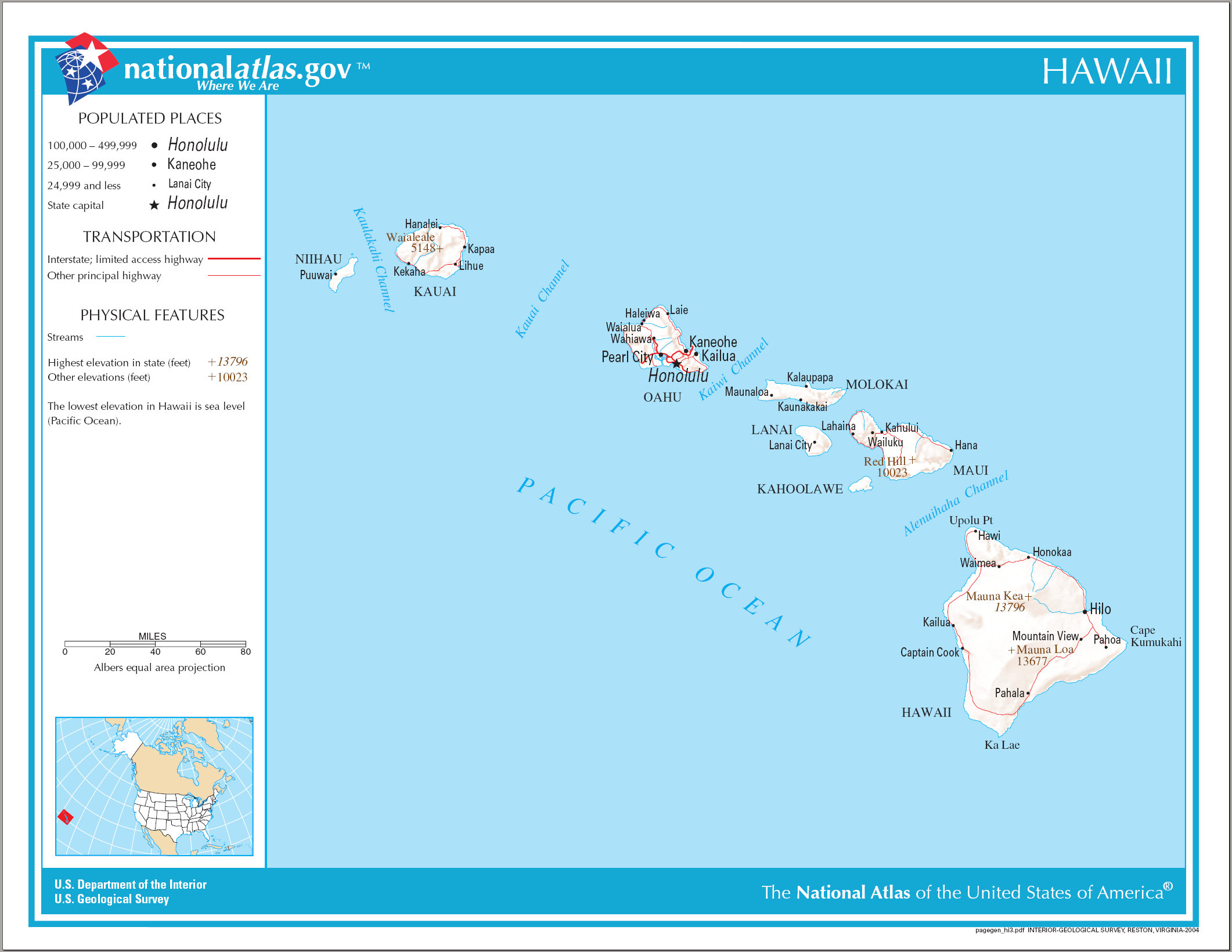
File:Hawaii Islands2.png

This is not a drill

But testing isn't the only purpose that Hawai'i fields serve. Agricultural lands throughout the state also are used to grow GE seed for commercial farmers, with much of the activity centered on O'ahu, Moloka'i and Kaua'i. About half of the 4,000 acres in seed crops statewide are cultivated in GMOs, according to industry estimates. About 97 percent of it is "Roundup Ready" corn, which can withstand direct applications of Monsanto's herbicide. GE seed crops that produce their own insecticides are also being grown.
Seed companies have been taking advantage of Hawai'i's year-round growing season since the mid-1970s. But with an annual value of just $20 million two decades ago, the seed industry was a big player in Islands agriculture. Now, it's the star-and the only one that's rising. With a record-high value of $146.3 million last season, the seed industry accounts for about a quarter of the state's total farm revenues, eclipsing every other commodity. It's also expanding rapidly, increasing 42 percent last year alone.
The steady growth is no accident. The state has been recruiting biotech businesses and investment since the mid-1990s, when former Gov. Ben Cayetano endorsed the industry as a clean, high-tech way to save agriculture and diversify the economy. Now all the major chemical and agribusiness companies involved in GMOs are established in Hawai'i. These include Dow AgroScience, Syngenta and BASF, as well as Dupont's Pioneer Hi-Bred International, the world's largest seed company. The biggest local grower is Monsanto, which previously produced the toxins subpolychlorinated biphenyl (PCBs) and dioxin and is now a global leader in GE seeds, with some 674 biotechnology patents.
Carol Okada, manager of the state DOA's Plant Quarantine Branch, which oversees GMOs in Hawai'i, was quoted in Scientific American magazine last year as saying the booming seed business is in the Islands to stay. "Even though it's controversial here, the seed industry is now the No. 1 industry for us and it is very important in terms of the economy, dealing with invasive species and giving farmers choices."

A state of denial

The state's ongoing support for the industry doesn't sit well with everyone.
"These biotech companies are receiving huge state and federal subsides and tax incentives to come here," Di Pietro said. "Most of the seed company profits are realized out of state. Biotech companies use a large portion of our ag land and water, yet produce no food that we can eat. We experience little benefit and receive much environmental degradation that we will be left for us to mitigate."
It's unclear just how much degradation is associated with GE crops because neither the state nor federal governments required companies to conduct Environmental Impact Statements before growing them here. In the Earthjustice suit, federal Judge J. Michael Seabright found the USDA acted in "utter disregard" of the Endangered Species Act and National Environmental Protection Act when it granted permits for the biopharm field tests before conducting environmental studies, Achitoff said.
"They're environmentally anything but benign," Achitoff said, noting that GE crops have been shown to contaminate conventional and organic crops, usually through the unintentional mixing of commercial seed. In Hawai'i, birds are also thought to have played a role in spreading the seeds of the Rainbow papaya, which was genetically engineered to resist the ringspot virus. Its genetic traits have been found in both the fruit and seed of traditional varieties, prompting an outcry from health-conscious consumers and organic farmers, who could lose their certification if their crops contain GMOs.
Both organic and conventional farmers face another peril from crop contamination. Monsanto is especially aggressive in enforcing its patents, Achitoff said, and has investigated and/or sued thousands of American and Canadian farmers for saving seeds with its patented GMO traits. The company has employed private investigators who secretly videotape and photograph farmers, infiltrate community meetings and gather information from informants about farming activities, according to an article published in Vanity Fair last year. As a result, Achitoff said, some farmers have paid huge fines to Monsanto, even though they were growing the crops inadvertently.
Herbicide-resistant varieties of soybean and corn, which represent the bulk of GE crops now being grown, present another environmental concern, Achitoff said. Their cultivation has given rise to herbicide-resistant "super weeds" that require stronger chemicals for eradication, and studies also have shown that farmers raising "Roundup Ready" crops use more herbicide than those growing conventional varieties.
Biotech researchers and seed companies, however, maintain that GE crops are safe because nothing has turned up to indicate otherwise. In testimony to the state Senate earlier this year, Richard Manshardt, a professor and plant geneticist at UH's College of Tropical Agriculture and Human Resources (CTAHR) asserted that "the biological impacts of current GE crops are not different or greater than those caused by production and distribution of conventional or organic crops. In the specific case of the virus-disease-resistant Hawaiian papayas with which I am personally familiar, no harmful environmental, agricultural or human health issues were found to be unique to GE papayas in seven years of testing during development or 10 years of production after commercial release."
Achitoff, however, said the university researchers are pawns of the biotech industry. "Essentially what they want is the funding and it's distorted their perspective on the safety of GMOs. We have people at CTAHR and the Farm Bureau who have been essentially bought by the biotech industry and they're the ones who howl most loudly to the Legislature."
Although Hawai'i has been reluctant to control, or even scrutinize, the GE crops grown by its seed industry, Achitoff is seeing "a slow but steady trend away from the complete laissez-faire approach toward regulation" on the national level. With new studies showing a link between GE products and health problems, and consumers embracing healthier eating practices, "people will be looking to government and demanding a different approach in regard to GMO regulations," he said. "I'm optimistic about it."

Planted with good intentions

Despite claims that genetic engineering (GE) will lead to crops that can withstand drought, increase yields and boost nutrition, no GE plants with those specific traits have yet been developed for commercial cultivation.
Instead, most of the research has been devoted to producing crops that can withstand direct applications of herbicides, most notably Roundup, which is produced by biotechnology giant Monsanto. These herbicide-resistant varieties account for about 80 percent of the GE crops now being grown. The second most common crops are those that have been engineered to produce their own pesticides.
So far, the USDA has approved GE varieties of soybeans, corn (except blue corn, red corn and popcorn), canola, sugar beets, zucchini, crookneck squash and papaya. GE crops are used heavily as animal feed, and genetically modified organisms (GMOs) are common in products on supermarket shelves. (For a free shopping guide, visit [responsibletechnology.org].)
Another 100 GE crops are waiting in the wings, including virtually every fruit, vegetable and grain now commonly eaten. The biotech industry also has developed "terminator technology," which prevents a plant from making seeds, but it has not yet been deployed.

Current legislation

Genetic engineering is a perennially hot topic in the Hawai'i Legislature, and two bills that would ban the development, testing and propagation of genetically-modified taro in Hawai'i are still alive.
Senate Bill 709 has been amended since its introduction to change its effective date to the year 2050, while House Bill 1663 has similar language, but a July 2009 effective date. Meanwhile, the fate of House Bill 1226 is uncertain. Known as the "pre-emption bill," it would prohibit the state and county from banning or otherwise regulating activities related to genetically-modified plant organisms (GMOs).
Earthjustice attorney Paul Achitoff, who has litigated matters related to GMOs, said the bill is bucking national legal trends regarding pre-emption measures as contrary to the public interest.
"Essentially, it's the state saying voluntarily, unilaterally, without any instruction from the federal government or Congress, we're going to tie our hands and make it impossible to do anything about GMOs," Achitoff said.
Although House Speaker Calvin Say has refused to disclose who asked him to introduce the bill, Achitoff said "there's no doubt in my mind it came from the (biotech) industry and it's consistent with similar legislation that's been put forth by Monsanto and others in a number of other states."
The bill passed the house and was referred to the Senate committee on energy and environment, where Chairman Mike Gabbard pronounced it "a very bad bill" and said he does not plan to schedule it for a hearing. While that would normally scuttle a measure, opponents are worried it might be revived using a technique called "gut and replace," in which the contents of a live bill are stripped and replaced with a dead one, or by amending another bill, such as one of those related to GMO taro.
File:Kalalau Trail 2004-08-22.JPG

Etiquetas:

domingo, diciembre 14, 2008

Scientific American article on GMO's in Hawaii

http://www.sciam.com/article.cfm?id=genetically-modified-hawaii

The last few paragraphs:

The genetically modified seed biz may be booming in the 50th state, but not everyone is pleased about it. The Hawaii County Council (county legislature) last month voted to ban the growth of genetically modified taro (a tropical plant whose potato-like root is a staple of the Hawaiian diet) and coffee on the Big Island (Hawaii). The reason: pollen from GM crops could contaminate the non-gm varieties and destroy farmers' livelihoods. The concern seems to be greater with these products, because they're specialty crops commonly grown on the Islands, as opposed to corn, raising the possibility of cross-pollination.

Map of the United States with Hawaii highlighted

There is also an emotional element to banning GM taro. According to legend, the taro plant originated when a child of the gods was born lifeless. >From the child's grave sprouted the first taro plant, forever casting it as a sacred subsistence food and an ancestor to native Hawaiians.

Despite the hoopla, Carol Okada, manager for the Plant Quarantine Branch of Hawaii's Department of Agriculture, says the business is here to stay and will still be booming in Hawaii 10 years down the road. "Even though it's controversial here," she says, "the [GM] seed industry is now the No. 1 industry for us and it is very important in terms of the economy, dealing with invasive species, and giving farmers choices."

The bottom line: Hawaii may be the GM crop test capital of the world, but the debate over biotech foods is far from over.

Etiquetas: ,

viernes, noviembre 21, 2008

Email to a Friend


Overwhelming Opposition to GE Papaya

For Immediate Release
- November 20, 2008 -

U.S. Groups, Businesses and Organic Farmers Overwhelmingly Oppose Engineered Papaya

Organizations came together with scientists, businesses, organic farmers, bee keepers and others [1] to oppose a U.S. Department of Agriculture proposal to allow the commercialization of genetically engineered (GE) papaya trees in Florida. Over 12,000 people opposed the commercialization while only 17 people submitted statements supporting the commercialization of GE papaya.

The STOP GE Trees Campaign, which initiated the call for opposition, includes 137 organizations across the world that have united in the demand for a global ban on GE trees of all types.

GE papaya trees were previously commercialized in Hawaii where Hawaiian activists and scientists charge they have been a disaster, with one study demonstrating 50% contamination of backyard, wild and organic papayas only a few years after being released on the Big Island of Hawaii. Another study found that GE papaya, engineered to resist the ringspot virus, are increasingly susceptible to black spot fungus, leading to use of fungicides to control the problem. [2]

Dr. Neil Carman, of the Sierra Club's Biotechnology Committee stated: "The use of GE papaya trees in Hawaii caused a rapid contamination of backyard and organic papaya. The USDA admits that release of GE papaya in Florida will also cause contamination, yet they continue to pursue it. They argue such contamination would be beneficial, ignoring the fact that it could wipe out the organic papaya farmers in Florida. In addition, their Environmental Assessment was completely inadequate. It did not assess the potential impacts on human health, pollinating insects like honey bees, or wildlife." [3]

Anne Petermann, Coordinator of the STOP GE Trees Campaign and Co-Director of Global Justice Ecology Project said: "That the USDA continues to promote destructive genetically engineered trees and foods, despite the documentation of over 140 cases of genetic contamination [4] is disgraceful. The approval of GE papaya trees in Florida would set a very dangerous precedent that could open the door to commercialization of GE forest trees in the U.S. It could help pave the way for huge plantations of non-native and invasive GE eucalyptus trees across the U.S. South that would increase destruction of our native forests and devastate the communities that depend on them."

The STOP GE Trees Campaign teamed up with the Sierra Club, the Center for Food Safety and Florida Organic Growers to publicize the USDA's plans to deregulate GE papaya in Florida and generate comments opposing it.

Contact:
Anne Petermann, Coordinator of the STOP GE Trees Campaign and Co-Director of Global Justice Ecology Project +1.802.482.2689/mobile +1.802.578.0477 email:
Dr. Neil Carman, Sierra Club's Biotechnology Committee +1.512.472.1767 email:

NOTES:
[1] Organizations and businesses a that submitted comments included Abundant Life Essentials, Bee Heaven Organic Farm, Brooklyn for Peace, Center for Food Safety (petition signed by 7,843 supporters), Community Ecology, Designed for Movement, Dolores Green - Florida organic farmer, Environmental Council of Volusia/Flagler Counties (Florida), Family Farm Defenders (5,000+ members), Florida Certified Organic Growers & Consumers, Inc., Food & Water Watch (petition signed by 3,973 supporters), Global Justice Ecology Project (600+members), Global Organics, Hawaii SEED, Indiana Forest Alliance, Institute of Science in Society, Institute for Social Ecology, Mountain Biscuit (Uses Papaya in their products), Network for Environmental & Economic Responsibility of United Church of Christ, Northwest Resistance Against Genetic Engineering, Oregon Toxics Alliance, Palm Beach County Environmental Coalition, Park Slope Food Coop, PCC Natural Markets (45,000 members), Reserve Technology Institute, Rising Tide North America, Sierra Club (1.3 million members), Stop GE Trees Campaign (137 organizational members), Sunray Harvesters, The Ecohawk Foundation, The Truth News.Info, Whole Foods Community Coop, Whole Foods Markets, Wildgrace Organic Farm, Youth for Ecology Liberation

[2] http://www.grain.org/research_files/Contamination_Papaya.pdf

[3] USDA Environmental Assessment for GE Papaya and all public comments can be found at http://www.regulations.gov/fdmspublic/component/main?main

[4] http://www.gmcontaminationregister.org/

Etiquetas: ,

lunes, marzo 31, 2008

Hawaii organic

Image:Hawaii Islands2.png
Posted: Thursday, Mar 27, 2008 - 11:05:10 pm HST
'It's a rebellion of sorts'

Organic corn 'outbreak' reported


by Rachel Gehrlein - THE GARDEN ISLAND

In an attempt to make a statement about genetically modified corn on Kaua'i, a loose conglomeration of community members has started to distribute organic corn seeds and corn seedlings island-wide.

According to Lauren Shaw-Meek, a manager at Vim & Vigor in Lihu'e, the idea of the organic corn "outbreak" is to bring attention to what the group sees as the perils of GMO corn. By poking fun at the possibility of an organic corn "outbreak" the message is a little lighter and may reach a wider audience.

"It's a rebellion of sorts," Shaw-Meek said.

The idea that the organic corn can cross-pollinate with GMO corn puts those at risk who do not want to eat the GMO corn, Shaw-Meek added.

"The GMO companies do open-air testing with pesticides and herbicides," Westside resident Diana LaBedz said. "The ground becomes sterile, destroying the land for future generations."

LaBedz, a member of the Kaua'i chapter of the Surfrider Foundation, said she is participating in the corn outbreak to help educate people on what is going on around the world on the GMO front.

"World citizens have lost the right to know if corn bought to feed families has been chemically modified (contains the pesticide in the corn)," LaBedz said in a e-mail. "There is a concern that our corn will be contaminated by the GMO crops that pepper Kaua'i island, next to schools, rivers and in our neighborhoods. Kaua'i's citizens reject the philosophy that we must poison our environment and use the radical genetic engineering of plants and animals to produce enough food for everyone."

Because of this belief, organic seeds, plants and even organic popcorn have been given out around the island.

During Monday night's movie night at Small Town Coffee in Kapa'a, organic popcorn was handed out to moviegoers. The Storybook Theatre in Hanapepe plans to distribute the organic popcorn during their family movie night on April 4.

A view of the Hanalei Valley which is in Northern Kauaʻi.  The Hanalei River runs through the valley and 60% of Hawaii's taro is grown in its fields.
A view of the Hanalei Valley which is in Northern Kauaʻi. The Hanalei River runs through the valley and 60% of Hawaii's taro is grown in its fields.

A view of the Nā Pali coastline from the ocean.  It is part of the Nā Pali Coast State Park which encompasses 6,175 acres (20 km²) of land and is located on the northwest side of Kauaʻi.
A view of the Nā Pali coastline from the ocean. It is part of the Nā Pali Coast State Park which encompasses 6,175 acres (20 km²) of land and is located on the northwest side of Kauaʻi.

Free organic corn seeds were given out at the Lotus Root in Kapa'a, Farsyde Tattoo in Hanapepe, Koloa Natural Foods, Papaya's in Kapa'a and Vim & Vigor in Lihu'e.

Shaw-Meek said the free organic corn seeds "went like hotcakes" at Vim & Vigor.

"They went over amazingly well," Shaw-Meek said. "I'm not surprised the seeds flew out of here because people are excited about the planting season."

According to LaBedz, most locations are already "sold out" of seeds.

"We have more seeds, we just need to distribute them," she said.

Agreeing that the group is within its rights to express its message, one research scientist would like to work with them. According to Sarah Styan, a research scientist with Pioneer Seeds and president of the Hawai'i Crop Improvement Association, farmers around the world are demanding biotec agriculture.

"The whole basis of our business is selling seeds of genetic purity and maintaining the genetic integrity of agriculture," Styan said. "And just like any business, we are getting product out as fast as possible."

Styan added that all types of agriculture, including organic, biotec and conventional, are needed to maintain sustainability.

"We need everybody working together," Styan said. "If we work together, we can make agriculture stronger and improve sustainability."

LaBedz said Kaua'i can't be sustainable with GMO crops.

"If you can't protect your air, water and land we can't be sustainable," LaBedz said. "What they (GMO companies) are doing is permanent. We can't roll back and undo it."

• Rachel Gehrlein, staff writer, can be reached at 245-3681 (ext. 225) or rgehrlein@kauaipubco.com.
Image:Map of Hawaii NA.png

Etiquetas: ,

jueves, noviembre 29, 2007

GMO Taro Protest in Hawaii

Etiquetas: , ,

jueves, junio 28, 2007

Islands at Risk: Genetic Engineering in Hawaii


A film by Earthjustice, 2006
The film can be viewed in its entirety online at:
http://www.earthjustice.org/news/multimedia/video1/page.jsp?itemID=29841806

To purchase the DVD:
http://www.namaka.com/catalog/environment/genetic.html

Review by Claire Robinson

In my corner of England, the growing season starts in June and lasts for four short months. It's an achievement if once a week I get enough tiny veg from the garden to make a meal. So when I briefly lived in Hawaii in the early 90s, I felt as if I'd died and woken up in God's garden. My host's home was set in a jungle of coconut, banana, avocado, pineapple, mango and papaya trees. He hadn't planted anything himself, nor did he tend the plants. Nature was in charge. The plants produced so much food that it would fall off the loaded trees every night. In the morning we had to pick it up before the wildlife got to it, and eat it or give it away before it rotted.

As for weeds, I couldn't see anything that I could identify as one. Amongst the cropping trees were huge, extravagantly beautiful flowering and foliage plants. They looked strangely familiar and yet alien. Eventually, I realized that I recognized them from home as garden exotics. But in Hawaii, they grew wild and supersized, and you didn't have to buy, plant, feed, or weed them. Summer lasted all year round, so the plants enjoyed an endless growing season. This was their home, and the Creator had given them everything they needed.

How did a place so blessed by nature find itself targeted, in the chilling words of one activist, as a "national and international sacrifice area for biotech and genetic modification research"? How did its fertile fields get to be occupied by monocultures of experimental plants with Guantanamo-style bags over their heads? Answer: by stealth. A film by the Hawaiian nonprofit environmental law firm Earthjustice, Islands at Risk, features an interview with local hunter and activist Walter Ritte, who says, "We knew nothing about GMO until one day there was a rumour that there were strange things being grown in our cornfields. The whole farming community was changing and we didn't even know." In a process subsidized by US taxpayers and assisted by the state government of Hawaii, the islands' soils have become the open-air laboratories of chemical and biotech giants DuPont, Monsanto, Dow, and Syngenta, for the testing of GM crops.

The film shows that the entire enterprise has been cloaked in secrecy from the start. Even lawmakers are not allowed to know what is being planted and where. What is known is that on the island of Oahu, over 2000 field tests of GM crops have taken place. These include pharma plants producing AIDS, hepatitis and swine diarrhoea vaccines, and crops producing industrial compounds. And the experimental fields are within spitting distance of residential areas, schools and old people's homes. The industry claims it's safe as there is no rising incidence of disease. But this is exposed in the film as a lie. Lorrin Pang, MD and consultant to the World Health Organization, points out that the ten years since GMOs have been introduced have seen rises in prematurity, cancers, attention deficit disorder, and adult onset diabetes in children. Pang adds that no one can draw any conclusions as to the cause, as GMOs in food are not labeled.

If you think such criminal disregard for people's health and well-being should be against the law, well, it is. Earthjustice has had some success fighting the industry and government's GM contamination plans in court. In 2003, a biotech company wanted to produce GM drug-producing algae off the pristine Kona coast. The drug that was to be made in the algae had never been assessed for its impact on human health. Earthjustice took the State Board of Agriculture to court to enforce environmental laws relating to pharma crops. After two and a half years of costly litigation, the judge ruled in Earthjustice's favour and said the state has to conduct a study assessing impacts of such crops on the environment before allowing companies to produce them.

As a telling postscript, the film points out that a few months after the court judgment, a GM drug made from a product similar to the one proposed for testing in Kona was given to six healthy men in a human trial in London. All six were rushed into intensive care with multiple organ failure and continue to suffer severe ill effects.

You won't find anyone from industry or government talking about such disasters in Hawaii, however, where hype has replaced fact. Biotech promoters claim that GM virus-resistant papaya saved the papaya industry, whereas organic farmer Melanie Bondera points out that according to the figures, the opposite is true. Since GM papayas were introduced in Hawaii, 60% of the Hawaiian market (mainly Japan) has been lost due to consumer rejection of GMOs, and the small farmers have gone out of business. It's doubtful whether Hawaii's papaya industry can ever recover. Fifty per cent of the papayas never intended to be GM are now GM-contaminated, as is the seed source at the University of Hawaii.

The gene-bashers didn't have such an easy ride when they tried to "save" a Hawaiian sacred food plant, the taro. Hawaiians have been growing taro for over a thousand years, and there are hundreds of varieties adapted to different conditions. Plant experts knew which one to plant where. So when the University of Hawaii announced that it was going to "save" the taro by genetically engineering disease resistance into it, Hawaiians were not convinced. As Jerry Kananui of the Hawaii Island Taro Group says on the film, "It hurts me when I hear they're going to save the Hawaiian varieties of taro. Because they don't need to be saved. They're here." To add insult to injury, Hawaiians found out that the university had already patented the taro. Fury erupted. There's a traditional Hawaiian belief that the taro is the first-born, the body form of the god Kane, the giver of life. It's more important than man. Man's job is to ensure that the taro survives forever, because the taro's job is to feed man. So people got hold of copies of the patents and publicly tore them up, telling the university, "You cannot own our ancestors." The university backed down and gave up the patents.

As one of the farmers interviewed on the film points out, Hawaii is more than capable of supporting itself by selling its abundant non-GM crops: pineapples, flowers, bananas, organic crops. But there's no government support for such agriculture. The federal US government and the state of Hawaii prefer crops with bags over their heads, lethal algae, and papaya that no one wants. The Hawaiian GM experiment has been a recipe not for development but economic decline.

Etiquetas:

miércoles, mayo 30, 2007

La papaya GM

RED POR UNA AMERICA LATINA
LIBRE DE TRANSGENICOS
BOLETIN 239


La organización Greenpeace Internacional a producido un informe sobre la problemática de la papaya genéticamente modificada en Hawai, cultivo que fue introducido a las islas en 1998.

En este boletín compartimos con ustedes un resumen del mismo.

El informe completo en inglés puede encontrarse en:

www.greenpeace.org
=====================================================

EL FRACASO DE LA PAPAYA GM EN HAWAII


La papaya GM con resistencia al virus RINGSPOT fue introducida en1998 en Hawaii. Esta papaya transgénica ha significado un fracaso comercial que ha llevado a la industria de la papaya al colapso en la isla.

El documento reporta que en Hawai se han cosechado mucho menos papayas en la última generación. Menos aun que en los peores años en los que emergió el virus RINGSPOT.

La mayor producción de papaya en Hawai tuvo lugar en 1984, cuando se produjo cerca de 30 millones de Kg. En 1992, apareció el virus RINGSPOT en la Isla Grande, pero la producción se mantuvo en 19 millones kilos al año a lo largo de la década de 1990. Entre 1998 y 1999, antes de que sea muy evidente el rechazo a la papaya GM, la producción subió a 23,6 millones de kilos.

Pero con los precios de la fruta, el incremento en la producción no se tradujo en un incremento en las ganancias de los productores, porque el precio por kilo bajó a $ 0,66.

Desde el años 2001, la producción ha ido en caída. En 2004, la cosecha cayó a 15,5 millones de kilos, menos que la producción de los 90. En el 2005, la producción volvió a caer en un 12%. Sólo se cosechó 13,6 millones de kilos.

El valor bruto más alto de los cultivos de papaya fresca se alcanzó en 1997, el último año en que sólo se sembró papaya no transgénica. Desde 1998, la gente en Estados Unidos ha duplicado el consumo de papaya fresca. A pesar de ello, el área total de papayas cosechadas en Hawai es de menos de 600 Ha. Lo que significa una disminución del 28% desde que se adoptó la papaya GM.

En 1995, el valor bruto de los cultivos de papaya hawaiana era de US$ 22 millones (ajustado a la inflación). Ahora, este valor ha bajado a la mitad, pues su valor es de US$ 10,9 millones.

Hace 10 y 20 años, el área sembrada con papaya era el doble de la actual. Como promedio, los agricultores reciben menos del 35% por kilo de su fruta, de lo que recibían antes de la era de la papaya GM. En 1997, los agricultores recibían 1,23 dólares por kilo. En 1998 este valor bajó a 0,89 dólares por kilo porque los compradores tradicionales de la papaya hawaiana rechazaron la fruta. Las exportaciones al Japón cayeron de $10,3 millones en 1997 a $ 4,6 millones en el 2005.

Aunque en Canadá si está aprobada la importación de esta fruta transgénica, el precio nunca se ha recuperado. En los dos últimos años (2004 – 2005), el precio fue de $0,80 por kilo, lo que significa una ganancia muy marginal para el productor.

Junto con la caída en los precios de producción, el área cultivada también ha disminuido. Los promotores de la papaya GM frecuentemente citan estadísticas diciendo que el 60% del área sembrada con papaya es genéticamente modificada, pero hay que preguntar, ¿el 60% de qué?. En el 2004, sólo 500 hectáreas fueron cosechadas, lo que significa un 42% menos de lo que se sembró en 1998, y aun menos de lo que e sembró en 1979. En el 2005 el área creció de manera modesta (587 Ha.) y la producción bajó.

De acuerdo a las estadísticas de agricultura nacional, el número de agricultores que producen papaya bajó de 262 en 1998, a 205 en 2005.


A pesar de las evidencias presentadas en estas estadísticas del Departamento de Agricultura de EE UU (USDA), la industria biotecnológica y sus aliados insisten en que la papaya GM ha sido un éxito.

El Bureau de Agricultores Americanos dicen que ha sido un éxito dramático para la biotecnología (1).

Monsanto proclama que ha salvado la industria de papaya en Hawai (2).

En realidad, la ingeniería genética no ha salvado la industria. Ha acelerado la caída de las papayas hawaianas. Aunque se debe tomar en consideración otros elementos económicos y de mercado, la introducción de la papaya GM ha contribuido de manera significativa.

Los únicos beneficiarios de la introducción de la papaya GM en Hawai son las pocas compañías concentradas en una industria que frecuentemente depende de agricultores arrendatarios que no son dueños de la tierra que trabajan.

A partir de la adopción de la papaya GM, el mercado de la papaya hawaiana se dividió en tres sectores: orgánica, convencional y transgénica. Estas dos primeras con mejores precios en el mercado. Por ejemplo, en noviembre de 2005 un kilo de papaya orgánica cuestó $3,20 en contraste con $0,99 del kilo de papaya GM.

A pesar de ello, para los agricultores orgánicos y para aquellos que quieren llevar a cabo un tipo de agricultura más sustentable, la papaya GM ha sido una fuente de problemas.

La carga que tienen que enfrentar para defenderse de la contaminación del polen procedente de la papaya GM ha sido enorme e injusta.

La verdad sobre los fracasos en Hawai es especialmente importante debido a las presiones que Estados Unidos ejerce sobre otros país para que adopten esta tecnología.

En países del Sudeste de Asia, Estados Unidos ha presionado muchísimo para que se permita sembrar papaya GM en su territorio. Los promotores de la papaya GM como la USAID y la asociación industria biotecnológica ISAAA dicen que ha sido un éxito en base a esta aseveración dudosa, ellos han presionado para que los agricultores en Tailandia, Las Filipinas e Indonesia abran sus puertas a la fruta genéticamente modificada.

Aunque el “éxito” de la papaya GM es una gran sus inversionistas y los pocos de los grandes comercializadores de papaya en Hawai están encerrados en un círculo de la ingeniería genética. Si ellos no consiguen convencer a los países asiáticos que planten y coman papaya GM, entonces la industria hawaiana va a caer en espiral, pues los consumidores van a rechazarla.

Por otro lado, no se ha aprobado ninguna regulación para importar papaya GM en el Japón y los 25 países de la Unión Europea. El principal importador de papaya orgánica de Hawai es Japón.

La industria de la papaya en Hawai tiene un producto que los consumidores no quieren, y enfrenta además una fuerte competencia del sudeste de Asia y de América Latina. La papaya mexicana por ejemplo, se consume más en EE UU que la papaya hawaiana.


Notas:

(1) Truelsen, J. 2003. Biotechnology saves Hawaii papaya industry. American Farm Bureau News,26 May 2003. http://www.fb.org/news/fbn/html/biotechnology.html
(2) Monsanto. Monsanto Hawaii: Agricultural Biotech in the Islands.
http://www.monsanto.com/monsanto/layout/about_us/locations/us/hawaii/agr_biotech.asp

Etiquetas: ,

viernes, abril 13, 2007

Monsanto's plans for Kunia pose risk for other crops


Paul H. Achitoff Star Bulletin (Hawaii), April 12 2007

http://starbulletin.com/2007/04/12/editorial/commentary.html

MONSANTO just announced its purchase of thousands of acres in Central Oahu to test genetically modified (GM) crops, and protests of the Legislature's refusal to hear bills prohibiting genetic engineering of taro and coffee have been in the news. The newspapers publish a steady stream of letters from industry employees suggesting that anyone unwilling to give the industry free reign is an ignorant fear-monger mindlessly opposed to everything "biotech," from aspirin to stem-cell research. Time for a reality check. Here are some facts -- you decide.

In the past six months, three federal courts have ruled that the USDA broke environmental laws when allowing Monsanto and others to grow GM crops that could contaminate other crops or harm the environment, including corn and sugar cane engineered to produce powerful drugs in their cells. Hawaii's Judge J. Michael Seabright found USDA acted in "utter disregard" of the law.

During the past year, the U.S. long-grain rice crop was discovered contaminated by GM varieties not approved for human consumption, resulting in rice import bans by Japan, rejection of contaminated shipments by the European Union, and lawsuits to recover huge losses to rice farmers. The California Rice Commission has called for a moratorium on planting GM rice in California. Thousands of farmers in the United States and Canada have been investigated and/or sued by Monsanto for saving seeds with patented GMO traits. Farmers have paid huge fines even when their crops were inadvertently contaminated with Monsanto's traits. On the other hand, Monsanto refuses to take any responsibility for contamination of others' crops.

Consumers want as much organic produce as they can get; it's the fastest-growing agricultural segment. But since the genetically engineered papaya was introduced, to the hosannas of the Hawaii Farm Bureau, it has become virtually impossible to grow organic papaya reliably in most parts of Hawaii; the GM trees cross-pollinate other trees, and GM seeds are spread everywhere by birds and people. Even UH's papaya seed stock is contaminated. GM papayas receive much lower prices than conventional or organic papaya, and the export markets to Japan and Korea, where consumers refuse to buy GM fruit, have been seriously damaged. Should Kona coffee farmers assume they have nothing to worry about from GM coffee field testing?

Claims that GM crops will enhance yield or improve nutrition are completely speculative, even after years of research and development; 99.9 percent of all GM crops worldwide are corn, soy, canola or cotton designed to be resistant to herbicides, produce their own pesticides, or both. Monsanto developed crops resistant to its RoundUp herbicide so it could sell more RoundUp, which farmers can now dump on their fields without killing their crop. Sales of RoundUp skyrocketed six-fold from 1992 to 2002, producing RoundUp-resistant "superweeds" infesting 2 million acres of U.S. farmland. To kill RoundUp-resistant weeds, farmers are turning to even more toxic herbicides, such as 2,4-D, a component of Agent Orange produced by, you guessed it, Monsanto.

Pesticide-producing crops are not resistant to many corn and cotton insect pests, including the boll weevil, mirids, plant bugs and stink bugs. Farmers continue to spray insecticides to control them, and overall pesticide usage on such crops climbs back up after an initial drop.

Claims that GM crops have been "proven safe" or are "rigorously tested" are simply false. The EPA regulates pesticide-producing crops, but requires no feeding studies with the GM crop; nor does the FDA require any such proof. Scientific studies of GM foods in animals have shown signs of organ damage and raise legitimate concerns about allergies, immuno-suppression, and toxicity. Because the industry has fought requirements that GM foods be labeled so consumers can make their own choices, it's impossible for consumers or doctors to track illnesses back to their sources. Yet 70 percent of all processed foods in supermarkets now contain unlabeled GM ingredients.

About a year ago, the USDA's own inspector general issued a scathing audit criticizing USDA for failing to adequately regulate field tests of GM crops. The USDA was unaware of the location of many field trial sites and failed to conduct required inspections. A long and ever-growing list of contamination incidents has amply demonstrated that no field protocols have succeeded in reliably containing experimental GM crops, like the ones Monsanto plans to grow in Kunia.

Want to know more about exactly what crops Monsanto will be growing, or where? Too bad! Monsanto claims it's "confidential" -- that is, none of your business. Oh, and the Hawaii legislators who refuse to hear bills seeking to restrict genetic engineering of taro, coffee, or anything else? Monsanto says it's none of their business, either. We're all Monsanto's guinea pigs now.

Paul H. Achitoff is managing attorney in Hawaii for Earthjustice Legal Defense Fund.

Etiquetas: