martes, septiembre 23, 2014

Herbicide-Resistant Palmer Amaranth a Growing Threat to U.S. Farms

http://www.biosafety-info.net/article.php?aid=1086

Publication date: September 11, 2014 


THIRD WORLD NETWORK BIOSAFETY INFORMATION SERVICE 
Dear Friends and Colleagues 
Herbicide-resistant Palmer amaranth a growing threat to U.S. farms 
Researchers from the University of Illinois report that an invasive weed called Palmer amaranth (Amaranthus palmeri), which is showing growing resistance to common herbicides, including the widely used glyphosate, has “devastated cotton production” in the southern USA and is spreading at an alarming rate now across the Midwest. Already, it is found in 23 states.
Palmer amaranth is a prolific seed producer which can tolerate heat extremes, grow up to 2.5 metres tall and is challenging to remove. For instance, it cost the state of Georgia at least USD 11 million in 2009 to manually remove it from one million acres of cotton fields. The weed can decrease soybean yields by 78% and corn yields by 91%.
An article in Nature states that the spread of resistant weeds like Palmer amaranth can be traced to the widespread cultivation of crops genetically engineered (GE) to be resistant to glyphosate, citing that glyphosate-resistant weeds had infested 25 million hectares of US cropland by 2012. The article questions the proposal to develop GE crops made resistant to multiple herbicides as this is likely to be a flawed solution which will instead fuel the spread of more herbicide-resistant weeds. It calls on the Environmental Protection Agency to do more by way of integrated pest management. The article is available at http://www.nature.com/news/a-growing-problem-1.15382.

With best wishes
Third World Network
131 Jalan Macalister
10400 Penang
Malaysia
Website: http://www.biosafety-info.net/ and http://www.twn.my/
To unsubscribe: reply ‘unsubscribe’ to news@biosafety-info.net
To subscribe to other TWN information services: www.twnnews.net
PALMER AMARANTH THREATENS MIDWEST FARM ECONOMY, RESEARCHERS REPORT
http://www.eurekalert.org/pub_releases/2014-06/uoia-pat060314.php 

Etiquetas: , ,

miércoles, junio 25, 2014

Nature magazine op-ed on weeds

http://www.nature.com/news/a-growing-problem-1.15382?WT.ec_id=NATURE-20140612

NATURE | EDITORIAL, 11 June 2014  

A growing problem

Without careful stewardship, genetically engineered crops will do little to stop the spread of herbicide-resistant weeds.


EXCERPTS:

Palmer pigweed (Amaranthus palmeri) is not a weed to trifle with. It can reach more than 2.5 metres tall, grow more than 6 centi­metres a day, produce 600,000 seeds and has a tough, woody stem that can wreck farm equipment that tries to uproot it.

It is also becoming more and more resistant to the popular herbicide glyphosate.

The first such resistant population was confirmed in 2005 in a cotton field in Georgia, and the plant now plagues farmers in at least 23 US states. 

There is broad agreement that the spread of these resistant plants has its roots in the widespread adoption of crops engineered to be resistant to glyphosate.

By 2012, glyphosate-resistant weeds had infested 25 million hectares of US cropland. They have also appeared in other countries that have embraced glyphosate-tolerant crops, including Australia, Brazil and Argentina. Blanketing crops year after year in the same herbicide is the perfect way to foster resistant weeds.

Chemical companies have come up with a solution: crops engineered to tolerate multiple herbicides. The likelihood of a weed becoming resistant to more than one chemical, they claim, is very small. And, in an eerie echo of the 1990s discussion around glyphosate tolerance, some even point out that one of the other herbicides being targeted — the choline salt of an old chemical called 2,4-D — has been used for decades with little sign of resistance.

It is a flawed argument. Stacking up tolerance traits may delay the appearance of resistant weeds, but probably not for long. Weeds are wily: farmers have already reported some plants that are resistant to more than five herbicides. And with glyphosate-resistant weeds already in many fields, the chances of preventing resistance to another are dropping.

Etiquetas: , , ,

lunes, mayo 05, 2014

Herbicides and sustainability


http://blog.ucsusa.org/more-herbicide-or-more-innovative-sustainable-farming-511

More Herbicide, or More Innovative, Sustainable Farming?

As another growing season begins, production agriculture is confronted with important choices. Among them is whether the farming community and policy makers will heed the clear warnings from herbicide-resistant weeds that industrial monoculture farming methods are not sustainable.
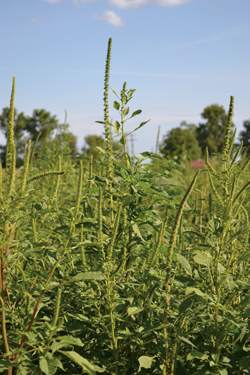
Palmer amaranth (aka pigweed) infests a soybean field. Photo: United Soybean Board/Flickr
The epidemic of weeds that have developed resistance to glyphosate herbicide, used on glyphosate-resistant GMO crops, is an important symptom of the problems with our current farming system. Mismanagement of this weed control system has predictably led to glyphosate resistant weeds, and along with them, greatly increased herbicide use and harm to farms and the environment.
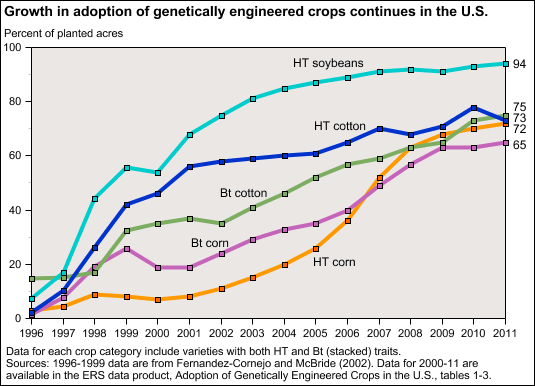
Some have noted that resistance to pesticides is nothing new. True. But the almost exclusive use of these GMO crops, and the glyphosate used with them, has led to exceptional evolutionary pressure for resistance to develop. For example, for most of the last decade, over 90 percent of soybeans grown in the US have been GMO glyphosate-resistant. This exacerbates weed resistance tendencies inherent in monocultures and the problems that come with them. The lack of regulations that could require methods to prevent or reduce the development of resistant weeds is also an important key to this problem. As a consequence, USDA is poised to approve the next generation of GMO herbicide resistant crops without adequate safeguards.

Etiquetas: , , ,

domingo, mayo 04, 2014

Monsanto Supersizes Farmers' Weed Problem--but Science Can Solve It

viernes, enero 31, 2014

Herbicide-resistant Weeds Run Riot in the U.S.

http://www.biosafety-info.net/article.php?aid=1036

THIRD WORLD NETWORK BIOSAFETY INFORMATION SERVICE
Dear Friends and Colleagues
Re: Herbicide-resistant Weeds Run Riot in the U.S.  
A policy brief by the Union of Concerned Scientists (UCS), entitled “The Rise of Superweeds – and What to Do About It”, has raised the alarm on ‘superweeds’ resistant to glyphosate over-running 60 million acres across the United States. The UCS cites three reasons for the emergence of the weeds: year after year of huge monoculture farming on the same land; over-reliance on a single herbicide, namely, glyphosate; and the neglect of other weed control measures. 
For almost two decades, farmers growing Monsanto’s Roundup Ready crops, genetically engineered (GE) to be resistant to glyphosate (sold as Roundup), have been spraying the herbicide with careless abandon. When resistant weeds emerged, they resorted to applying more and different herbicides. Overall pesticide use in the U.S. in 2012 was an estimated 404 million pounds greater than if Roundup Ready crops had not been planted.  Meanwhile Monsanto and other pesticide and seed companies are offering the next generation of GE seeds resistant to two older but more toxic herbicides, dicamba and 2-4D. The brief warns that“the use of multiple herbicides would speed up the evolution of weeds that have multiple resistances— a nightmare scenario for farmers who rely primarily on herbicides.” 
The UCS unequivocally recommends agroecology as the solution to the problem, citing studies that show that it can reduce herbicide use by more than 90% while maintaining or increasing yields and net profits of farmers. Agroecological practices such as crop rotation and using cover and weed-suppressive crops can also yield important benefits like increased soil fertility and water-holding capacity and reduce global warming.  
The UCS make specific recommendations which include providing governmental support to farmers who practice organic agriculture or who wish to adopt it; supporting multi-disciplinary research on integrated and alternative weed management strategies and promoting such practices amongst farmers; and bringing together scientists, industry, farmers, and public interest groups to formulate plans for preventing or containing the development of herbicide-resistant weeds.  
A blog article on this issue by Dr. Doug Gurian-Sherman, senior scientist of the UCS, is reproduced below. The full policy brief can be downloaded fromhttp://www.ucsusa.org/food_and_agriculture/our-failing-food-system/industrial-agriculture/the-rise-of-superweeds.html.

With best wishes
Third World Network
131 Jalan Macalister
10400 Penang
Malaysia
To subscribe to other TWN information services: www.twnnews.net

Etiquetas: , ,

martes, diciembre 31, 2013

GMO herbicide treadmill


THIRD WORLD NETWORK BIOSAFETY INFORMATION SERVICE

U.S. FARMERS CAUGHT IN A TREADMILL WITH GM HERBICIDE-RESISTANCE CROPS
A new study by U.S. scientists warns that agricultural weed management through herbicide-resistant crops is an unsustainable pathway. Over the years, Monsanto has heavily promoted the massive use of its glyphosate-based Roundup herbicide in conjunction with its genetically modified (GM) Roundup Ready crops while denying that weed resistance would ensue. By 2012, however, the reported acreage infested with glyphosate-resistant weeds in the U.S. had risen to 61.2 million acres from 32.6 million acres in 2010.
In response, agri-business corporations are developing crops that are genetically engineered to be resistant to both glyphosate and synthetic auxin herbicides such as 2,4-D and dicamba. Scientists have documented that non-target terrestrial plant injury was 75 to 400 times higher for dicamba and 2,4-D, respectively, than for glyphosate.
The researchers categorically state that the continual insertion of more genes into crops is not a sustainable solution to herbicide resistance and call this the ‘genetic modification treadmill’, similar to the ‘pesticide treadmill’ that was introduced in the mid-20th century. They warn that this ‘single-tactic approach’ is likely to make the problem worse by increasing the severity of resistant weeds as well as will facilitate a significant increase in herbicide use with related potential harmful effects.
The report discusses these risks and presents alternatives for research and policy. In particular, the team recommends integrated weed management characterized by reliance on multiple weed management approaches that are firmly underpinned by ecological principles and which has been shown to reduce herbicide use by as much as 94%.
The full paper can be accessed from http://www.jstor.org/stable/10.1525/bio.2012.62.1.12. The abstract (Item 1) and a related article (Item 2) are reproduced below.
With best wishes
Third World Network
131 Jalan Macalister
10400 Penang
Malaysia
Email: twnet@po.jaring.my
Website: http://www.biosafety-info.net/ and http://www.twn.my/
To subscribe to other TWN information services: www.twnnews.net

Item 1
NAVIGATING A CRITICAL JUNCTURE FOR SUSTAINABLE WEED MANAGEMENT
David A. Mortensen, J. Franklin Egan, Bruce D. Maxwell, Matthew R. Ryan, Richard G. Smith. Navigating a Critical Juncture for Sustainable Weed Management. BioScience, Vol. 62, No. 1 (January 2012), pp. 75-84. http://www.jstor.org/stable/10.1525/bio.2012.62.1.12.
Abstract
Agricultural weed management has become entrenched in a single tactic—herbicide-resistant crops—and needs greater emphasis on integrated practices that are sustainable over the long term. In response to the outbreak of glyphosate-resistant weeds, the seed and agrichemical industries are developing crops that are genetically modified to have combined resistance to glyphosate and synthetic auxin herbicides. This technology will allow these herbicides to be used over vastly expanded areas and will likely create three interrelated challenges for sustainable weed management. First, crops with stacked herbicide resistance are likely to increase the severity of resistant weeds. Second, these crops will facilitate a significant increase in herbicide use, with potential negative consequences for environmental quality. Finally, the short-term fix provided by the new traits will encourage continued neglect of public research and extension in integrated weed management. Here, we discuss the risks to sustainable agriculture from the new resistant crops and present alternatives for research and policy.

Item 2
2,4-D AND DICAMBA-RESISTANT CROPS AND THEIR IMPLICATIONS FOR SUSCEPTIBLE NON-TARGET CROPS
Diane Brown
Michigan State University Extension, November 7 2013
http://msue.anr.msu.edu/news/24_d_and_dicamba_resistant_crops_and_their_implications_for_susc
*Scientists have documented that non-target terrestrial plant injury was 75 to 400 times higher for dicamba and 2,4-D, respectively, than for glyphosate.
Herbicide-resistant weeds are becoming a more widespread problem in the United States. Although herbicide resistance has most commonly occurred in the south in cotton and soybeans, it is increasing in other regions as well. According to a team of agricultural researchers from Pennsylvania State University, University of New Hampshire and Montana State University, too much reliance on glyphosate-type herbicides for weed control on U.S. farms has created a dramatic increase in the number of genetically-resistant weeds.

Etiquetas: , ,

lunes, septiembre 02, 2013

What are superweeds?

miércoles, agosto 21, 2013

SUPERWEEDS – HOW BIOTECH CROPS BOLSTER THE PESTICIDE INDUSTRY

http://www.biosafety-info.net/article.php?aid=989

The full study by Food & Water Watch can be downloaded from:documents.foodandwaterwatch.org/doc/Superweeds.pdf‎. 


Executive Summary

Genetically engineered (GE) crops were first approved in the United States in the 1990s, and since then the United States has been the biggest global adopter of this technology. GE crops were supposed to improve yields, lower costs for farmers and reduce agriculture’s environmental impact. Yet nearly 20 years after their introduction, genetically engineered crops have not provided the benefits promised by the companies that patented them. Food & Water Watch examined U.S. Department of Agriculture (USDA) and U.S. Environmental Protection Agency (EPA) data to document the increased use of herbicides that has accompanied the adoption of herbicide-tolerant GE crops. Our analysis looks at the rapid proliferation of GE crops and affiliated pesticides in the United States and points out the interdependent relationship between these two industries that also fuels the crisis of weed resistance. Food & Water Watch evaluated data from the International Survey of Herbicide Resistant Weeds that reveal burgeoning herbicide-resistant weeds caused by the over-reliance on glyphosate for broad control of weeds. These data make it clear that the problem of herbicide-resistant weeds will not be solved with the intensified use of older, more toxic herbicides like 2,4-D and dicamba.
Some of Food & Water Watch’s findings include:
• Herbicide use on corn, soybeans and cotton did fall in the early years of GE crop adoption, dropping by 42 million pounds (15 percent) between 1998 and 2001. But as weeds developed resistance to glyphosate, farmers applied more herbicides, and total herbicide use increased by 81.2 million pounds (26 percent) between 2001 and 2010.
• The total volume of glyphosate applied to the three biggest GE crops — corn, cotton and soybeans — increased 10-fold from 15 million pounds in 1996 to 159 million pounds in 2012.
• Total 2,4-D use declined after glyphosate was widely adopted, but its use has increased since glyphosate-resistant crops became widespread, growing 90 percent between 2000 and 2012. 2,4-D application on corn could easily increase by nearly three-fifths within two years of 2,4-D-tolerant corn’s introduction. And if just a million dicamba-tolerant soybean acres are planted, it would increase dicamba use 17 times.
• Reports of weeds developing glyphosate resistance are popping up in more and more states. In 2008, glyphosate-resistant waterhemp was reported in five states, but by 2012 it was reported in 12 states. Glyphosate-resistant Palmer amaranth was reported in eight states in 2008 but 17 by 2012. Resistant horseweed spread from 12 states in 2004 to 21 in 2012.
• The International Survey of Herbicide Resistant Weeds found only about one weed infestation per year that was resistant to multiple herbicides between 1997 and 2001, but a decade after GE crops were introduced (2007 to 2011), there were three times as many multiple herbicide-resistant weed infestations.
• Herbicide-resistant weeds’ costs to farmers can range from $12 to $50 an acre, or as much as $12,000 for an average-sized corn or soybean farm or $28,000 for an average cotton farm.
More biotech industry-led solutions will only perpetuate agriculture’s reliance on chemicals as the end-all-be-all solution to weed and insect management. But this approach drives the rise of superweeds, poses risks to human health and threatens critical habitat for wildlife in the process.
Food & Water Watch recommends that:
• The USDA, EPA and Food and Drug Administration (FDA) must work together to thoroughly evaluate the potentially harmful effects of GE crops and linked chemicals before commercialization, to ensure the safety of humans and the environment.
• The USDA should support and encourage cultivation best management practices to prevent weed resistance in the first place.
• The USDA should educate and encourage farmers to adopt non-chemical strategies for long-term weed control. The USDA must dedicate research dollars to developing alternatives for sustainable management of herbicide-resistant weeds.
• The U.S. government must improve the collection and distribution of weed resistance and agricultural pesticide application data.

Etiquetas: ,

domingo, julio 21, 2013

Herbicide-tolerant GE Crops Create Resistant Weed Problems in the US

http://www.biosafety-info.net/article.php?aid=989


July 15, 2013

THIRD WORLD NETWORK BIOSAFETY INFORMATION SERVICE
Dear friends and colleagues
Re: Herbicide-tolerant GE Crops Create Resistant Weed Problems in the US

The US is the biggest global adopter of genetically engineered (GE) crops, of which the bulk comprises Monsanto’s Roundup Ready (RR) varieties that are tolerant to glyphosate. A recent study on herbicide-tolerant GE crops in the US examined US Department of Agriculture (USDA) and US Environmental Protection Agency (EPA) data, and has revealed that herbicide use has increased substantially since the latter half of the 90s. Alongside this, RR crops have given rise to a serious negative externality called ‘superweeds’ which are resistant to glyphosate and which cost farmers as much as USD12-50 per acre to get rid of.
Although initially dropping from 1998-2001, herbicide use in the US subsequently increased by 81.2 million pounds (26%) from 2001-2010 as farmers applied more herbicides to overcome glyphosate-resistant weeds. The total volume of glyphosate applied to GE corn, cotton and soy increased ten-fold from 15 million pounds in 1996 to 159 million pounds in 2012.

Glyphosate-resistant superweeds are appearing in more states across the country covering as much as 61.2 million acres. As of 2012, gyphosate-resistant waterhemp, Palmer amaranth and horseweed were found in 8, 12 and 21 states, up from 5, 8 and 12 states, respectively, 4-8 years earlier. In addition, the International Survey of Herbicide Resistant Weeds found three times as many multiple herbicide-resistant weed infestations in 2011 compared to a decade earlier.  

The emergence of the resistant weeds has paved the way for the introduction of 2,4-D tolerant corn and dicamba-tolerant soybean. The application of these two herbicides is expected to increase dramatically in coming years. 2,4-D is a known endocrine disruptor and dicamba is a carcinogenic herbicide.

The study makes several recommendations, which include proper health evaluations of GE crops, better data collection, and the adoption of non-chemical best management practices to prevent weed resistance and control weeds on a long-term basis.
The full study by Food & Water Watch can be downloaded from:documents.foodandwaterwatch.org/doc/Superweeds.pdf‎.  

With best wishes,
Third World Network
131 Jalan Macalister
10400 Penang
Malaysia
To subscribe to other TWN information services: www.twnnews.net

Etiquetas: , ,

lunes, junio 04, 2012

The revenge of weeds

http://the-scientist.com/2012/05/20/revenge-of-the-weeds/

Revenge of the Weeds

Plant pests are evolving to outsmart common herbicides, costing farmers crops and money.

By Amy Coombs | May 20, 2012

It’s a story suited for a Hollywood horror film, yet it’s also a tenet of evolutionary biology. Introduce a toxin to a system, and you inevitably select for resistant survivors. These few individuals gain a reproductive advantage and multiply; sometimes they can’t be stopped with even the most potent chemicals.

For years, this general plot line made headlines in the fields of antibiotic resistance and cancer research. More recently, plants have become a common protagonist. Weeds around the world are developing resistance to glyphosate—one of the most common herbicides on the market—and like bacteria and tumor cells, many plants can also withstand multiple other toxins, each with unique molecular targets.

In January, a hair-raising infestation of the kochia shrub was confirmed in Alberta, Canada. Originally introduced to desert climates as forage for cattle, the tenacious weed can now survive glyphosate, which targets an enzyme involved in the biosynthesis of aromatic compounds. It can also withstand chemicals that inhibit the ALS enzyme, involved in the production of amino acids. At least 2,000 acres are now impacted, and “we expect more cases will be confirmed after a field survey this fall,” says Hugh Beckie of Agriculture and Agri-Food Canada, the government department that manages farming policies.

The United States are also being taken by storm. Palmer amaranth recently developed resistance to the same two classes of chemicals in Tennessee. Since 2009, the tall, spindly weed has swept across 1 million acres of cropland, causing some farmers to abandon their fields. And in California, a plant named hairy fleabane recently crept into vineyards. It is now able to withstand both glyphosate and Paraquat—a chemical that hijacks photons from proteins involved in photosynthesis.

Worldwide, 23 weed species have developed glyphosate resistance, and at least 10 of these have also developed resistance to other herbicides, according to the International Survey of Herbicide Resistant Weeds. And Bill Freese, of the Center for Food Safety in Washington, DC, believes these numbers underestimate the problem. In order for a weed to be listed as resistant, it must survive four times the concentration used to kill susceptible plants. “Some weeds tolerate lower levels of glyphosate, and these also have a big impact in the field,” he says.


Weed infestations are more of a nuisance than a monstrosity—but they are biting into farmer’s pocketbooks. In Alabama, 61 percent of soybean fields are infested with glyphosate-resistant Palmer amaranth, costing farmers $71 million a year in lost yields, and 80 percent of the state’s cotton is also infested, with losses now totaling $10.9 million. 

******


Selecting for super-weeds 

It’s not uncommon for bacteria to multiply every 20 minutes, but plants have a much longer life cycle and thus a slower rate of evolution. This makes herbicide resistance deceptively improbable.

Kochia scoparia Wikimedia Commons, WildBoar
The chance that a single mutation will confer herbicide resistance is 1 in 100,000, making the likelihood of a double resistant mutant less than 1 in 10 billion. Early industry-sponsored research suggested resistance to glyphosate was particularly unlikely because large mutations in the herbicide’s target, the EPSPS enzyme, would render it dysfunctional, killing the plant before it could reproduce.
“The claims made were naïve, and resistant weeds have indeed developed,” says David Mortensen, a weed scientist at Pennsylvania State University. “When a chemical is applied to such a wide area—to nearly all soybean and cotton, and a big percentage of corn—the selection pressure is too intense.”  
Indeed, glyphosate use has increased dramatically, from the 4 million or so pounds that were applied to corn in 2000 to 65 million pounds last year, with use on cotton and soy fields also climbing. Much of this increase can be attributed to the incorporation of genetically engineered crops that are unaffected by glyphosate, which is sold by St. Louis-based Monsanto under the brand name Roundup. To help farmers spray glyphosate directly over fields without harming crops, Monsanto released Roundup Ready soy and canola in 1996. Genetically engineered cotton and corn soon followed, and by 2001, the GE crops spanned millions of acres. This is when resistant weeds made their debut.
“Glyphosate has been around since the 1970s, but resistant weeds didn’t become a serious problem until the herbicide was packaged with genetically engineered crops,” says Mortensen.

******


Conyza bonariensis (horseweed) seed heads and flowersWikimedia Commons, Rickjpelleg

******

Another strategy—used by plants and bacteria, alike—is to overexpress targeted enzymes, so that some can still function properly even while others are destroyed by the chemical. Glyphosate-resistant waterhemp, Palmer amaranth, kochia, and Italian ryegrass, for example, all overexpress the EPSPS gene that the herbicide targets. Yet instead of simply upregulating gene expression, glyphosate-resistant plants make multiple copies of the EPSPS gene. “This is very hard to do—it’s much less likely than a point mutation,” says Tranel.

The rise of the resistant

If the situation wasn’t bad enough already, it appears to be snowballing. Weeds in nine different countries have independently developed resistance to multiple modes of action. Some stubborn survivors can now survive most of the chemicals used by farmers, and the infestations are spreading.

Last year, for example, farmers in Iowa reported infestations of waterhemp in their corn and soy fields. The weed has now encroached on 500 acres, and continues to survive treatments of glyphosate and six additional chemicals. The case is a rare example of a weed developing resistance to three chemical classes, each with a unique molecular target. Even more impressive, a biotype of Rigid Ryegrass growing in Victoria, Australia, is now resistant to four chemical classes. Only about 10 acres are impacted so far, but the weeds are predicted to spread.

Despite the seemingly small odds of a plant evolving resistance to multiple herbicides, the dramatic increase in glyphosate-resistant weeds, which now infest more than 17 million acres nationwide, has made this possibility exponentially more likely. “We don’t need a single plant to undergo two unlikely adaptations—we just need one event to happen in a biotype that already has glyphosate resistance,” says Mortensen.

The next wave of genetically modified seeds will be the ultimate experiment, says Freese. Monsanto is developing crops that can be simultaneously sprayed with glyphosate and the herbicide dicamba. Dow AgroSciences plans to market genetically engineered corn seeds resistant to both glyphosate and the herbicide 2,4-D; the US Department of Agriculture is reviewing the technology this summer. “Just as we had an increase in glyphosate [use] after Roundup Ready crops were released, we may soon see a huge increase in 2,4-D,” Freese says. “In our view, this will also lead to weeds with multiple resistance to 2,4-D and glyphosate. ”

Correction (May 24): The odds of a plant developing double resistance to the chemicals mentioned in this story are more like 1 in 10 billion.  The original version stated “less than 1 in a trillion,” which reflects a less conservative number. The Scientist regrets the error.


Etiquetas: ,

martes, mayo 15, 2012

Nestle on GM superweeds

http://www.foodpolitics.com/2012/05/gm-crops-in-crisis-roundup-resistant-superweeds/

by Marion Nestle

May 14 2012

GM crops in crisis: Roundup-resistant “superweeds”

I was a member of the FDA Food Advisory Committee when the agency approved production of genetically modified foods in the early 1990s.
At the time, critics repeatedly warned that widespread planting of GM crops modified to resist Monsanto’s weed-killer, Roundup, were highly likely to select for “superweeds” that could withstand treatment with Roundup.
I wrote about this problem in Safe Food: The Politics of Food Safety.  I added this update to the 2010 edition:
Late in 2004, weeds resistant to Monsanto’s herbicide Roundup began appearing in GM plantings in Georgia and soon spread to other Southern states.  By 2009, more than one hundred thousand acres in Georgia were infested with Roundup-resistant pigweed.  Planters were advised to apply multiple herbicides, thereby defeating the point of Roundup: to reduce chemical applications.
Today, the idea that planting of GM crops is “widespread” is an understatement.

So, according to Reuters, is Roundup resistance.
Weed resistance has spread to more than 12 million U.S. acres and primarily afflicts key agricultural areas in the U.S. Southeast and the corn and soybean growing areas of the Midwest.
Many of the worst weeds, some of which grow more than six feet and can sharply reduce crop yields, have become resistant to the popular glyphosate-based weed-killer Roundup, as well as other common herbicides.
This is not a trivial problem.  As the Ottawa Citizen explains,
The resilience of nature is evident across almost five million hectares of superweed-infested U.S. farmland. Some runaway weeds in the southern U.S. are said to be big enough to stop combines dead in their tracks.
How is the chemical industry responding to this threat?  Zap it harder!
The industry is pressing the U.S. and Canadian governments to approve GM corn engineered to resist 2,4-D.
Remember 2,4-D?   It was the principal ingredient in Agent Orange, the defoliant used during the Vietnam War.  Although the health problems it caused have been attributed to contamination with dioxin, the uncontaminated chemical has also been associated with illness in some studies (the Wikipedia entry has references).
The chemical industry maintains that 2,4-D is safe at current usage levels.  Maybe, but Ontario bans its use on lawns, gardens, and in school yards and parks.  Weeds resistant to 2,4-D have been identified since the 1950s.
Is pouring more toxic herbicides on food crops a good idea?  These chemicals cannot be healthy for farmworkers or for soil or groundwater.
Organic agriculture anyone?
Addition: Fred Kirschenmann, Distinguished Fellow at the Leopold Center at Iowa State and organic farmer says in an e-mail:
The other issue that has weed scientists concerned is the fact that 2-4-D is known to be much more invasive than many other herbicides—it can drift in the air for long periods of time and land on many unintended crops.
2-4-D has been identified as the main cause for destroying the grape industry in Iowa—in the 1940′s Iowa was the 4th largest grape producing state in the nation, and then was virtually reduced to zero.
Clearly if 2-4-D is going to be the “answer” to Roundup Ready resistance it will now be used in much larger quantities than in the 1950′s and is not only likely to destroy the rebounding grape production (I think some 200 acres now) and the 8 wineries in Iowa, but will make it extremely difficult to grow vegetables, which will not be good news for the burgeoning CSA/farmers Market industry that has emerged in recent years.

Etiquetas: , ,

lunes, julio 18, 2011

Resistant weeds are spreading

Ken Roseboro
Editor/Publisher
The Organic & Non-GMO Report
The Non-GMO Sourcebook
Phone: 641-209-3426
Fax: 641-209-3428
Email: ken@non-gmoreport.com
Web: www.non-gmoreport.com
Facebook: The Organic & Non-GMO Report
Twitter: nongmoreport


Herbicide Resistance, and Weeds, Are Spreading in the United States: Newly Published Research


Press Release -- July 12, 2011 Herbicide resistance is growing. At least 21 weed species have now developed resistance to glyphosate, a systemic herbicide that has been effectively used to kill weeds and can be found in many commercial products. Some weeds are now developing resistance to alternative herbicides being used. New occurrences of resistance are being noted in varying weed species and locations, creating challenges for weed scientists.

Several articles in the current issue of the journal Weed Science focus on the issue of herbicide resistance. The articles highlight first reports of resistance. “The herbicide resistance issue is becoming serious,” the journal’s editor, William K. Vencill, said. “It is spreading out beyond where weed scientists have seen it before.”
Palmer amaranth is a common weed that competes with cotton, soybean, corn, grain sorghum, and peanut crops in the southern United States. A density of 10 of these weeds per row of cotton has been shown to reduce yields more than 50 percent. By 2010, 52 counties in the state of Georgia had infestations of glyphosate-resistant Palmer amaranth.
Field and greenhouse tests conducted for the current study now confirm that this weed is resistant not only to glyphosate, but also to phrithiobac, an acetolactate synthase-inhibiting herbicide. This marks one of the first reports of multiple resistance to both glyphosate and pyrithiobac in Palmer amaranth. As multiple herbicide resistance becomes more common, a grower’s ability to be economically sustainable is threatened.
Another study in this issue conducted dose-response, ammonia accumulation, and enzyme activity tests on glyphosate-resistant Italian ryegrass populations taken from hazelnut orchards in Oregon. This research now confirms resistance of Italian ryegrass to another control alternative, glufosinate ammonium, a nonselective broad-spectrum herbicide.
In West Memphis, Ark., another study reports the first documented glyphosate-resistant johnsongrass biotype in the United States. A soybean field in continuous production over 6 years showed reduced control of johnsongrass with the recommended application rate of glyphosate. A greenhouse study was conducted with this johnsongrass to confirm this finding and determine any differences in absorption or translocation of the herbicide within these plants.
As herbicide resistance spreads, growers will need new weed management strategies. These could include herbicides with alternative sites of action within the plant or nonchemical methods such as tilling and mulching. Growers should prevent resistant weeds in a production field from reaching reproductive maturity to prevent spread of the trait through seed or pollen.
Full text of “Multiple Resistance in Palmer Amaranth to Glyphosate and Pyrithiobac Confirmed in Georgia,” and other articles in Weed Science, Vol. 59, No. 3, May-June 2011, are available at http://allenpress.com/publications/journals/wees

Etiquetas: ,

jueves, julio 14, 2011

Enviro impacts of war on weeds

http://www.foodfirst.org/en/Roundup%2C+glyphosate%2C+herbicide

Environmental Impacts of Killing Weeds now resistant to Roundup

Herbicide tolerance and GM crops
Why the world should be ready to round up glyphosate

Round-Up Ready Corn

Glyphosate is the active ingredient in many herbicides sold throughout the world, including the well-known formulation, Roundup. Glyphosate based herbicides are used widely for weed control because they are non-selective; glyphosate kills all vegetation.

Glyphosate has been promoted as ‘safe’. However, mounting scientific evidence questions the safety of glyphosate and its most well known formulation, Roundup. The evidence detailed in this report demonstrates that glyphosate-based products can have adverse impacts on human and animal health, and that a review of their safety for human and animal health is urgently needed.

The report's conclusion
The rapid evolution of weeds that are resistant to glyphosate is a result of farmers becoming over-reliant on one herbicide for weed control. This is particularly associated with GM RR (genetically modified Roundup Ready) crops. Now that resistance to glyphosate is widespread in weeds within GM RR soy, maize and cotton crops, farmers have to resort to using mixtures of herbicides.

Thus, the promise of reduced herbicide use and cheaper and easier weed controls has not been delivered. However, it is clear that GM RR crops have brought about an escalation in the pesticides ‘arms race’, with an increasing toxic burden on the environment involving significant uncertainty about the overall safety of glyphosate for people and biodiversity.

Read the entire report by Greenpeace.

Etiquetas: , , , ,

martes, junio 14, 2011

The Growing Roundup-Resistant Weed Problem

THIRD WORLD NETWORK BIOSAFETY INFORMATION SERVICE

Dear Friends and colleagues,

RE: Growing Roundup-Resistant Weed Problem

The adoption of crops that are genetically engineered to tolerate the herbicide Roundup has resulted in a growing number of weed species that are resistant to glyphosate, the active ingredient in Roundup, due to widespread use of the herbicide. This has also led to a decline in the effectiveness of glyphosate as a weed-management tool.

According to weed expert David Mortensen, during the period since the introduction of glyphosate-tolerant crops, the number of weedy plant species that have evolved resistance to glyphosate has increased dramatically, from zero in 1995 to 19 in June of 2010. Based on the most recent data, glyphosate-tolerant weeds were reported on 30,000 sites and affected up to 11.4 million acres, up from 3,251 sites covering about 2.4 million acres in 2007.

The cost of forestalling and controlling herbicide-tolerant weeds is estimated to cost farmers almost $1 billion each year, at an additional cost of $10-20 per acre.

The trend is set to continue and the problem of resistance may worsen if multiple herbicide-tolerant crops are introduced, as increased use of herbicides is expected.

With best wishes,

Third World Network
131 Jalan Macalister,
10400 Penang,
Malaysia
Email: twnet@po.jaring.my
Website: www.biosafety-info.net and www.twnside.org.sg
To subscribe to other TWN information mailing lists: www.twnnews.net


Growing Roundup-resistant weed problem must be dealt with, expert says
Physorg.com
September 14, 2010
http://www.physorg.com/news203697204.html

Growing Roundup-resistant weed problem must be dealt with, expert says

Penn State weed scientist David Mortensen.

(PhysOrg.com) -- When Penn State weed scientist David Mortensen told members of the U.S. House Oversight Committee this summer that the government should restrict the use of herbicide-tolerant crops and impose a tax on biotech seeds to fund research and educational programs for farmers, it caused quite a stir.

Etiquetas: ,

jueves, marzo 03, 2011

Louisiana super weeds

THIRD WORLD NETWORK BIOSAFETY INFORMATION SERVICE

Dear Friends and colleagues,

Re: Lousiana Farmers Battle Herbicides-resistant Weeds

Herbicide-resistant pigweed (Palmer amaranth) is becoming a major headache for farmers at three locations in North Louisiana in the United States.

These weeds have developed resistance to the herbicide glyphosate, which includes Roundup as well as many other glyphosate products, and are found among fields planted with Roundup Ready soybeans or Roundup Ready cotton.

This latest discovery shows that "super-weeds" have spread across much of the US farmbelt, a phenomenon that many critics of genetic engineered organisms have warned about over the years. Several states from Iowa to Georgia, including Arkansas and Mississippi, have had severe outbreaks of herbicide-resistant weeds, including pigweed.

In one of the three Louisiana locations, a cousin of Palmer amaranth, tall water hemp, is suspected of having herbicide resistance, and it has been confirmed in Mississippi.

Fighting herbicide-resistant weeds will be costly to farmers if the experience of affected farmers in other states is any indication. Farmers are likely to face reduced yields and harvest problems and will need to use more herbicides, glyphosate and/or other types of chemicals.

With best wishes,

Third World Network

131 Jalan Macalister,

10400 Penang,

Malaysia

Email: twnet@po.jaring.my

Website: www.biosafety-info.net and www.twnside.org.sg

----------------------------------------------------------------------------

LOUISIANA FARMERS FACE ADDED COST OF BATTLING RESISTANT WEED

By Bruce Schultz, Louisiana State University Ag Center, USA AgFax, USA

(http://agfax.com/Content/lousiana-farmers-dealing-with-weeds-02032011.aspx)

3 February 2011

Tests by the LSU AgCenter have confirmed herbicide-resistant pigweed at three locations in north Louisiana.

"We've joined the party," said Daniel Stephenson, LSU AgCenter weed scientist who conducted the testing.

But this party is no celebration, rather, a meeting of the minds by LSU AgCenter scientists to figure out how to combat the problem.

"We're evaluating alternative weed control programs," said Jim Griffin, LSU AgCenter weed scientist. "We'll assist growers in planning control programs where weed control issues have occurred."

Two of the fields were in Tensas Parish, and the third was in Franklin Parish. All three populations are resistant to the herbicide glyphosate, which includes Roundup as well as many other glyphosate products.

Roundup Ready soybeans were grown in one of the Tensas Parish fields, while Roundup Ready cotton was grown in the other two fields, according to Donnie Miller, LSU AgCenter weed scientist and director of the Northeast Research Station.

Last year, Palmer amaranth (pigweed) from Concordia Parish and johnsongrass in Pointe Coupee Parish were confirmed as resistant to glyphosate.

Several states from Iowa to Georgia, including Arkansas and Mississippi, have had severe outbreaks of herbicide-resistant weeds, including pigweed, specifically Palmer amaranth.

Griffin said it's not a surprise that the problem finally surfaced in Louisiana. "It was not a matter of if, but when."

Griffin explained that herbicide resistance is the result of accelerated evolution.

"The process begins with just a few plants with the genetic capacity to survive the herbicide treatment. It is believed that these plants, which occur naturally in the population at a very low level, are not a result of genetic mutation caused by the herbicide. These inherently resistant plants, when exposed to the same herbicide over several years, produce seed. Over time the population slowly shifts such that the resistant weeds become dominant. Since this process is slow, the producer may not notice the problem until large scale weed control failures occur," Griffin said.

The pigweed from Concordia Parish survived amazingly high rates of glyphosate, Stephenson said.

"To kill half the population would have required 54 times the normal rate," Stephenson said.

The Concordia Parish weed was found in 2009 from a field where Roundup Ready cotton had been grown in four consecutive years. In 2009, the farmer noticed pigweed that had not been killed by an aerial application of glyphosate, Stephenson said. Samples of those plants were used to obtain seeds that were grown in a greenhouse and tested with varying rates of glyphosate.

The same protocol was used on johnsongrass that could not be killed with glyphosate alone. It was found in a field in Pointe Coupee Parish where Roundup Ready soybeans had been grown for 10 years.

Also in Concordia Parish, a cousin of Palmer amaranth, tall water hemp, is suspected of having herbicide resistance, and it has been confirmed in Mississippi by Mississippi State University, he said. In other states, including Arkansas and Mississippi, herbicide-resistant weeds have caused headaches for farmers, with reduced yields and harvest problems caused by the large weeds.

Palmer amaranth can grow up to an inch a day, expanding to a 4- to 6-inch diameter trunk that can damage harvest equipment. It thrives in heat that normally would suppress other weeds, Stephenson said. Its pollen can move up to 600 meters, making neighboring fields vulnerable. One plant can produce up to 2 million seeds. Their small size makes it impossible to clean all seeds from farm equipment.

But weed experts say the problem in Louisiana is manageable.

"Louisiana is at a point where we can mitigate this," Stephenson said.

"We've got the opportunity to not be like our neighbors."

He said growers in Concordia Parish are working together to fight the weed. They are using herbicides with residual action.

Stephenson said alternative herbicides, such as Valor, Dual, Reflex or Magnum, which have different modes of action to kill pigweed, can be used separately or with glyphosate.

Miller said chemical companies are offering rebates and other incentives for growers to use alternative herbicides.

Stephenson warned that using reduced rates of herbicides to save money is false economy.

During field scouting for insects and diseases, he said, farmers can destroy weeds to prevent seed production.

"Growing Liberty link soybeans where Ignite is used for weed control would also be a means to manage glyphosate-resistant weed problems," Griffin said.

The Liberty Link gene is also available for other crops, including corn and cotton.

Griffin said crop rotation is another strategy, provided the rotational crop would be something other than one that relies on glyphosate for primary weed control. For example, he said, rice would be a good rotational choice.

Stephenson said addressing the problem will cost farmers more money, but it is less expensive than what farmers are facing in Arkansas. "It comes down to pay me now, or pay me later."

He said the Palmer amaranth problem may be overshadowed by the herbicide-resistant johnsongrass.

"With Palmer, I have bullets to control it, but with johnsongrass, I only have one bullet," he said. That is because in some areas of the state johnsongrass has already been shown to be resistant to herbicides that could be used as alternatives to glyphosate. That puts us in a real dilemma.

He said chemical companies are working on new compounds to fight the weeds, but a new product is at least 10-12 years away. Weed scientists agree that glyphosate was the discovery of a lifetime, and nothing like it is on the horizon.

"There is no silver bullet coming," Stephenson said.

Glyphosate was discovered by a team of researchers led by John E. Franz, a Monsanto Co. chemist, in 1970.

The herbicide kills plants by interfering with an enzyme required for growth. It is absorbed through its leaves and moves throughout the plant, and it is quickly broken down in the soil by bacteria.

Using herbicide-resistant crops has enabled farmers to lessen their environmental impact by reducing their reliance on plowing to kill weeds.

Using minimal or no-till practices leaves soil more intact and reduces runoff from fields into waterways. It also means farmers don't have to burn as much fuel to grow a crop, keeping food prices lower and helping farmers cut their expenses.

Although Roundup Ready technology has been accepted in cotton, soybeans and corn in the northern United States where sugar beets are grown, litigation involving the Roundup Ready version of that commodity has growers in a quandary. A federal judge has ruled that Roundup Ready beets cannot be planted this year until a full environmental impact study is conducted for the genetically altered variety, even though the genetically modified variety has been grown for the past six years on 95 percent of the sugar beet acreage in 10 states.

The U.S. Department of Agriculture decided this month it will allow Roundup Ready alfalfa to be commercially grown. The USDA reversed an earlier decision that would have imposed restrictions on where it could be grown. A 230-page environmental impact study was completed, but opponents are contending it was not an in-depth examination.

Etiquetas: , ,