Agroecology is a solution to the food systems and climate change crises
http://www.biosafety-info.net/article.php?aid=1016
Title: Agroecology is a Solution to the Food Systems and Climate Change Crises
Publication date: October 25, 2013
THIRD WORLD NETWORK INFORMATION SERVICE ON SUSTAINABLE AGRICULTURE
Dear friends and colleagues,
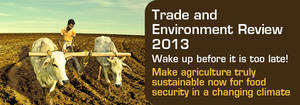
The UN Conference on Trade and Environment (UNCTAD) launched its Trade and Environment Review 2013 on 18 September 2013 (see TWN Agriculture Info: Making Agriculture Truly Sustainable for Food Security in a Changing Climate, 19 September 2013). The report highlights the drastic changes needed in agriculture to combat hunger and environmental degradation.
The UN Special Rapporteur on the Right to Food contributed a commentary on ‘Agroecology: A Solution to the Crises of Food Systems and Climate Change’. He explores how agroecology, which is the application of the science of ecology to agricultural systems, can result in modes of production that are more resilient, highly productive and sustainable. It therefore contributes to the alleviation of rural poverty, and thus, to the realization of the right to food.
Among the benefits of agroecology highlighted:
* Agroecological techniques have a proven potential to significantly improve yields.
* Agroecology has the potential to increase the incomes of small-scale farmers as well as contributes to rural development.
* The diversity of species on farms managed following agroecological principles, as well as in urban or peri-urban agriculture, is important to improve nutrition.
* Agroecology can support the provision of a number of services to ecosystems, including by providing a habitat for wild plants, supporting genetic diversity and pollination, and water supply and regulation.
* Agroecology strengthens resilience to climate change and also contributes to mitigating climate change.
The commentary is reproduced below. The Trade and Environment Review 2013 is available at http://unctad.org/en/pages/PublicationWebflyer.aspx?publicationid=666
With best wishes,
Third World Network
131 Jalan Macalister
10400 Penang
Malaysia
Email: twnet@po.jaring.my
Websites: www.twn.my, www.biosafety-info.net
Commentary VI: Agroecology: A Solution to the Crises of Food Systems and Climate Change
Olivier de Schutter
UN Special Rapporteur on the Right to Food
Abstract
The food price hikes of 2008 and 2011–2012 were partly the result of weather-related events linked to climate change, and partly due to the dependence of food production on fossil energies that caused a merger between food and energy markets as well as the financialization of food markets. The current efforts to reinvest in agriculture should take into account the need to improve the resilience of food systems so as to reduce their vulnerability to extreme weather events and to the increasingly volatile prices of non-renewable fossil energies. This article explores how agroecology, understood as the application of the science of ecology to agricultural systems, can result in modes of production that are not only more resilient, but also both highly productive and sustainable, enabling them to contribute to the alleviation of rural poverty, and thus, to the realization of the right to food.
TO READ THE REST: http://www.biosafety-info.net/article.php?aid=1016
Title: Agroecology is a Solution to the Food Systems and Climate Change Crises
Publication date: October 25, 2013
THIRD WORLD NETWORK INFORMATION SERVICE ON SUSTAINABLE AGRICULTURE
Dear friends and colleagues,
The UN Conference on Trade and Environment (UNCTAD) launched its Trade and Environment Review 2013 on 18 September 2013 (see TWN Agriculture Info: Making Agriculture Truly Sustainable for Food Security in a Changing Climate, 19 September 2013). The report highlights the drastic changes needed in agriculture to combat hunger and environmental degradation.
The UN Special Rapporteur on the Right to Food contributed a commentary on ‘Agroecology: A Solution to the Crises of Food Systems and Climate Change’. He explores how agroecology, which is the application of the science of ecology to agricultural systems, can result in modes of production that are more resilient, highly productive and sustainable. It therefore contributes to the alleviation of rural poverty, and thus, to the realization of the right to food.
Among the benefits of agroecology highlighted:
* Agroecological techniques have a proven potential to significantly improve yields.
* Agroecology has the potential to increase the incomes of small-scale farmers as well as contributes to rural development.
* The diversity of species on farms managed following agroecological principles, as well as in urban or peri-urban agriculture, is important to improve nutrition.
* Agroecology can support the provision of a number of services to ecosystems, including by providing a habitat for wild plants, supporting genetic diversity and pollination, and water supply and regulation.
* Agroecology strengthens resilience to climate change and also contributes to mitigating climate change.
The commentary is reproduced below. The Trade and Environment Review 2013 is available at http://unctad.org/en/pages/PublicationWebflyer.aspx?publicationid=666
With best wishes,
Third World Network
131 Jalan Macalister
10400 Penang
Malaysia
Email: twnet@po.jaring.my
Websites: www.twn.my, www.biosafety-info.net
Commentary VI: Agroecology: A Solution to the Crises of Food Systems and Climate Change
Olivier de Schutter
UN Special Rapporteur on the Right to Food
Abstract
The food price hikes of 2008 and 2011–2012 were partly the result of weather-related events linked to climate change, and partly due to the dependence of food production on fossil energies that caused a merger between food and energy markets as well as the financialization of food markets. The current efforts to reinvest in agriculture should take into account the need to improve the resilience of food systems so as to reduce their vulnerability to extreme weather events and to the increasingly volatile prices of non-renewable fossil energies. This article explores how agroecology, understood as the application of the science of ecology to agricultural systems, can result in modes of production that are not only more resilient, but also both highly productive and sustainable, enabling them to contribute to the alleviation of rural poverty, and thus, to the realization of the right to food.
TO READ THE REST: http://www.biosafety-info.net/article.php?aid=1016
Etiquetas: Agroecology, en, Olivier de Schutter, Organic, Third World Network, UNCTAD, United Nations