sábado, diciembre 19, 2015

GM Salmon: knowledge gaps, uncertainties and questions

http://genok.com/arkiv/4830/

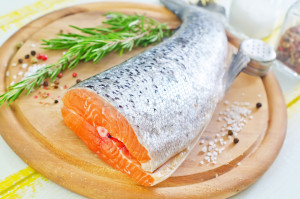
Foto: tycoon101/dollarphotoclub.com
This chapter on GM salmon is from the recently published GenØk report “Uncertainty and Knowledge Gaps related to Environmental Risk Assessment of GMOs”. This report provides a detailed discussion of uncertainties, knowledge gaps and research needs related to the potential use and introduction of GMOs. It covers GM plants, antibiotic resistance marker genes, GM vaccines, gene therapy and medicinal products containing or consisting of GMOs, as well as GM microorganisms, GM trees and GM salmon.
The salmon chapter addresses knowledge gaps, uncertainties and questions surrounding GM salmon, and among the issues raised are:
  • effects of construct composition, site of integration and gene dosage on expression and effectiveness of the transgene
  • effects of genetic background and the impact of pleiotropic and epigenetic effects on the resulting phenotype
  • the importance of comparative studies
A discussion about questions related to ecological impact, and the potential containment of GM salmon is also included, focusing on:
  • current knowledge about escape and survival of domestic salmon
  • potential impacts on wild salmon populations
  • other ecosystem impacts (on species with similar niches, potential prey, trophic interactions etc.)
  • potential for physical and reproductive containment of GM salmon

Etiquetas: , , , ,

jueves, diciembre 17, 2015

Are you eating Frankenfish?

http://www.nytimes.com/2015/12/15/opinion/are-you-eating-frankenfish.html?src=me&_r=0

THIS month, Congress may decide whether consumers are smart enough to be trusted with their own food choices. Some lawmakers are trying to insert language into must-pass spending legislation that would block states from giving consumers the right to know whether their food contains genetically modified ingredients.
They must be stopped.
Nine out of 10 Americans want G.M.O. disclosure on food packages, according to a 2013 New York Times poll, just like consumers in 64 other nations. But powerful members of the agriculture and appropriations committees, along with their allies in agribusiness corporations like Monsanto, want to keep consumers in the dark. That’s why opponents of this effort have called it the DARK Act — or the Deny Americans the Right to Know Act.

Etiquetas: , ,

lunes, enero 21, 2013

Help Us Stop the Approval of GE Fish!

jueves, enero 03, 2013

From the latest Organic Consumers Association newsletter

http://www.organicconsumers.org/bytes/ob361.htm

 Follow OCA: Twitter | Facebook | Pinterest 

ESSAY OF THE WEEK

GMO Food Fight: Round Two 2013

"This gives us hope that you can, with a well-funded, well-organized, well-executed campaign, defeat a ballot initiative and go directly to the voters. We hope we don’t have too many of them, because you can’t keep doing that over and over again . . .".

- Jennifer Hatcher, Food Marketing Institute, on Big Food and Big Biotech’s narrow defeat of Prop 37, the California Right to Know GMO ballot initiative.

Big Food and Big Biotech can hope all they want. But consumers can – and will – propose state laws and state ballot initiatives as often as we need, in as many states as we must, until we have what 61 other countries have: truth and transparency in the form of mandatory GMO labeling laws.

Today, activists in Washington State are delivering approximately 350,000 signatures to the state legislature to guarantee that a mandatory GMO labeling Initiative, I-522, will be on the ballot in November. Initial polling shows that Washington state voters will likely pass this Ballot Initiative, no matter how much money the biotech industry and large food corporations put into an anti-labeling campaign.

Vermont legislatures will reintroduce a GMO labeling bill early this year and Connecticut plans to introduce one in May. And that’s just the beginning.

Read Ronnie’s latest essay


GMO Salmon Would Be Approved as ‘New Animal Drug’

TAKE ACTION: Tell the FDA: No Frankenfish!

Do you really want a mutant, likely allergenic salmon on your dinner plate that was approved by the FDA's Center for Veterinary Medicine as a "new animal drug"?

Last week the FDA cleared the way for approval of the first genetically engineered animal for human consumption - a GMO salmon gene-spliced with an eel - despite mounting concerns that it's likely hazardous for humans and poses a threat to the wild salmon population.

Scary enough. But get this. The FDA considers any genetically altered animal a “new animal drug” for approval purposes. That means the genetically modified animal – in this case a salmon intended as food for humans – is subjected to a less rigorous safety review than if it were classified as a food (for humans) additive.

Shameless. And there are plenty of other reasons to stop this dangerous experiment. The FDA’s own testing revealed that “Frankenfish” causes increased allergy risk in humans. “Frankenfish” grows twice as large, twice as fast as the average wild salmon. If it escapes into the wild, it could threaten the entire wild salmon population.

And, of course, there are no laws in the U.S. requiring “Frankenfish” to be labeled.

TAKE ACTION: Tell the FDA: NO FRANKENFISH!

Learn more here

Read the FDA’s Environmental Assessment

Etiquetas: , ,

jueves, diciembre 27, 2012

Tell the FDA: No Frankenfish!


From Organic Bytes, online newsletter of the US Organic Consumers Association: http://www.organicconsumers.org/bytes/ob360.htm

Obama Clears the Way for Approval of First Genetically Engineered Animal
Take a little DNA from a Chinook salmon, and a little growth hormone from an eel-like creature called an ocean pout, and what do you get? A frankenfish that grows twice as fast as wild salmon – and just as rapidly grows the profits of a biotech company called AquaBounty Technologies.

In a last-minute holiday gift to yet another biotech company that wants to play god with our food, the Obama administration has cleared the way for the FDA to soon approve the first genetically modified salmon.

Bad idea, says the Consumers Union, the advocacy and policy arm of Consumer Reports, which called the Environmental Assessment (EA) of the proposed frankenfish "flawed and inadequate."

The FDA is expected to approve AquaBounty’s frankenfish after a 60-day public comment period – unless consumers, activists and common sense prevail. Here are the three top reasons to tell the FDA “NO FRANKENFISH”:

1. Harmful to human health: FDA has allowed this fish to move forward based on tests of allergenicity of only six engineered fish—tests that actually did show an increase in allergy-causing potential, according to Michael Hansen, PhD, Senior Scientist with Consumers Union.

2. Harmful to wild salmon population: Only 95% of the GE salmon may be sterile, and the rest fertile. Even 1% equals thousands of fish. Plus the fish at the egg production facility in Prince Edward Island, Canada, will not be sterile. All it takes is for some of these frankenfish to escape, and the world’s wild salmon population will be at risk.

3. Not Labeled: Without GMO labeling laws, you’ll have no way to avoid the frankenfish that will end up in grocery stores and fish markets.

It’s going to take hundreds of thousands of us telling the FDA “NO FRANKENFISH” in order to have an impact. Please make your voice heard today!

Take action! 

Learn more


Etiquetas: , ,

sábado, marzo 10, 2012

Take action!

Stop GMO Salmon and Save Wild Salmon!

As the Food & Drug Administration stands poised to approve the first genetically engineered animal, a salmon-like Frankenfish, the Environmental Protection Agency could take action to protect wild salmon by stopping the proposed Pebble Mine in Alaska's Bristol Bay. This open-pit mine would generate up to 10 billion tons of toxic mine waste that will have to be treated for hundreds of years. Mine waste disposal in the Bristol Bay watershed is a direct threat to the tremendous wild salmon habitat that supports the Bristol Bay fishery, and supplies the world with a healthy and sustainable source of wild salmon. The salmon fishery is the economic engine of the region, generating an estimated $450 million in revenue each year, and supplying some 10,000 jobs.

Tell the EPA to Protect Wild Alaskan Salmon

Ask Your U.S. Senator to Cosponsor a Bill to Ban Frankenfish

Global Days of Action to Shut Down Monsanto March 16 & 17

Shut Down Monsanto and the Anti-Monsanto Project are calling for global days of action to shut down Monsanto on Friday and Saturday March 16 & 17.

Global Call to Action

The Current List of Global Actions

Etiquetas: , , , ,

martes, marzo 08, 2011

Canadian Scientists Have Reservations over GE Salmon

THIRD WORLD NETWORK BIOSAFETY INFORMATION SERVICE
Dear Friends and colleagues,
Re: Canadian Scientists Have Reservations over GE Salmon
Government scientists in Canada warned that Canadian fish stocks could be harmed if the world’s first genetically engineered (GE) salmon, on the brink of release, is approved for commercialization. Internal official records also indicate that experts from the Department of Fisheries and Oceans (DFO) are concerned about “limited” and possible constraints of the current Canadian regulations for GE fish.
The company behind the GE salmon is US-based AquaBounty, but it is developed in Canada using technology developed by scientists at Memorial University in Newfoundland. The company plans to produce the eggs of the fast-growing AquAdvantage in Prince Edward Island, home to AquaBounty’s research facility. The eggs would then shipped to Panama where the GE salmon would be raised in inland fish farms and processed before being shipped to US for sale.
The concerns expressed by Canadian scientists and officials are contrary to the US Food and Agriculture Department’s preliminary analysis which concluded that the GE salmon is safe and has no severe impact on the environment, and therefore had effectively given the green light for its go-ahead.
However, because of the project’s involvement in Canada, AquaBounty still has to undergo a separate regulatory approval process in Canada. And DFO officials and scientists are not so sanguine. According to internal documents, they have voiced their concerns of the potential risk of fish migrating back and affecting Canadian fish stocks. They also expressed concern that the present regulatory system in the country may not allow a comprehensive assessment to be conducted.
With best wishes,
Third World Network
131 Jalan Macalister,
10400 Penang,
Malaysia
-----------------------------------------------------------------------------------------------------------------
Item 1
Genetically engineered fish could pose threat to wild stocks: DFO scientists Montreal Gazette, Canada By Sarah Schmidt, Postmedia News, Canada (
22 February 2011
OTTAWA – There’s a risk Canadian fish stocks could be harmed if the world's first genetically engineered salmon is approved for commercialization, federal scientists suggest.
Internal records obtained by Postmedia News also indicate experts from the Department of Fisheries and Oceans are concerned about “limited” and possibly “constrained” regulatory powers around the approvals for GE fish.
The analysis, from senior scientists specializing in biotechnology and aquaculture, comes as a company called AquaBounty Technologies works to bring GE salmon to the dinner plate.
Hoping to get approval in the United States to sell the first genetically engineered fish that people can eat, the company cleared an important hurdle in August, when the U.S. Food and Drug Administration's preliminary analysis concluded that the salmon, engineered in Atlantic Canada to grow twice as fast as normal fish, are safe to eat and not expected to have a significant impact on the environment.
The AquAdvantage salmon contains a growth hormone gene from the Chinook salmon and a genetic on-switch from the ocean pout, resulting in the continuous production of the hormone. The salmon grows to market size in
16 to 18 months instead of three years, but does not grow any bigger than conventional salmon.
The company plans to produce the eggs in Prince Edward Island, home to AquaBounty's research facility, where the Massachusetts-based company currently grows sterile female GE salmon for research purposes. It uses technology developed by scientists at Memorial University in Newfoundland.
The eggs would then be shipped to Panama, where the genetically engineered Atlantic salmon would be raised at an inland fish farm and processed before getting shipped as table-ready fish to the U.S. for sale. The FDA‚s preliminary environmental analysis concluded it is “extremely unlikely that AquAdvantage Salmon would ever be able to survive and migrate to the Pacific Ocean.”
The Canadian connection means AquaBounty must undergo a separate regulatory approval process in Canada. During early consultations a year ago involving AquaBounty officials and scientists from the Department of Fisheries, Environment Canada and Health Canada, fisheries officials voiced concerns.
“DFO clarified that while the risk assessment will focus on potential effects in Canada, there is potential risk of fish migrating back to affect Canadian fish stocks,” according to the minutes, redacted in many places and released under access-to-information legislation.
“DFO requested that containment and limitations to which companies in other countries will have to comply be clearly outlined in the notification.”
In separate correspondence about draft minutes of this meeting, two government experts raised issues about the regulatory approvals process in Canada to approve GE fish.
Key passages of email correspondence between Caroline Mimeault, a scientific adviser at DFO’s Biotechnology and Aquatic Animal Health Science, and Robert Devlin, a world renowned DFO scientist who studies risk assessment of GE fish at the department’s Centre for Aquaculture and Environmental Research in West Vancouver, are redacted.
But the correspondence refers to limits and possible constraints of the current Canadian regulations for GE fish.
Mimeault wrote that she “totally agreed” with Devlin, “but we are limited by the current . . . regulations.”
Mimeault, citing another colleague's input about the kind of information that can be requested of a company seeking to commercialize GE fish, said the government “may be constrained” by the regulations.
This email exchange includes an attachment of a journal article Devlin co-wrote that found dispersal behaviour has been affected by introducing an outside gene into a fish, so GE fish may venture into habitat previously not used by wild fish.
The apparent concerns about assessments and regulations contradict newly released internal DFO media lines, prepared in May 2009 in case of journalists‚ questions about AquaBounty.
The Canadians regulations “currently provide an effective regulatory framework for protecting the environment from potential risks of GE fish,”
state the media lines.
Another draft of media lines, prepared in August 2010 by the Canadian Food Inspection Agency, also shows that DFO scientists say there is a risk of contamination of wild species in the case of accidental escape of GE fish.
The draft stated: “The GE salmon are bred in contained, land-based systems and are reproductively sterile females, eliminating the threat of interbreeding amongst them or with native populations.”
But Mimeault, the DFO scientific adviser specializing in biotechnology and aquatic animal health, reviewed the media lines and took issue with the sweeping claim: “I would rather use a less definitive term such as ‘significantly reducing’‚ as opposed to ‘eliminating’‚ as we know that the possibility for accident release can never be completely eliminated and that the technology to render the fish reproductively sterile is not 100 per cent efficient.”
Lucy Sharratt, co-ordinator of the Canadian Biotechnology Action Network and critic of AquaBounty’s efforts to commercialize its GE fish, said she’s worried inadequate regulations could hamper the ability of DFO scientists to carry out a comprehensive risk assessment of a GE fish application.
“The documents confirm the fish cannot be contained, infertility cannot be 100 per cent achieved, and when fish escape, there’s a risk it will come back to affect our fish stocks,” said Sharratt. “This could be a case of good scientists inside departments constrained by regulations.”
Michael Hansen, a scientist at the New York-based Consumers Union, said the concerns of federal fisheries experts are noteworthy.
“The real issue here is DFO are raising credible scientific issues because, frankly, the assessment that the FDA did was scientifically completely inadequate.”

Etiquetas: , , ,

viernes, febrero 18, 2011

Congress Can Stop GM Salmon!

Take Action: Tell Your Member of Congress to Cosponsor H.R.521 & Vote for CR Amendment No. 491!

When the Food & Drug Administration took public comments on genetically engineered salmon last Fall, 21,095 Organic Consumers Association activists sent letters urging the FDA to block Frankenfish. We expect the FDA to release an environmental assessment of the GM salmon any day now, and when they do, we'll have another 30 days to submit public comments, but FDA approval seems all but certain.

Thankfully, there are members of Congress, Republicans and Democrats alike, who are committed to stopping GM salmon, even if Obama's FDA gives it the green light. These Congresspersons know that GM salmon just isn't safe. Worse than even "normal" factory farmed fish, which are often deformed and disease-ridden, GM salmon is less nutritious, more likely to trigger allergies, and could increase cancer-risks in the people who eat it.

Please contact your Member of Congress and urge them to cosponsor H.R.521, Rep. Don Young (R-AL)'s bill to ban GM salmon, and vote for H.R.1 Amendment No. 491, Rep. Lynn Woolsey (D-CA)'s effort to include a ban on GM salmon in the 2011 Continuing Resolution.

Take Action

Etiquetas: , , ,

sábado, noviembre 27, 2010

Refuting GE salmon nonsense

New Report Refutes Industry Argument that Genetically Modified Salmon will Feed Hungry World Populations

Brussels - Food & Water Europe released a report today outlining why the genetically engineered (GE) salmon currently being considered by the US Food and Drug Administration (FDA) for approval as a human food will not alleviate global hunger.

GE Salmon Will Not Feed the World outlines several reasons why this transgenic fish is likely to be more expensive to produce than perceived, as well as problematic for the environment, fishing communities and consumers. The report was released a day after Scottish MP Rob Gibson motioned to petition the Scottish Government to monitor the FDA's approval process, noting that escapees are likely to occur through time and could easily reach the shores of Scotland, "altering forever the genetic integrity of wild Atlantic salmon and of quality Scottish farmed salmon."

"The company producing this experimental fish, AquaBounty, is the only one who will be profiting from it, despite misleading claims that this product could be a means to feed growing populations around the world," said Wenonah Hauter, Executive Director of Food & Water Europe.

Since GE salmon can require large amounts of food, display deformities and likely have higher oxygen demands, they can be costly to produce. These projected costs, combined with the various potential human health and ecological concerns associated with GE fish, will not likely add up to a more financially advantageous product for growers or consumers.

Furthermore, farmed salmon in general may not be as nutritious or safe as wild salmon. They contain on average 35 percent fewer omega-3 fatty acids - which are important for human health, but not produced by the body. Also, farmed salmon often contain higher levels of contaminants in their fat (which they can have more of than wild salmon), including 10 times the amount of polychlorinated biphenyls (PCBs). GE salmon are also known to have higher levels of insulin-like growth factor 1, which has been associated with increased risk of certain types of cancer.

These worrying food safety issues are compounded by the environmental damage GE salmon would add to the already unsustainable salmon farming industry. The small, wild fish used in salmon feed are a major food source for marine mammals, birds and larger fish as well as low-income, food insecure populations around the world. In 2006, the aquaculture sector alone consumed nearly 90 percent of small prey fish captured worldwide. GE salmon may require about five times the amount of feed as a non-altered salmon to grow faster. This will further exacerbate the decline of available wild fish for marine wildlife and people in countries that need it most. If fish are not used in feed, it is entirely likely that the fish would be fed on industrial soya-which is associated with serious environmental and human rights impacts as well. Escapes of GE salmon into the wild could also threaten wild salmon, by competing for food, habitat and mates.

"GE salmon is an inefficient way to produce food that comes with more costs than benefits," says Hauter. "We should be concerned about protecting consumers and our wild fish populations rather than pushing forward to approve this potentially dangerous product."

Read the report - http://www.foodandwaterwatch.org/world/europe/factsheets/ge-salmon-will-not-feed-the-world-europe/

Etiquetas: , ,

miércoles, noviembre 24, 2010

US public does not want GM fish

PUBLIC SAYS NO TO TRANSGENIC FISH,

DEMANDS MANDATORY LABELING

Nearly 400,000 Citizens Send Letters to FDA Demanding Labeling of GE Fish

COMMENTS CITE MATERIAL CHANGES, AS WELL AS

CULTURAL, RELIGIOUS, AND ECONOMIC CONCERNS

Washington, DC November 23, 2010 – As the comment period on the labeling of a controversial genetically engineered salmon came to a close yesterday, the Center for Food Safety called on the U.S. Food and Drug Administration (FDA) to recognize the immense public outcry for mandatory labeling of untested, unapproved transgenic salmon. The Center lead a broad coalition of consumer, environmental, religious and animal welfare groups, along with commercial and recreational fisheries associations and food retailers, grocers and chefs in demanding the FDA deny approval of the long-shelved AquaBounty transgenic salmon and requiring mandatory labeling of the fish if approved despite intense opposition. If approved the transgenic salmon would be the first genetically engineered (GE) animal intended for human consumption.

“Consumers sent a clear message to FDA that they do not want to eat genetically engineered salmon and should FDA decide to move forward despite overwhelming opposition it must be labeled,” said Andrew Kimbrell, Executive Director for the Center for Food Safety. Yesterday marked the end of a two month public comment period on the labeling of GE salmon. Nearly 400,000 public comments have been sent to FDA from the coalition, demanding the agency reject this application and require mandatory labeling of this transgenic salmon should it decide to approve it. In addition, the Center for Food Safety distributed 150,000 postcards consumers are mailing in to FDA.

Poll after poll has shown than consumers are against the commercialization of GE salmon, and that any GE fish to reach the market should be labeled as such. A Lake Research Partners poll commissioned by Food & Water Watch and released in September found that 91 percent of Americans believe FDA should not allow genetically engineered fish and meat into the marketplace. Additionally, a 2008 Consumers Union nationwide poll found that 95 percent of respondents said they thought food from genetically engineered animals should be labeled.

“FDA’s decision to go ahead with this approval process is misguided and it fails to adequately take into account the numerous human health, environmental and animal welfare concerns that have been raised,” said Jaydee Hanson, Senior Policy Analyst at the Center for Food Safety. The FDA currently approves GE animals through its new animal drug law, yet critics fault the process as failing to require adequate safety assessments and lacking transparency and public engagement.

Recently, forty members of Congress called on the FDA to halt the approval of GE salmon and requested the agency thoroughly examine and address the serious flaws with FDA’s approval process and include greater public input and scientific scrutiny. The letter that circulated the House of Representatives was authored by Reps. Peter DeFazio (OR), Dennis Kucinich (OH), and Mike Thompson (CA) and the letter in the Senate was authored by Senator Mark Begich (AK).

Anticipating the stark danger to our fisheries and ocean environments - and trying to circumvent analyses of those dangers - AquaBounty has claimed that they will only raise their fish in land-based facilities. However, many states ban raising transgenic fish in land-based facilities. Moreover, a Freedom of Information Act (FOIA) request revealed that the U.S. Food and Drug Administration (FDA) knowingly withheld a Federal Biological Opinion by the U.S. Fish and Wildlife Service (FWS) and National Oceanic and Atmospheric Administration (NOAA) prohibiting the use of transgenic salmon in open-water net pens pursuant to the U.S. Endangered Species Act (ESA). Other FOIA documents revealed serious concerns within the Fish and Wildlife Service about the approval of GE salmon.

“We all know there is a great appetite for salmon, but the solution is not to ‘farm’ genetically engineered versions to put more on our dinner tables; the solution is to work to bring our wild salmon populations back” said Andrew Kimbrell, Executive Director for the Center for Food Safety. “This Thanksgiving week, families across the country have joined in saying no to transgenic fish.”

# # #

Heather Whitehead
True Food Network Director, the Center for Food Safety
hwhitehead@icta.org
t 415/826-2770 f 415/826-0507 c 510/501-8092
truefoodnow.org | ge-fish.org | centerforfoodsafety.org

Join the Network | Facebook | Twitter | YouTube

Get the NEW True Food Shoppers Guide App for iPhone or Android!
Get it on iTunes or search for "True Food" in the Android Market

Etiquetas: , , ,

sábado, noviembre 20, 2010

COALITION REVEALS IMMENSE PUBLIC OPPOSITION TO TRANSGENIC FISH, DEMANDS MANDATORY LABELING

As Comment Period on Approval and Labeling Winds Down More than 360,000

Send Comments to FDA Demanding Action on GE FISH


Washington, DC November 18, 2010 – A coalition of consumer, environmental and animal welfare groups, along with commercial and recreational fisheries associations and food retailers, grocers and chefs held a joint press conference today demanding the U.S. Food and Drug Administration (FDA) deny approval of the long-shelved AquaBounty transgenic salmon and require mandatory labeling of the fish if approved despite intense opposition. If approved the transgenic salmon would be the first genetically engineered (GE) animal intended for human consumption.

“Consumers clearly do not want to eat genetically engineered salmon and should FDA decide to move forward despite overwhelming opposition it must be labeled,” said Andrew Kimbrell, Executive Director for the Center for Food Safety. Today the coalition presented the over 360,000 public comments that have been sent to FDA demanding the agency reject this application and require mandatory labeling of this transgenic salmon should it decide to approve it.

Anticipating the stark danger to our fisheries and ocean environments - and trying to circumvent analyses of those dangers - AquaBounty has claimed that they will only raise their fish in land-based facilities. However, many states ban raising transgenic fish in land-based facilities. Moreover, a recent Freedom of Information Act (FOIA) request revealed that the U.S. Food and Drug Administration (FDA) knowingly withheld a Federal Biological Opinion by the U.S. Fish and Wildlife Service (FWS) and National Oceanic and Atmospheric Administration (NOAA) prohibiting the use of transgenic salmon in open-water net pens pursuant to the U.S. Endangered Species Act (ESA). Other FOIA documents newly revealed serious concerns within the Fish and Wildlife Service about the approval of GE salmon.

“Poll after poll has shown than consumers are against the commercialization of GE salmon, and that any GE fish to reach the market should be labeled as such,” said Patty Lovera, Assistant Director of Food and Water Watch. A Lake Research Partners poll commissioned by Food & Water Watch and released in September found that 91 percent of Americans believe FDA should not allow genetically engineered fish and meat into the marketplace. Additionally, a 2008 Consumers Union nationwide poll found that 95 percent of respondents said they thought food from genetically engineered animals should be labeled. Circumventing public opinion, top food and agriculture biotechnology firms and trade associations spent over half a billion dollars over the past decade in campaign contributions and lobbying Congress in support of controversial industry projects like genetically engineered (GE) food animals according to a new analysis by Food & Water Watch.

“FDA’s decision to go ahead with this approval process is misguided and fails to take into account the numerous human health, environmental and animal welfare concerns that have been raised,” said Dr. George Leonard, Aquaculture Program Director at Ocean Conservancy. The FDA currently approves GE animals through its new animal drug law, yet critics fault the process as failing to require adequate safety assessments and lacking transparency and public engagement. “We need a robust system that is open, transparent and takes a rigorous approach to risk assessment rather than one that favors backdoor approvals and closed-door meetings,” added Leonard.

On September 19 and 20, the FDA convened its Veterinary Medicine Advisory Committee for a public meeting to discuss the approval of the AquAdvantage salmon. The 2-day meeting was followed by a public hearing on the labeling of the transgenic salmon. FDA’s briefing materials for the meeting suggest that the AquAdvantage salmon has significantly lower levels of Omega 3 fatty acids (the healthy fat in salmon) compared to wild salmon and may have a greater potential to cause possibly fatal allergic reactions. FDA’s own Advisory Committee raised its own concerns regarding inadequate sample sizes, incomplete data, questionable culling practices, troubling physical abnormalities and poor environmental and scientific assessments. Additionally, the absence of data on disease resistance and inadequate nutritional composition data leave the safety of these animals largely unknown.

“FDA requires labeling of foods when there is a ‘material difference’ from other foods. In layman’s language, that means there is a difference that consumers care about. The differences between genetically engineered and conventional salmon are definitely differences that consumers care about that should trigger a mandatory label. Given the unanswered questions about increased allergy risks, labeling is doubly important,” states Michael Hansen of Consumers Union.

“We all know there is a great appetite for salmon, but the solution is not to ‘farm’ genetically engineered versions to put more on our dinner tables; the solution is to work to bring our wild salmon populations back” said Jonathan Rosenfield, Ph. D. fish ecologist for SalmonAid. “The approval of these transgenic fish will only exacerbate the problem.”


# # #


A complete list of coalition press releases as well as joint letters signed by more than 300 environmental, health and consumer groups; animal welfare organizations; fishermen and fishing organizations and associations; and food companies, grocers, distributors, chefs and restaurants are available on the web at: www.ge-fish.org

Heather Whitehead
True Food Network Director, the Center for Food Safety
hwhitehead@icta.org
t 415/826-2770 f 415/826-0507 c 510/501-8092
truefoodnow.org | ge-fish.org | centerforfoodsafety.org

Join the Network | Facebook | Twitter | YouTube


Get the NEW True Food Shoppers Guide App for iPhone or Android!
Get it on iTunes or search for "True Food" in the Android Market

Etiquetas: , ,

miércoles, septiembre 15, 2010

COALITION DEMANDS FDA DENY APPROVAL OF CONTROVERSIAL GENETICALLY ENGINEERED FISH

CENTER FOR FOOD SAFETY – FOOD AND WATER WATCH – SALMONAID

NORTHWEST ATLANTIC MARINE ALLIANCE - ORGANIC CONSUMERS ASSOCIATION –

FRIENDS OF THE EARTH – THE LIVING OCEANS SOCIETY – SMALL BOAT COMMERCIAL

SALMON FISHERMEN’S ASSOCIATION – THE GEORGIA STRAIT ALLIANCE – CALIFORNIANS FOR

GE-FREE AGRICULTURE – THE ORGANIC & NON-GMO REPORT – PLANETARY HEALTH, INC. – SIERRA CLUB – SAY NO TO GMOS! – CENTER FOR ENVIRONMENTAL HEALTH – CANADIAN BIOTECHNOLOGY ACTION NETWORK – INSTITUTE FOR FISHERIES RESOURCES – AMERICAN ANTI-VIVISECTION SOCIETY – PACIFIC COAST FEDERATION OF FISHERMEN’S ASSOCIATION – MANGROVE ACTION PROJECT – FOOD FIRST / INSTITUTE FOR FOOD AND DEVELOPMENT POLICY – EDEN FOODS, INC. – THE NON-GMO PROJECT – NORTHWEST RESISTANCE AGAINST GENETIC ENGINEERING –

PCC NATURAL MARKETS – AMBERWAVES – GLOUSTER FISHERMEN’S WIVES ASSOCIATION –

FRESH THE MOVIE – WASHINGTON BIOTECHNOLOGY ACTION COUNCIL –

OREGON PHYSICIANS FOR SOCIAL RESPONSIBILITY

August 27, 2010

JOINT PRESS STATEMENT

FOR IMMEDIATE RELEASE

Contacts:

George Kimbrell, Center for Food Safety: 571-527-8618

Jaydee Hanson, Center for Food Safety: 202-547-9359 (w); 703-231-5956 (c)

Marianne Cufone, Food and Water Watch: 202-683-2511

Niaz Dorry, Northwest Atlantic Marine Alliance: 508-982-3748

Jonathan Rosenfield, PhD, SalmonAID Foundation: 510-684-4757

COALITION DEMANDS FDA DENY APPROVAL OF

CONTROVERSIAL GENETICALLY ENGINEERED FISH

FDA Considers Approval of GE Salmon--the First GE Food Animal--Yet Fails to

Inform the Public of Environmental and Economic Risks

Washington, DC August 27, 2010 – A coalition of 31 consumer, animal welfare and environmental groups, along with commercial and recreational fisheries associations and food retailers submitted a joint statement criticizing an announcement this week by the U.S. Food and Drug Administration (FDA) that it will potentially approve the long-shelved AquAdvantage transgenic salmon as the first genetically engineered (GE) animal intended for human consumption.

The engineered Atlantic salmon being considered was developed by AquaBounty Technologies, which artificially combined growth hormone genes from an unrelated Pacific salmon, (Oncorhynchus tshawytscha) with DNA from the anti-freeze genes of an eelpout (Zoarces americanus). This modification causes production of growth-hormone year-round, creating a fish the company claims grows at twice the normal rate. This could allow factory fish farms to crowd fish into pens and still get high production rates.

Each year millions of farmed salmon escape from open-water net pens, outcompeting wild populations for resources and straining ecosystems. “We believe any approval of GE salmon would represent a serious threat to the survival of native salmon populations, many of which have already suffered severe declines related to salmon farms and other man-made impacts,” Marianne Cufone, director of Food and Water Watch’s fish program said.

If the FDA opens this door, GE fish will likely be among the millions of salmon that currently escape from open ocean pens every year. This could be the last blow to wild salmon stocks and in turn the thousands of men and women who depend on fishing for their livelihoods. “Approving genetically engineered salmon is a sharp contradiction to the agreements the United States has signed at NASCO, where transgenic salmonids are considered a serious threat to wild salmon” said Boyce Thorne Miller, Science and Policy Coordinator for the Northwest Atlantic Marine Alliance and accredited observer at the North Atlantic Salmon Conservation Organization.

Escaped GE salmon can pose an additional threat – genetic pollution resulting from what scientists call the “Trojan gene” effect.” Research published in the Proceedings of the National Academy of Sciences notes that a release of just sixty GE salmon into a wild population of 60,000 would lead to the extinction of the wild population in less than 40 generations.

Anticipating the stark danger to our fisheries and ocean environments - and trying to circumvent analyses of those dangers - AquaBounty has claimed that they will only raise their fish in land-based facilities. However most salmon farmers in the real world ply their trade in low-lying coastal areas and competing corporations will no doubt race to produce GE fish in crowded open ocean facilities already in use for fish production. Backsliding on its original claims, reports have circulated that AquaBounty may only suggest producers raise GE fish in “inland waters” – presenting novel threats to our nation’s lakes, rivers, and estuaries – many of which are already under attack by invasive fish species like the Asian carp and Northern snakehead.

“FDA’s decision to go ahead with this approval process is misguided and dangerous, and is made worse by its complete lack of data to review” said Andrew Kimbrell, Executive Director for the Center for Food Safety. “FDA has been sitting on this application for 10 years and yet it has chosen not to disclose any data about its decision until just a few days before the public meeting.”

On Wednesday, FDA officials announced that they had begun the approval process for the engineered salmon and have scheduled public meetings beginning Sunday, September 19. Speakers wishing to present oral comments are expected to submit their requests in writing by September 7th; one day after the FDA has said it may post “some” of the data to its website. “This is not a process that leads to full and informed public participation,” said Charles Margulis, Sustainable Food Program Coordinator for the Center for Environmental Health.

FDA announced the same day that it will hold a public comment period and a hearing on labeling for the transgenic salmon, which seems to presuppose that the controversial GE fish will be approved. If the GE fish is approved, Agency officials are undecided as to whether they will require any product labeling.

“We all know there is a great appetite for salmon, but the solution is not to ‘farm’ genetically engineered versions to put more on our dinner tables; the solution is to work to bring our wild salmon populations back” said Jonathan Rosenfield, PhD, a Conservation Biologist and President of the SalmonAID Foundation, a 28-member coalition of commercial, tribal, and sportfishing interests, conservation organizations and chefs. “The approval of these transgenic fish will only exacerbate the problems facing our wild fisheries.”

# # #

Heather Whitehead
True Food Network Director, the Center for Food Safety
hwhitehead@icta.org
t 415/826-2770 f 415/826-0507 c 510/501-8092
truefoodnow.org | centerforfoodsafety.org

Etiquetas: , ,